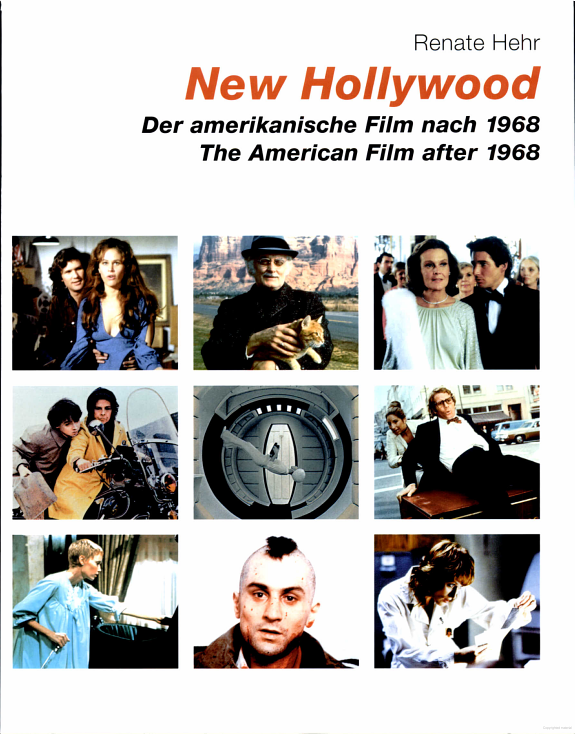
New Hollywood

New Hollywood

Der Amerikanische Film Nach 1968

by Renate Hehr

112 pages· 2003· ISBN 9783930698943

Browse books you can read free on Readfeed

No club is reading this yet — be the first to start one

Start a club free
About
The surprising success of Bonnie and Clyde, The Graduate and Easy Rider in the late sixties marks a turning-point in the history of the American cinema, as these are films that differ in their style fundamentally from the traditional Hollywood films. They revised the traditional genre formulae and overturned the rules of classical narrative structure, but they were also aimed at a young audience influenced by alternative culture, a group that the big studios had ignored until then. The American film industry, which was in financial crisis and in a phase of artistic stagnation in the sixties because it had tried to meet increasing competition from television by producing blockbusters, started to think again, and became more receptive to new ideas. A period of artistic renewal began, of a kind that had never been possible before in America on such a radical scale. The first wave of New Hollywood was starting to die down in 1971, as the films were often too experimental, too self-referential and too alien for a mass audience, and the market for the limited target group of a young audience interested in culture was quickly saturated. But important stimuli emerged, and made it possible for a series of filmmakers like Robert Altman, Arthur Penn, Mike Nichols, Alan Pakula, Sydney Pollack, Stanley Kubrick, Sam Peckinpah, Paul Mazursky, Hal Ashby and ultimately an exceptional figure like Woody Allen to establish themselves permanently. They were joined in the seventies by the younger generation of so-called film prodigies like Francis Ford Coppola, Peter Bogdanovich, William Friedkin, Martin Scorsese, Steven Spielberg, Brian De Palma, Paul Schrader or George Lucas. They all represented the liberation of the director from the dictates of the studio, the acquisition of a right to have individual artistic handwriting and the era of the director as superstar.

Discuss New Hollywood with other readers

Join or start a book club for New Hollywood on Readfeed. Live chat, shared reading progress, and AI discussion questions — free to get started.

Frequently asked questions

How do I join a book club for New Hollywood?

Sign up free on Readfeed, then browse public clubs or start your own club with New Hollywood as the current read. Invite friends with a share link and discuss together with live chat and AI discussion questions.

Can I discuss New Hollywood with other readers online?

Yes. Readfeed book clubs let you chat live, share progress, and join discussions about New Hollywood with readers worldwide — whether your club is virtual, in-person, or hybrid.

Is Readfeed free?

Yes. Creating an account and joining book clubs is free. Sign up to find readers who love the same books and start discussing today.