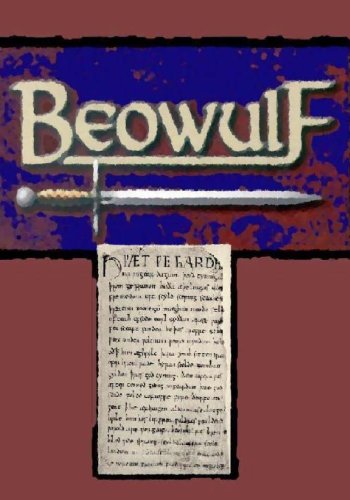
Beowulf
by M. I. Ebbutt, J. H. F. Bacon
28 pages· 2012· ISBN 9781477639078
Rate this book:
About
Beowulf is the conventional title of an Old English heroic epic poem consisting of 3182 alliterative long lines, set in Scandinavia, commonly cited as one of the most important works of Anglo-Saxon literature.It survives in a single manuscript known as the Nowell Codex. Its composition by an anonymous Anglo-Saxon poet is dated between the 8th and the early 11th century. In 1731, the manuscript was badly damaged by a fire that swept through a building housing a collection of Medieval manuscripts assembled by Sir Robert Bruce Cotton. The poem fell into obscurity for decades, and its existence did not become widely known again until it was printed in 1815 in an edition prepared by the Icelandic scholar Grímur Jónsson Thorkelin.In the poem, Beowulf, a hero of the Geats in Scandinavia, comes to the help of Hroðgar, the king of the Danes, whose mead hall (Heorot) has been under attack by a being known as Grendel. After Beowulf slays him, Grendel's mother attacks the hall and is then also defeated. Victorious, Beowulf goes home to Geatland in Sweden and later becomes king of the Geats. After a period of fifty years has passed, Beowulf defeats a dragon, but is fatally wounded in the battle. After his death, his attendants bury him in a tumulus, a burial mound, in Geatland.Opinions may differ as to the date at which the poem of “Beowulf” was written, the place in which it was localised, and the religion of the poet who combined the floating legends into one epic whole, but all must accept the poem as embodying the life and feelings of our Forefathers who dwelt in North Germany on the shores of the North Sea and of the Baltic. The life depicted, the characters portrayed, the events described, are such as a simple warrior race would cherish in tradition and legend as relics of the life lived by their ancestors in what doubtless seemed to them the Golden Age. Perhaps stories of a divine Beowa, hero and ancestor of the English, became merged in other myths of sun-hero and marsh-demon, but in any case the stories are now crystallized around one central human figure, who may even be considered an historical hero, Beowulf, the thane of Hygelac, King of the Geats. It is this grand primitive hero who embodies the ideal of English heroism. Bold to rashness for himself, prudent for his comrades, daring, resourceful, knowing no fear, loyal to his king and his kinsmen, generous in war and in peace, self-sacrificing, Beowulf stands for all that is best in manhood in an age of strife. It is fitting that our first British hero should be physically and mentally strong, brave to seek danger and brave to look on death and Fate undaunted, one whose life is a struggle against evil forces, and whose death comes in a glorious victory over the powers of evil, a victory gained for the sake of others to whom Beowulf feels that he owes protection and devotion.
Discuss Beowulf with other readers
Join or start a book club for Beowulf on Readfeed. Live chat, shared reading progress, and AI discussion questions — free to get started.
Frequently asked questions
How do I join a book club for Beowulf?
Sign up free on Readfeed, then browse public clubs or start your own club with Beowulf as the current read. Invite friends with a share link and discuss together with live chat and AI discussion questions.
Can I discuss Beowulf with other readers online?
Yes. Readfeed book clubs let you chat live, share progress, and join discussions about Beowulf with readers worldwide — whether your club is virtual, in-person, or hybrid.
Is Readfeed free?
Yes. Creating an account and joining book clubs is free. Sign up to find readers who love the same books and start discussing today.