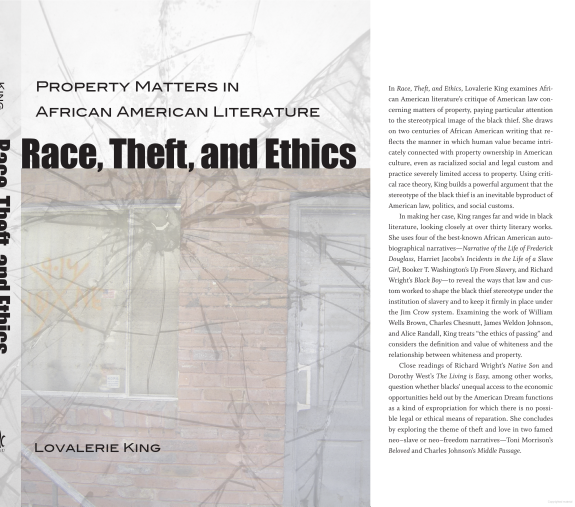
In Race, Theft, and Ethics, Lovalerie King examines African American literature's critique of American law concerning matters of property, paying particular attention to the stereotypical image of the black thief. She draws on two centuries of African American writing that reflects the manner in which human value became intricately connected with property ownership in American culture, even as racialized social and legal custom and practice severely limited access to property. Using critical race theory, King builds a powerful argument that the stereotype of the black thief is an inevitable byproduct of American law, politics, and social customs. In making her case, King ranges far and wide in black literature, looking closely at over thirty literary works. She uses four of the best-known African American autobiographical narratives -- Narrative of the Life of Frederick Douglass, Harriet Jacobs's Incidents in the Life of a Slave Girl, Booker T. Washington's Up From Slavery, and Richard Wright's Black Boy -- to reveal the ways that law and custom worked to shape the black thief stereotype under the institution of slavery and to keep it firmly in place under the Jim Crow system. Examining the work of William Wells Brown, Charles Chesnutt, James Weldon Johnson, and Alice Randall, King treats "the ethics of passing" and considers the definition and value of whiteness and the relationship between whiteness and property. Close readings of Richard Wright's Native Son and Dorothy West's The Living is Easy, among other works, question whether blacks' unequal access to the economic opportunities held out by the American Dream functions as a kind of expropriation for which there is no possible legal or ethical means of reparation. She concludes by exploring the theme of theft and love in two famed neo--slave or neo--freedom narratives -- Toni Morrison's Beloved and Charles Johnson's Middle Passage. Race, Theft, and Ethics shows how African American literature deals with the racialized history of unequal economic opportunity in highly complex and nuanced ways, and illustrates that, for many authors, an essential aspect of their work involved contemplating the tensions between a given code of ethics and a moral course of action. A deft combination of history, literature, law and economics, King's groundbreaking work highlights the pervasiveness of the property/race/ethics dynamic in the interfaces of African American lives with American law.