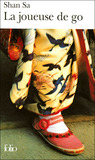
La Joueuse de go
by Shan Sa
325 pages· 2003· ISBN 9782070424191
About
In war-torn Manchuria of the 1930s, two lives briefly find peace over a game of go in Shan Sa's third novel, The Girl Who Played Go (translated by Adriana Hunter). The unnamed characters, a Japanese soldier stationed in China and a 16-year-old Manchurian girl, narrate their stories in alternating first-person chapters. For the girl, the struggles of Independent Manchuria take a back seat to her discovery of love and the awakening of her sexuality. For the soldier, his idealized dreams of samurai honor and imperial conquest are slowly displaced by homesickness, troubled recollections of his earthquake-torn youth, and remorse over a lost love. But the solitary concerns of each character are eventually submerged by the tides of war. The girl's first lover, Min, is a revolutionary. His ardor for his virgin conquest is matched by a doomed patriotism. Simultaneously, the soldier comes to relish the girl's home town, Thousand Winds, in Southern Manchuria, and becomes distrustful of his own nationalism. His daily games of go with the young female stranger awaken a new passion in him that becomes entwined with admiration for her aggressive play.
As they hardly speak, the soldier and the girl's views of each other remain clouded in Sa's technically facile narrative maneuvers. Where the soldier sees love, the girls sees escape. By maintaining the first person, Sa (winner of the French Prix Goncourt du Premier) leads the reader not only to experience the Japanese and Manchurian perspectives of the occupation, but also she offers glimpses into the deep failure inherent in cross-cultural and cross-generational communication. Couple with the rich historical detail, Sa's narrative games reward close reading amidst the briskly paced spiral into tragedy. --Patrick O'Kelley
As they hardly speak, the soldier and the girl's views of each other remain clouded in Sa's technically facile narrative maneuvers. Where the soldier sees love, the girls sees escape. By maintaining the first person, Sa (winner of the French Prix Goncourt du Premier) leads the reader not only to experience the Japanese and Manchurian perspectives of the occupation, but also she offers glimpses into the deep failure inherent in cross-cultural and cross-generational communication. Couple with the rich historical detail, Sa's narrative games reward close reading amidst the briskly paced spiral into tragedy. --Patrick O'Kelley
Discuss La Joueuse de go with other readers
Join or start a book club for La Joueuse de go on Readfeed. Live chat, shared reading progress, and AI discussion questions — free to get started.
Frequently asked questions
How do I join a book club for La Joueuse de go?
Sign up free on Readfeed, then browse public clubs or start your own club with La Joueuse de go as the current read. Invite friends with a share link and discuss together with live chat and AI discussion questions.
Can I discuss La Joueuse de go with other readers online?
Yes. Readfeed book clubs let you chat live, share progress, and join discussions about La Joueuse de go with readers worldwide — whether your club is virtual, in-person, or hybrid.
Is Readfeed free?
Yes. Creating an account and joining book clubs is free. Sign up to find readers who love the same books and start discussing today.