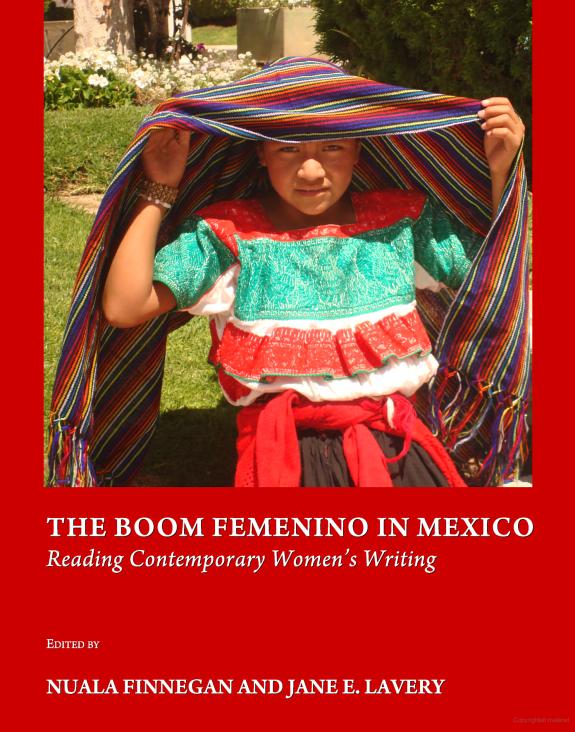
The Boom Femenino in Mexico

The Boom Femenino in Mexico

Reading Contemporary Women’s Writing

by Nuala Finnegan, Jane E. Lavery

370 pages· 2010· ISBN 9781443821810

Browse books you can read free on Readfeed

No club is reading this yet — be the first to start one

Start a club free
About
The Boom Femenino in Mexico: Reading Contemporary Women’s Writing is a collection of essays that focuses on literary production by women in Mexico over the last three decades. In its exploration of the boom femenino phenomenon, the book traces the history of the earlier boom in Latin American culture and investigates the implications of the use of the same term in the context of contemporary women’s writing from Mexico. In this way it engages critically with the cultural, historical and literary significance of the term illuminating the concept for a wide range of readers. It is clear that the entry of so many women writers into an arena traditionally reserved for men has prompted discussion around concepts such as ‘women’s writing’ and the very definition of ‘literature’ itself. Many of the contributors grapple with the theoretical tensions that such debates provoke offering an important opportunity to think critically about the texts produced during this period and the ways in which they have impacted on the Mexican and international cultural spheres. The project is comprehensive in its scope and, for the first time, brings together scholars from Mexico, the U.S. and Europe in a transnational forum. The book posits that despite certain aesthetic and thematic commonalities, the increased output by women writers in Mexico cannot be appraised as a unified literary movement. Instead it embraces a wide range of different generic forms and the subjects under study in the essays in the book include the best-selling work of Ángeles Mastretta, Elena Poniatowska and Laura Esquivel as well as the social and political preoccupations of journalists, Rosanna Reguillo and Cristina Pacheco. Contributors offer readings of the aesthetic visions of writers as diverse as Carmen Boullosa, Ana García Bergua, and Eve Gil while other essays examine the nuances of contemporary gender identity in the work of Ana Clavel, Sabina Berman, Brianda Domecq and María Luisa Puga. There are essays devoted to poetry by indigenous Mayan women and an analysis of the complex place of poetry within the broader framework of literary production. The problems that emerge as a result of literary cataloguing based on gender politics are also considered at length in a number of essays that take a panoramic view of literary production over the period. Various critical approaches are employed throughout and the collection as a whole demonstrates that academic interest in Mexican women’s writing of the boom femenio is thriving. Above all, the essays here provide a space in which the location of women within prevailing cultural paradigms in Mexico and their role in the mapping of power in evolving textual canons may be interrogated. It is clear from the collection that interest in such issues is still alive and that the debate is far from over.

Discuss The Boom Femenino in Mexico with other readers

Join or start a book club for The Boom Femenino in Mexico on Readfeed. Live chat, shared reading progress, and AI discussion questions — free to get started.

Frequently asked questions

How do I join a book club for The Boom Femenino in Mexico?

Sign up free on Readfeed, then browse public clubs or start your own club with The Boom Femenino in Mexico as the current read. Invite friends with a share link and discuss together with live chat and AI discussion questions.

Can I discuss The Boom Femenino in Mexico with other readers online?

Yes. Readfeed book clubs let you chat live, share progress, and join discussions about The Boom Femenino in Mexico with readers worldwide — whether your club is virtual, in-person, or hybrid.

Is Readfeed free?

Yes. Creating an account and joining book clubs is free. Sign up to find readers who love the same books and start discussing today.