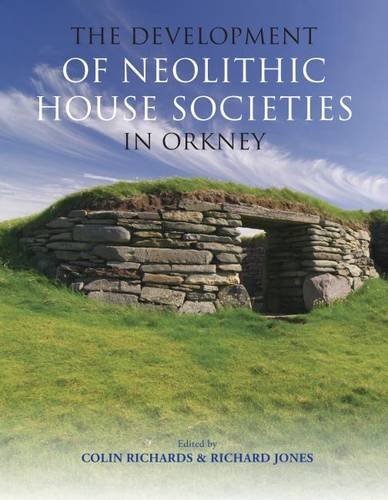
The Development of Neolithic House Societies in Orkney: Investigations in the Bay of Firth, Mainland, Orkney (1994-2014)

The Development of Neolithic House Societies in Orkney: Investigations in the Bay of Firth, Mainland, Orkney (1994-2014)

by Colin Richards, Richard Jones

512 pages· 2016· ISBN 9781909686892
About
Considering that Orkney is a group of relatively small islands lying off the northeast coast of the Scottish mainland, its wealth of Neolithic archaeology is truly extraordinary. An assortment of houses, chambered cairns, stone circles, standing stones and passage graves provides an unusually comprehensive range of archaeological and architectural contexts. Yet, in the early 1990s, there was a noticeable imbalance between 4th and 3rd millennium cal BC evidence, with house structures, and ‘villages' being well represented in the latter but minimally in the former. As elsewhere in the British Isles, the archaeological visibility of the 4th millennium cal BC in Orkney tends to be dominated by the monumental presence of chambered cairns or tombs. In the 1970s Claude Levi-Strauss conceived of a form of social organization based upon the ‘house' - societes a maisons - in order to provide a classification for social groups that appeared not to conform to established anthropological kinship structures. In this approach, the anchor point is the ‘house', understood as a conceptual resource that is a consequence of a strategy of constructing and legitimizing identities under ever shifting social conditions. Drawing on the results of an extensive program of fieldwork in the Bay of Firth, Mainland Orkney, the text explores the idea that the physical appearance of the house is a potent resource for materializing the dichotomous alliance and descent principles apparent in the archaeological evidence for the early and later Neolithic of Orkney. It argues that some of the insights made by Levi-Strauss in his basic formulation of societes a maisons are extremely relevant to interpreting the archaeological evidence and providing the parameters for a ‘social' narrative of the material changes occurring in Orkney between the 4th and 2nd millennia cal BC. The major excavations undertaken during the Cuween-Wideford Landscape Project provided an unprecedented depth and variety of evidence for Neolithic occupation, bridging the gap between domestic and ceremonial architecture and form, exploring the transition from wood to stone and relationships between the living and the dead and the role of material culture. The results are described and discussed in detail here, enabling tracing of the development and fragmentation of societes a maisons over a 1500 year period of Northern Isles prehistory.

Discuss The Development of Neolithic House Societies in Orkney: Investigations in the Bay of Firth, Mainland, Orkney (1994-2014) with other readers

Join or start a book club for The Development of Neolithic House Societies in Orkney: Investigations in the Bay of Firth, Mainland, Orkney (1994-2014) on Readfeed. Live chat, shared reading progress, and AI discussion questions — free to get started.

Frequently asked questions

How do I join a book club for The Development of Neolithic House Societies in Orkney: Investigations in the Bay of Firth, Mainland, Orkney (1994-2014)?

Sign up free on Readfeed, then browse public clubs or start your own club with The Development of Neolithic House Societies in Orkney: Investigations in the Bay of Firth, Mainland, Orkney (1994-2014) as the current read. Invite friends with a share link and discuss together with live chat and AI discussion questions.

Can I discuss The Development of Neolithic House Societies in Orkney: Investigations in the Bay of Firth, Mainland, Orkney (1994-2014) with other readers online?

Yes. Readfeed book clubs let you chat live, share progress, and join discussions about The Development of Neolithic House Societies in Orkney: Investigations in the Bay of Firth, Mainland, Orkney (1994-2014) with readers worldwide — whether your club is virtual, in-person, or hybrid.

Is Readfeed free?

Yes. Creating an account and joining book clubs is free. Sign up to find readers who love the same books and start discussing today.