Remote Sensor Monitoring by Radio with Arduino: Detecting Intruders, Fires, Flammable and Toxic Gases, and other Hazards at a Distance

Remote Sensor Monitoring by Radio with Arduino: Detecting Intruders, Fires, Flammable and Toxic Gases, and other Hazards at a Distance

by Mr. David Leithauser

124 pages· 2016· ISBN 9781534640559

Browse books you can read free on Readfeed

No club is reading this yet — be the first to start one

Start a club free
About
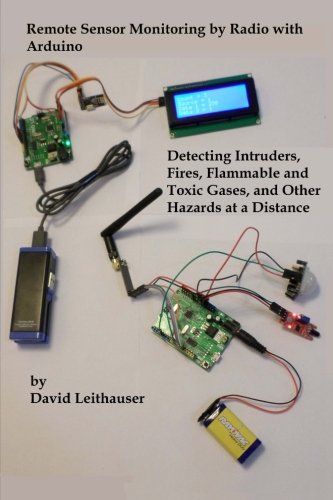
This book is about connecting sensors and radio transceivers to an Arduino so that you can monitor the sensor readings from a distance. You can put the Arduino sensor package miles away from the receiving station, in your front or back yard, or even in your home like your basement or attic. Although the techniques described in this book will work with any type of sensor input, the book will focus on sensors that detect potentially dangerous or disruptive conditions. These will include intruders, fires, flammable gas leaks and other toxic gases like pollution, power failures, floods (including minor “floods” like a pipe bursting), and other hazards. For the radio communications, we will use the nRF24L01 transceiver chip. This inexpensive chip (usually around $1.00 on EBay) interfaces easily with the Arduino and can both transmit and receive data. It has an advertised range of 100 meters (about 328 feet) for the basic unit, although in actual practice it may be closer to 30 meters (about 98 feet). However, with an optional antenna the range is reported to be 1,000 meters (1 km, about .6 miles). In the first five chapters, I explain the hardware and software aspects of this handy transceiver, enabling you to set up the communications. I even explain how to set up repeater transmitters that can relay the signal from locations beyond the 1 km range. In the chapters after these five chapters, I discuss attaching and operating various analog and digital sensors, explaining how to set them up and integrate them into the transmission software. The chapters will be divided by hazards you can monitor, not specific sensors, so one chapter may include several different types of sensors that can be used to detect the same hazard.

Discuss Remote Sensor Monitoring by Radio with Arduino: Detecting Intruders, Fires, Flammable and Toxic Gases, and other Hazards at a Distance with other readers

Join or start a book club for Remote Sensor Monitoring by Radio with Arduino: Detecting Intruders, Fires, Flammable and Toxic Gases, and other Hazards at a Distance on Readfeed. Live chat, shared reading progress, and AI discussion questions — free to get started.

Frequently asked questions

How do I join a book club for Remote Sensor Monitoring by Radio with Arduino: Detecting Intruders, Fires, Flammable and Toxic Gases, and other Hazards at a Distance?

Sign up free on Readfeed, then browse public clubs or start your own club with Remote Sensor Monitoring by Radio with Arduino: Detecting Intruders, Fires, Flammable and Toxic Gases, and other Hazards at a Distance as the current read. Invite friends with a share link and discuss together with live chat and AI discussion questions.

Can I discuss Remote Sensor Monitoring by Radio with Arduino: Detecting Intruders, Fires, Flammable and Toxic Gases, and other Hazards at a Distance with other readers online?

Yes. Readfeed book clubs let you chat live, share progress, and join discussions about Remote Sensor Monitoring by Radio with Arduino: Detecting Intruders, Fires, Flammable and Toxic Gases, and other Hazards at a Distance with readers worldwide — whether your club is virtual, in-person, or hybrid.

Is Readfeed free?

Yes. Creating an account and joining book clubs is free. Sign up to find readers who love the same books and start discussing today.