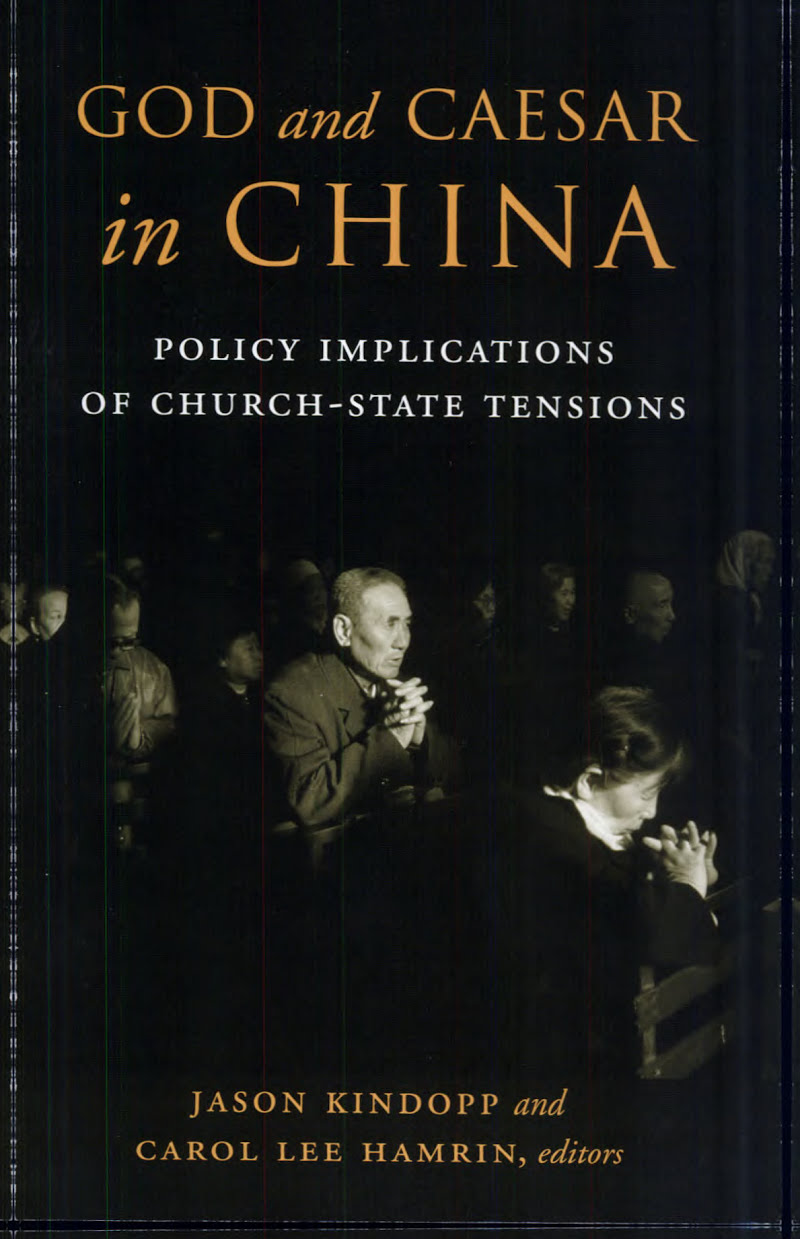
In the late 1970s when Mao's Cultural Revolution ushered in China's reform era, religion played a small role in the changes the country was undergoing. There were few symbols of religious observance, and the practice of religion seemed a forgotten art. Yet by the new millennium, China's government reported that more than 200 million religious believers worshiped in 85,000 authorized venues, and estimates by outside observers continue to rise. The numbers tell the story: Buddhists, as in the past, are most numerous, with more than 100 million adherents. Muslims number 18 million with the majority concentrated in the northwest region of Xinjiang. By 2000 China's Catholic population had swelled from 3 million in 1949 to more than 12 million, surpassing the number of Catholics in Ireland. Protestantism in China has grown at an even faster pace during the same period, multiplying from 1 million to at least 30 million followers. China now has the world's second-largest evangelical Christian population—behind only the United States. In addition, a host of religious and quasi-spiritual groups and sects has also sprouted up in virtually every corner of Chinese society. Religion's dramatic revival in post-Mao China has generated tensions between the ruling Communist Party state and China's increasingly diverse population of religious adherents. Such tensions are rooted in centuries-old governing practices and reflect the pressures of rapid modernization. The state's response has been a mixture of accommodation and repression, with the aim of preserving monopoly control over religious organization. Its inability to do so effectively has led to cycles of persecution of religious groups that resist the party's efforts. American concern over official acts of religious persecution has become a leading issue in U.S. policy toward China. The passage of the 1998 International Religious Freedom Act, which institutionalized concern over religious freedom abroad in U.S. foreign policy, cemented this issue as an item on the agenda of U.S.-China relations. God and Caesar in China examines China's religion policy, the history and growth of Catholic and Protestant churches in China, and the implications of church-state friction for relations between the United States and China, concluding with recommendations for U.S. policy. Contributors include Jason Kindopp (George Washington University), Daniel H. Bays (Calvin College), Mickey Spiegel (Human Rights Watch), Chan Kim-kwong (Hong Kong Christian Council), Jean-Paul Wiest (Chinese University of Hong Kong), Richard Madsen (University of California, San Diego), Xu Yihua (Fudan University), Liu Peng (Chinese Academy of Social Sciences), and Carol Lee Hamrin (George Mason University).