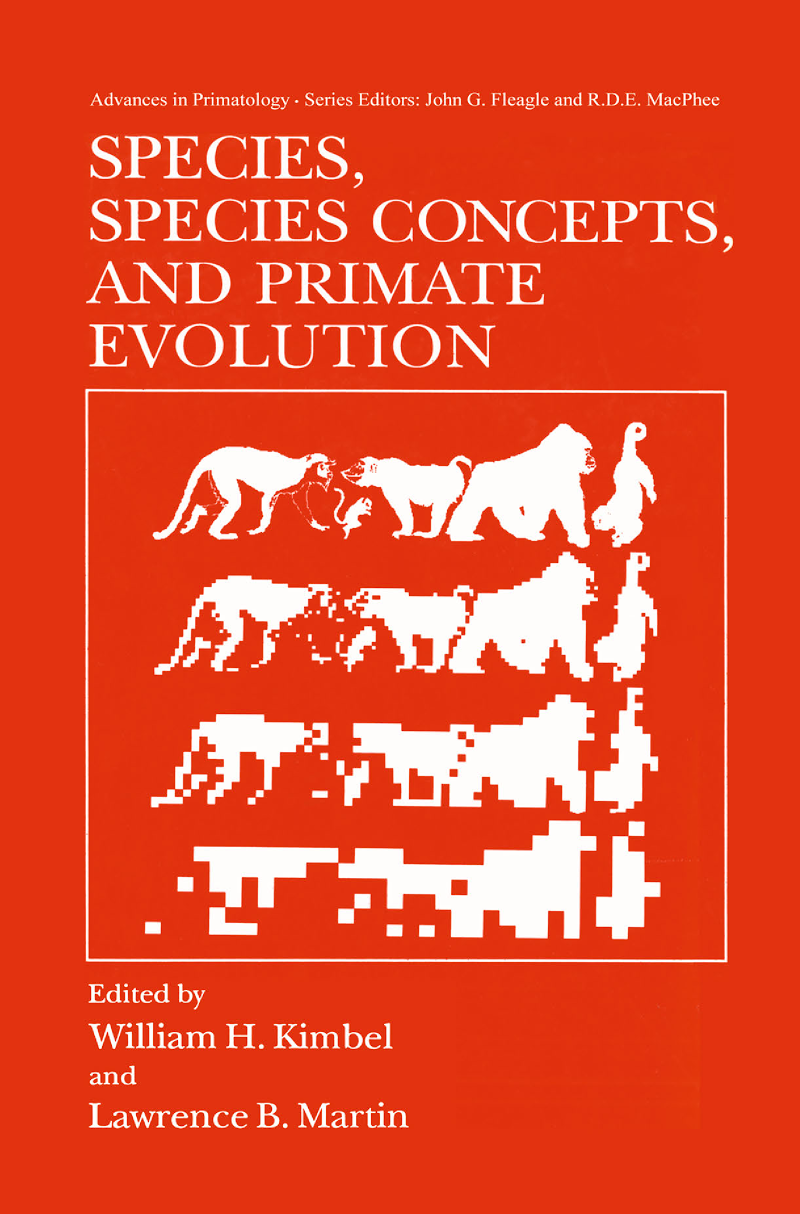
Species, Species Concepts and Primate Evolution

Species, Species Concepts and Primate Evolution

by William H. Kimbel, Lawrence B. Martin

560 pages· 2013· ISBN 9781489937452
About
A world of categones devmd of spirit waits for life to return. Saul Bellow, Humboldt's Gift The stock-in-trade of communicating hypotheses about the historical path of evolution is a graphical representation called a phylogenetic tree. In most such graphics, pairs of branches diverge from other branches, successively marching across abstract time toward the present. To each branch is tied a tag with a name, a binominal symbol that functions as does the name given to an individual human being. On phylogenetic trees the names symbolize species. What exactly do these names signify? What kind of information is communicated when we claim to have knowledge of the following types? "Tetonius mathewzi was ancestral to Pseudotetonius ambiguus. " "The sample of fossils attributed to Homo habzlis is too variable to contain only one species. " "Interbreeding populations of savanna baboons all belong to Papio anubis. " "Hylobates lar and H. pileatus interbreed in zones of geographic overlap. " While there is nearly universal agreement that the notion of the speczes is fundamental to our understanding of how evolution works, there is a very wide range of opinion on the conceptual content and meaning of such particular statements regarding species. This is because, oddly enough, evolutionary biolo gists are quite far from agreement on what a species is, how it attains this status, and what role it plays in evolution over the long term.

Discuss Species, Species Concepts and Primate Evolution with other readers

Join or start a book club for Species, Species Concepts and Primate Evolution on Readfeed. Live chat, shared reading progress, and AI discussion questions — free to get started.

Frequently asked questions

How do I join a book club for Species, Species Concepts and Primate Evolution?

Sign up free on Readfeed, then browse public clubs or start your own club with Species, Species Concepts and Primate Evolution as the current read. Invite friends with a share link and discuss together with live chat and AI discussion questions.

Can I discuss Species, Species Concepts and Primate Evolution with other readers online?

Yes. Readfeed book clubs let you chat live, share progress, and join discussions about Species, Species Concepts and Primate Evolution with readers worldwide — whether your club is virtual, in-person, or hybrid.

Is Readfeed free?

Yes. Creating an account and joining book clubs is free. Sign up to find readers who love the same books and start discussing today.