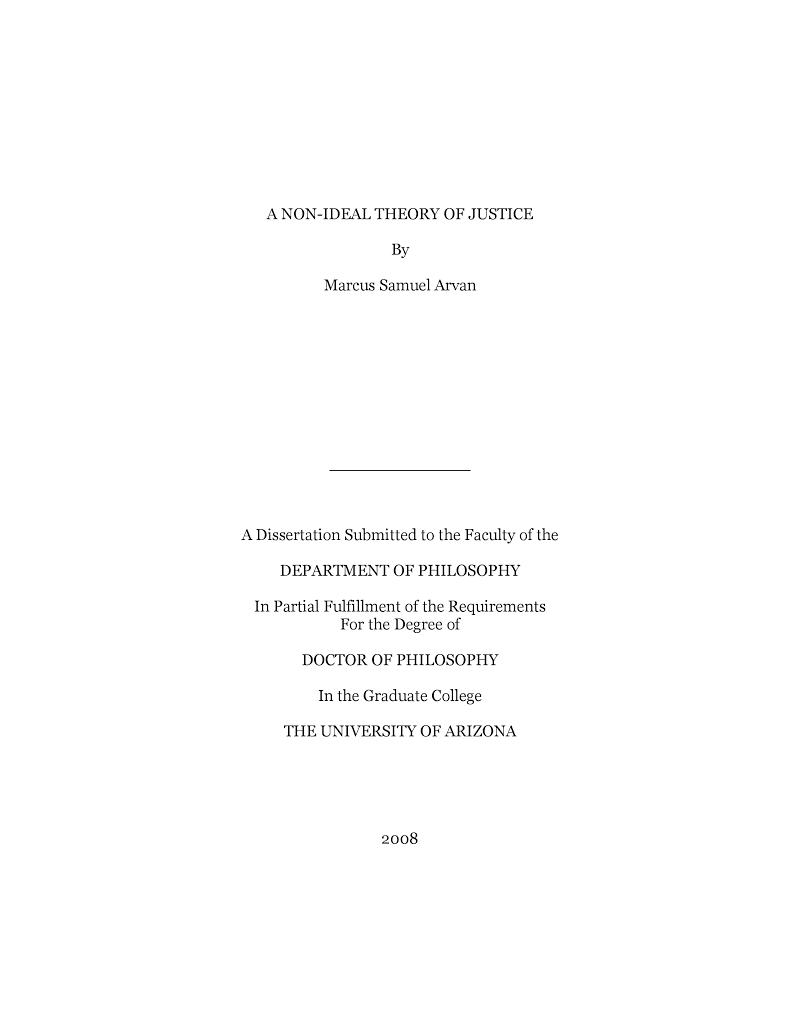
A Non-ideal Theory of Justice
276 pages· 2008· ISBN 9780549793212
About
This dissertation constructs a "non-ideal theory" of justice: a systematic theory of how to respond justly to injustice. Chapter 1 argues that contemporary political philosophy lacks a non-ideal theory of justice, and defends a variation of John Rawls' famous original position--the Non-Ideal Original Position--as a method with which to construct such a theory. Finally, Chapter 1 uses the Non-Ideal Original Position to argue for a Fundamental Principle of Non-Ideal Theory: a principle that requires injustices to be dealt with in whichever way will best satisfy the preferences of all relevant individuals, provided those individuals are all rational, adequately informed, broadly moral, and accept the correct "ideal theory" of fully just conditions. Chapter 2 then argues for the Principle of Application--an epistemic principle that represents the Fundamental Principle's satisfaction conditions in terms of the aims of actual or hypothetical reformist groups. Chapters 3-5 then use these two principles to argue for substantive views regarding global/international justice. Chapter 3 argues that the two principles establish a higher-order human right for all other human rights to promoted and protected in accordance with the two principles of non-ideal theory. Chapter 4 argues that the two principles defeasibly require the international community to tolerate unjust societies, provided those societies respect the most basic rights of individuals. Finally, Chapter 5 argues that the two principles imply a duty of the international community to ameliorate severe poverty, as well as a duty to implement "fair trade" practices in international economics.
Discuss A Non-ideal Theory of Justice with other readers
Join or start a book club for A Non-ideal Theory of Justice on Readfeed. Live chat, shared reading progress, and AI discussion questions — free to get started.
Frequently asked questions
How do I join a book club for A Non-ideal Theory of Justice?
Sign up free on Readfeed, then browse public clubs or start your own club with A Non-ideal Theory of Justice as the current read. Invite friends with a share link and discuss together with live chat and AI discussion questions.
Can I discuss A Non-ideal Theory of Justice with other readers online?
Yes. Readfeed book clubs let you chat live, share progress, and join discussions about A Non-ideal Theory of Justice with readers worldwide — whether your club is virtual, in-person, or hybrid.
Is Readfeed free?
Yes. Creating an account and joining book clubs is free. Sign up to find readers who love the same books and start discussing today.