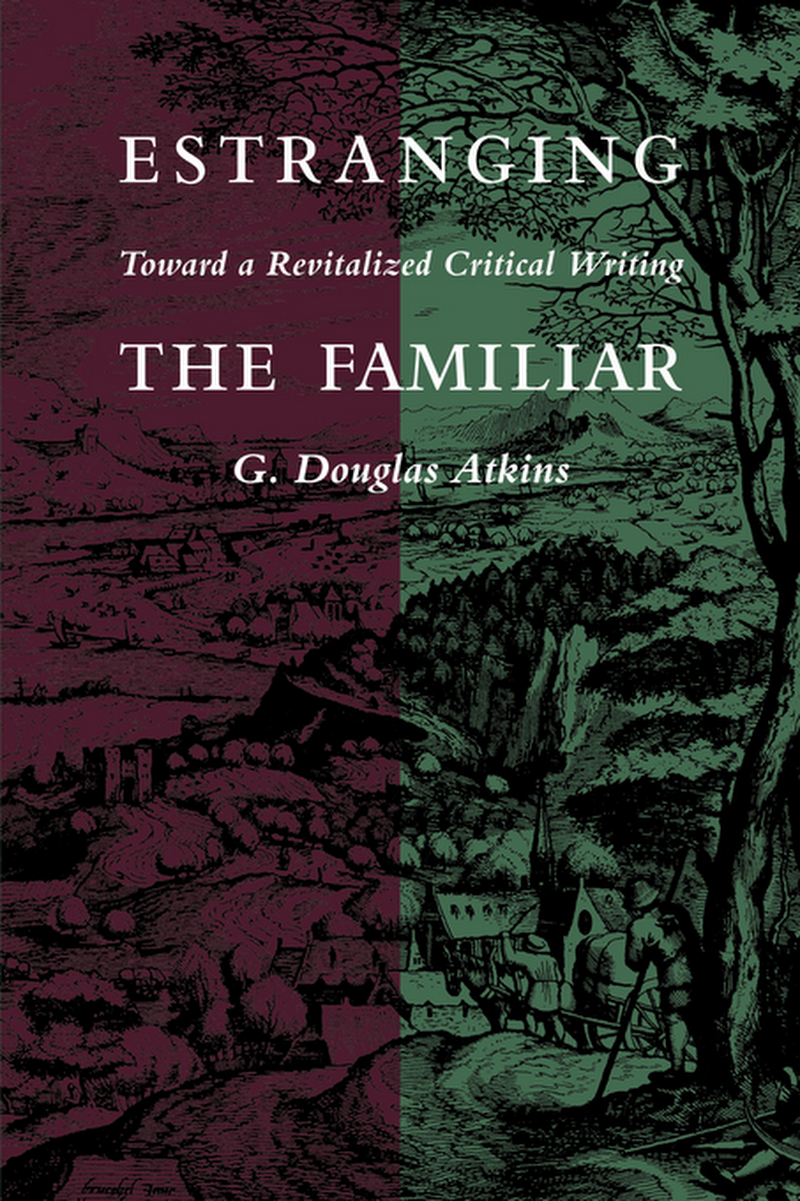
In Estranging the Familiar, G. Douglas Atkins addresses the often lamented state of scholarly and critical writing as he argues for a criticism that is at once theoretically informed and personal. The revitalized critical writing he advocates may entail--but is not limited to--a return to the essay, the form critical writing once took and the form that is now enjoying a resurgence of popularity and excellence. Atkins contends that to reach a general audience, criticism must move away from the impersonality of modern criticism and contemporary theory without embracing the old-fashioned essay. "The venerable familiar essay may remain the basis," Atkins writes, "but its conventional openness, receptivity, and capaciousness must extend to theory, philosophy, and the candor that seems to mark the tail-end of the twentieth century." In noting the timeliness, if not the necessity, of a return to the essay, Atkins also considers our culture's parallel "return to the personal." When the essay combines good writing with the concerns of the personal, Atkins says, it becomes a form of criticism that is readable, vital, and potentially attractive to a large readership. Atkins hopes critics will tap into the revitalized interest the essay now enjoys without ignoring the considerable insights and advances of contemporary theory. He argues that despite claims to the contrary there is no inherent incompatibility between the essay and modern theory. As Atkins considers various experiments in critical writing from Plato to the present, notably feminist interest in the personal and autobiographical, he contends that these attempts, although undeniably important, fall short of the desired goal when they emphasize the merely expressive and neglect the artful quality good writing can bring to personal criticism. The final third of the book consists of a series of experiments in critical writing that represent the author's own attempts to bridge the gap between theory and popular criticism, between an academic and a general audience. In essays that illustrate the rhetorical power of the form, Atkins describes the reciprocal relationship between his life experience and a reading of The Odyssey, explains the role that theory has played in his personal development, and chronicles his attempts to find a voice as a writer.