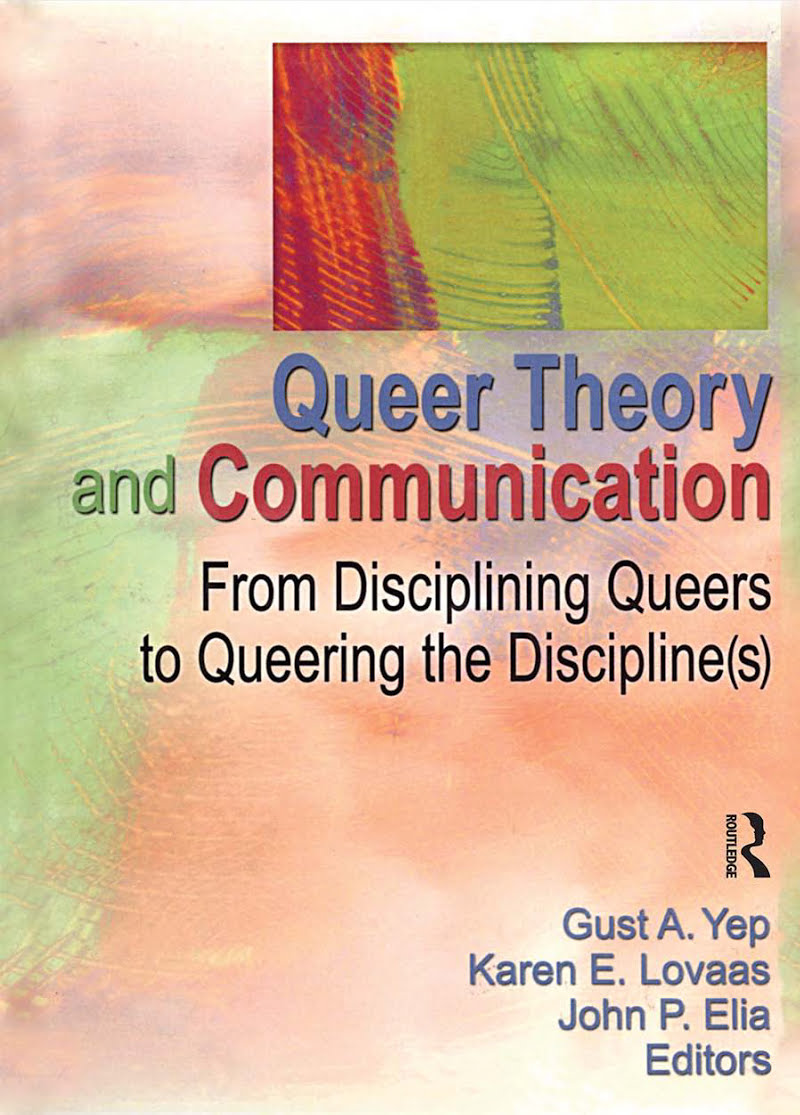
Get a queer perspective on communication theory! Queer Theory and Communication: From Disciplining Queers to Queering the Discipline(s) is a conversation starter, sparking smart talk about sexuality in the communication discipline and beyond. Edited by members of “The San Francisco Radical Trio,” the book integrates current queer theory, research, and interventions to create a critical lens with which to view the damaging effects of heteronormativity on personal, social, and cultural levels, and to see the possibilities for change through social and cultural transformation. Queer Theory and Communication represents a commitment to positive social change by imagining different social realities and sharing ideas, passions, and lived experiences. As the communication discipline begins to recognize queer theory as a vital and viable intellectual movement equal to that of Gay and Lesbian studies, the opportunity is here to take current queer scholarship beyond conference papers and presentations. Queer Theory and Communication has five objectives: 1) to integrate and disseminate current queer scholarship to a larger audience-academic and nonacademic; 2) to examine the potential implications of queer theory in human communication theory and research in a variety of contexts; 3) to stimulate dialogue among queer scholars; 4) to set a preliminary research agenda; and 5) to explore the implications of the scholarship in cultural politics and personal empowerment and transformation. Queer Theory and Communication boasts an esteemed panel of academics, artists, activists, editors, and essayists. Contributors include: John Nguyet Erni, editor of Asian Media Studies and Research & Analysis Program Board member for GLAAD Joshua Gamson, author of Freaks Talk Back: Tabloid Talk Shows and Sexual Nonconformity Sally Miller Gerahart, author, activist, and actress Judith Halberstam, author of Female Masculinity David M. Halperin, author of How to Do the History of Homosexuality E. Patrick Johnson, editor of Black Queer Studies Kevin Kumashiro, author of Troubling Education: Queer Activism and Antioppressive Pedagogy Thomas Nakayama, co-editor of Whiteness: The Communication of Social Identity A. Susan Owen, author of Bad Girls: Cultural Politics and Media Representations of Transgressive Women William F. Pinar, author of Autobiography, Politics, and Sexuality, and editor of Queer Theory in Education Ralph Smith, co-author of Progay/antigay: The Rhetorical War over Sexuality Queer Theory and Communication: From Disciplining Queers to Queering the Discipline(s) is an essential addition to the critical consciousness of anyone involved in communication, media studies, cultural studies, gender studies, and the study of human sexuality, whether in the classroom, the boardroom, or the bedroom.