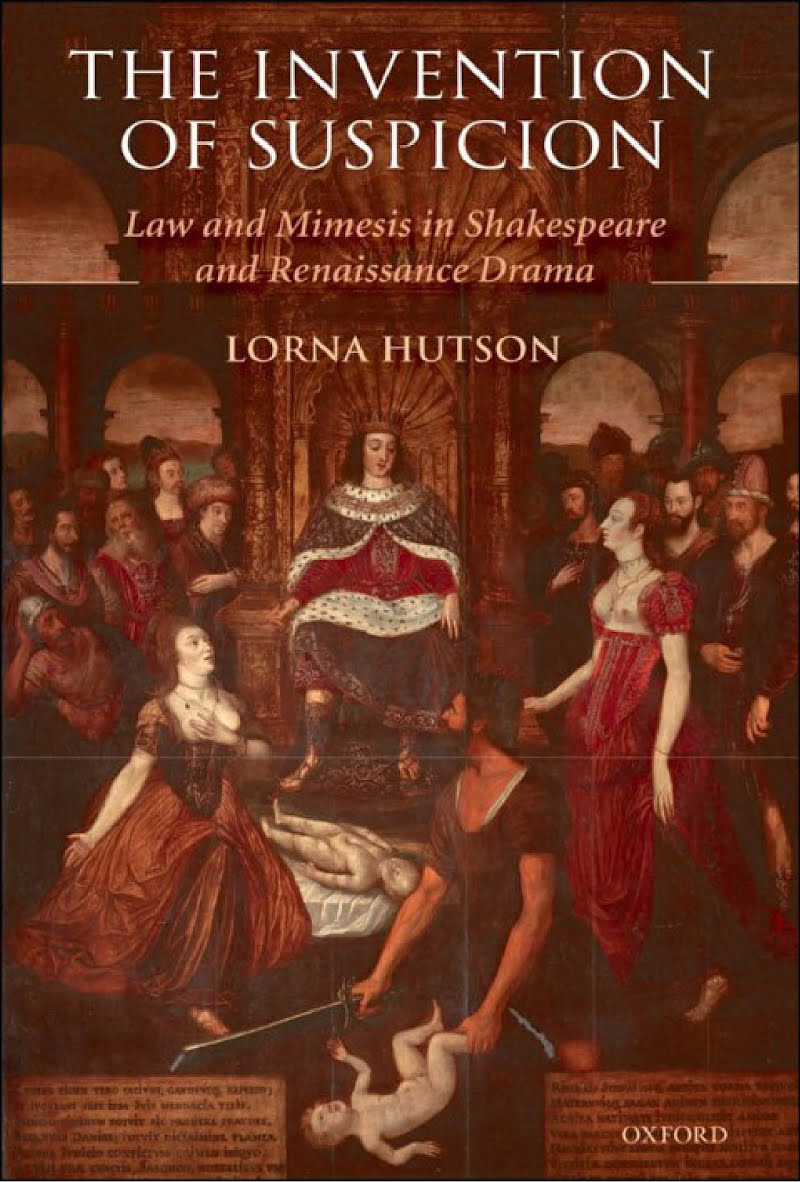
The Invention of Suspicion

The Invention of Suspicion

Law and Mimesis in Shakespeare and Renaissance Drama

by Lorna Hutson

392 pages· 2011· ISBN 9780191615894

Browse books you can read free on Readfeed

No club is reading this yet — be the first to start one

Start a club free
About
The Invention of Suspicion argues that the English justice system underwent changes in the sixteenth century that, because of the system's participatory nature, had a widespread effect and a decisive impact on the development of English Renaissance drama. These changes gradually made evidence evaluation a popular skill: justices of peace and juries were increasingly required to weigh up the probabilities of competing narratives of facts. At precisely the same time, English dramatists were absorbing, from Latin legal rhetoric and from Latin comedy, poetic strategies that enabled them to make their plays more persuasively realistic, more 'probable'. The result of this enormously rich conjunction of popular legal culture and ancient forensic rhetoric was a drama in which dramatis personae habitually gather evidence and 'invent' arguments of suspicion and conjecture about one another, thus prompting us, as readers and audience, to reconstruct this 'evidence' as stories of characters' private histories and inner lives. In this drama, people act in uncertainty, inferring one another's motives and testing evidence for their conclusions. As well as offering an overarching account of how changes in juridical epistemology relate to post-Reformation drama, this book examines comic dramatic writing associated with the Inns of Court in the overlooked decades of the 1560s and 70s. It argues that these experiments constituted an influential sub-genre, assimilating the structures of Roman comedy to current civic and political concerns with the administration of justice. This sub-genre's impact may be seen in Shakespeare's early experiments in revenge tragedy, history play and romance comedy, in Titus Andronicus, Henry VI and The Comedy of Errors, as well as Jonson's Every Man in his Humour, Bartholomew Fair and The Alchemist. The book ranges from mid-fifteenth century drama, through sixteenth century interludes to the drama of the 1590s and 1600s. It draws on recent research by legal historians, and on a range of legal-historical sources in print and manuscript.

Discuss The Invention of Suspicion with other readers

Join or start a book club for The Invention of Suspicion on Readfeed. Live chat, shared reading progress, and AI discussion questions — free to get started.

Frequently asked questions

How do I join a book club for The Invention of Suspicion?

Sign up free on Readfeed, then browse public clubs or start your own club with The Invention of Suspicion as the current read. Invite friends with a share link and discuss together with live chat and AI discussion questions.

Can I discuss The Invention of Suspicion with other readers online?

Yes. Readfeed book clubs let you chat live, share progress, and join discussions about The Invention of Suspicion with readers worldwide — whether your club is virtual, in-person, or hybrid.

Is Readfeed free?

Yes. Creating an account and joining book clubs is free. Sign up to find readers who love the same books and start discussing today.