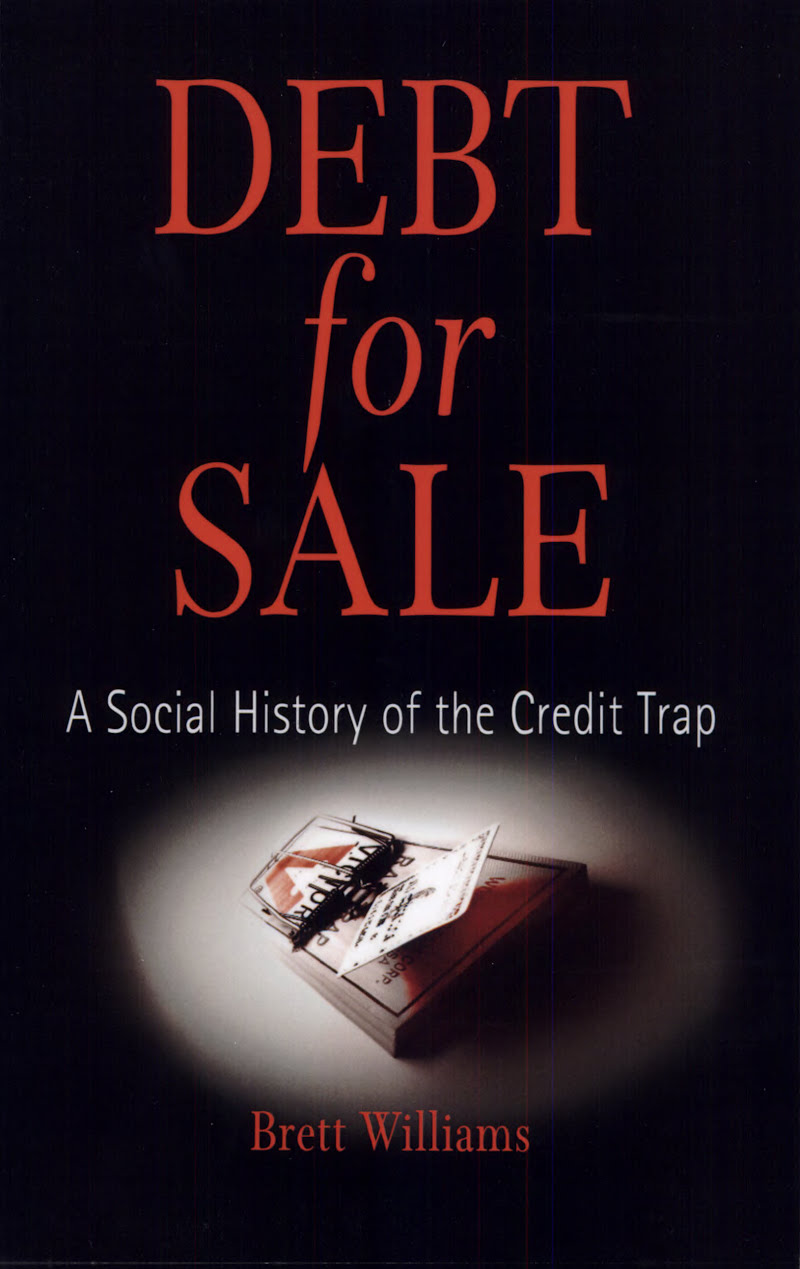
Credit and debt appear to be natural, permanent facets of Americans' lives, but a debt-based economy and debt-financed lifestyles are actually recent inventions. In 1951 Diners Club issued a plastic card that enabled patrons to pay for their meals at select New York City restaurants at the end of each month. Soon other "charge cards" (as they were then known) offered the convenience for travelers throughout the United States to pay for hotels, food, and entertainment on credit. In the 1970s the advent of computers and the deregulation of banking created an explosion in credit card use--and consumer debt. With gigantic national banks and computer systems that allowed variable interest rates, consumer screening, mass mailings, and methods to discipline slow payers with penalties and fees, middle-class Americans experienced a sea change in their lives. Given the enormous profits from issuing credit, banks and chain stores used aggressive marketing to reach Americans experiencing such crises as divorce or unemployment, to help them make ends meet or to persuade them that they could live beyond their means. After banks exhausted the profits from this group of people, they moved into the market for college credit cards and student loans and then into predatory lending (through check-cashing stores and pawnshops) to the poor. In 2003, Americans owed nearly $8 trillion in consumer debt, amounting to 130 percent of their average disposable income. The role of credit and debt in people's lives is one of the most important social and economic issues of our age. Brett Williams provides a sobering and frank investigation of the credit industry and how it came to dominate the lives of most Americans by propelling the social changes that are enacted when an economy is based on debt. Williams argues that credit and debt act to obscure, reproduce, and exacerbate other inequalities. It is in the best interest of the banks, corporations, and their shareholders to keep consumer debt at high levels. By targeting low-income and young people who would not be eligible for credit in other businesses, these companies are able quickly to gain a stranglehold on the finances of millions. Throughout, Williams provides firsthand accounts of how Americans from all socioeconomic levels use credit. These vignettes complement the history and technical issues of the credit industry, including strategies people use to manage debt, how credit functions in their lives, how they understand their own indebtedness, and the sometimes tragic impact of massive debt on people's lives.