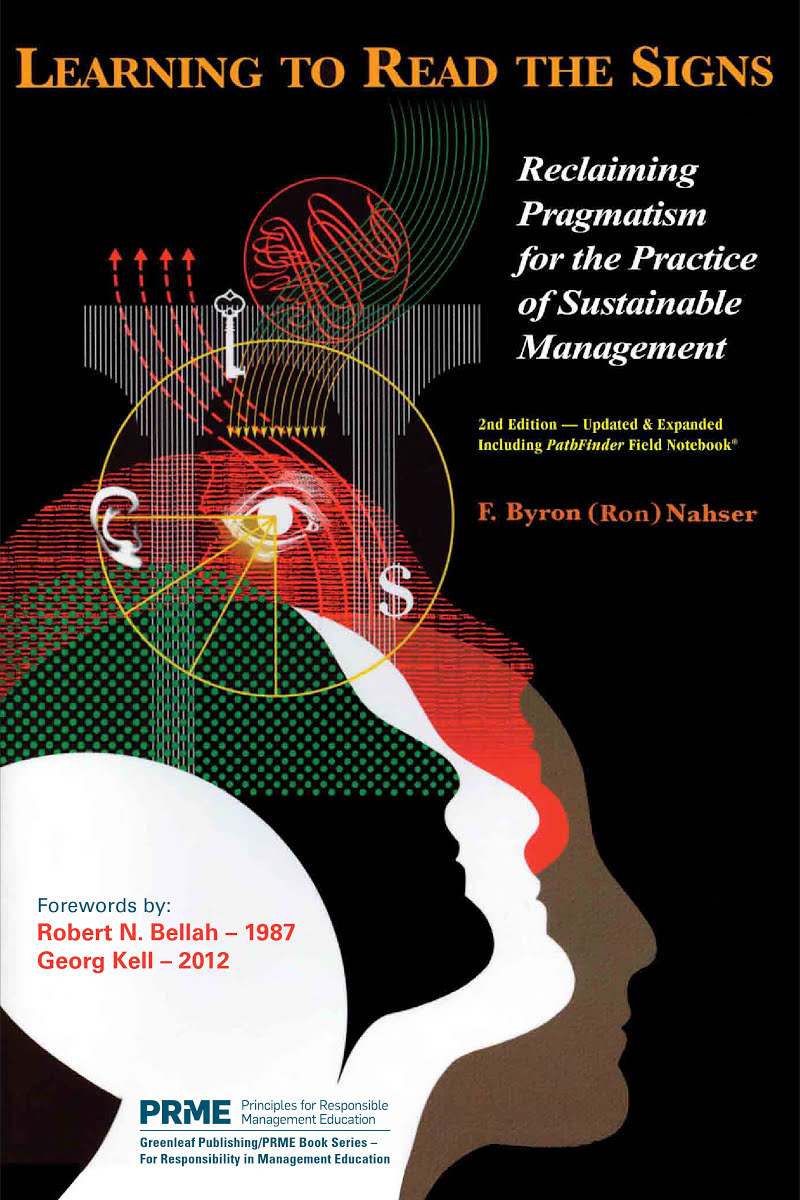
Learning to Read the Signs: 2nd edition

Learning to Read the Signs: 2nd edition

Reclaiming Pragmatism for the Practice of Sustainable Management

by Robert N. Bellah, F. Byron (Ron) Nahser, Georg Kell

240 pages· 2013· ISBN 9781909493087

Browse books you can read free on Readfeed

No club is reading this yet — be the first to start one

Start a club free
About
It's not what we know, but how we learn. This is the key that Learning to Read the Signs uses in order to evaluate and apply ideas and facts to one's organization life. The book asks the reader to go back to and reclaim pragmatism: an activity of thought involving four parts: Investigation, Hypothesis, Action, and Testing. Pragmatism is a method of interpretation or inquiry which offers to the thoughtful business practitioner a way to better understand the reality in which we operate, to think critically and creatively, and for business people to think together to make the best use of all our perspectives and talents. Questions raised in this book include: What are the signs telling us? Where are we headed and why? Why are things going the way they are? What is our purpose? Examples abound of companies and organizations that have failed to "read the signs": the automobile and the financial services industries are obvious examples. Doing business successfully in the 21st century means becoming aware of the filters that modify and limit business vision in our culture. Without this awareness, many businesses will continue to fall into short-term reactive thinking. In a world facing unprecedented social, environmental, and economic challenges, learning to read the signs is a business imperative. This is not a how-to book in the sense that it provides ten easy answers to everyday business problems. The help it gives is much more profound. This book outlines a mode of inquiry that can be used to solve cognitive as well as ethical questions. Drawing on the deepest resources of philosophical pragmatism, Nahser shows us that often we do not even know the right question to ask, that we must start by trusting our doubts and seeing where they lead, so that we can even begin to ask the right questions. He brings philosophy down to earth by showing that a practical philosophy can call into question our outworn assumptions, open up new lines in inquiry, and lead to conclusions we never imagined at the beginning of the process conclusions not just about what to do next, but about our larger purposes, those frameworks that give us meaning and direction. In this long-overdue and radical update to his seminal book, Ron Nahser turns his attention to how pragmatism can be can be practiced by the management of business, government, and non-profit organizations to create both success and a better world for all.

Discuss Learning to Read the Signs: 2nd edition with other readers

Join or start a book club for Learning to Read the Signs: 2nd edition on Readfeed. Live chat, shared reading progress, and AI discussion questions — free to get started.

Frequently asked questions

How do I join a book club for Learning to Read the Signs: 2nd edition?

Sign up free on Readfeed, then browse public clubs or start your own club with Learning to Read the Signs: 2nd edition as the current read. Invite friends with a share link and discuss together with live chat and AI discussion questions.

Can I discuss Learning to Read the Signs: 2nd edition with other readers online?

Yes. Readfeed book clubs let you chat live, share progress, and join discussions about Learning to Read the Signs: 2nd edition with readers worldwide — whether your club is virtual, in-person, or hybrid.

Is Readfeed free?

Yes. Creating an account and joining book clubs is free. Sign up to find readers who love the same books and start discussing today.