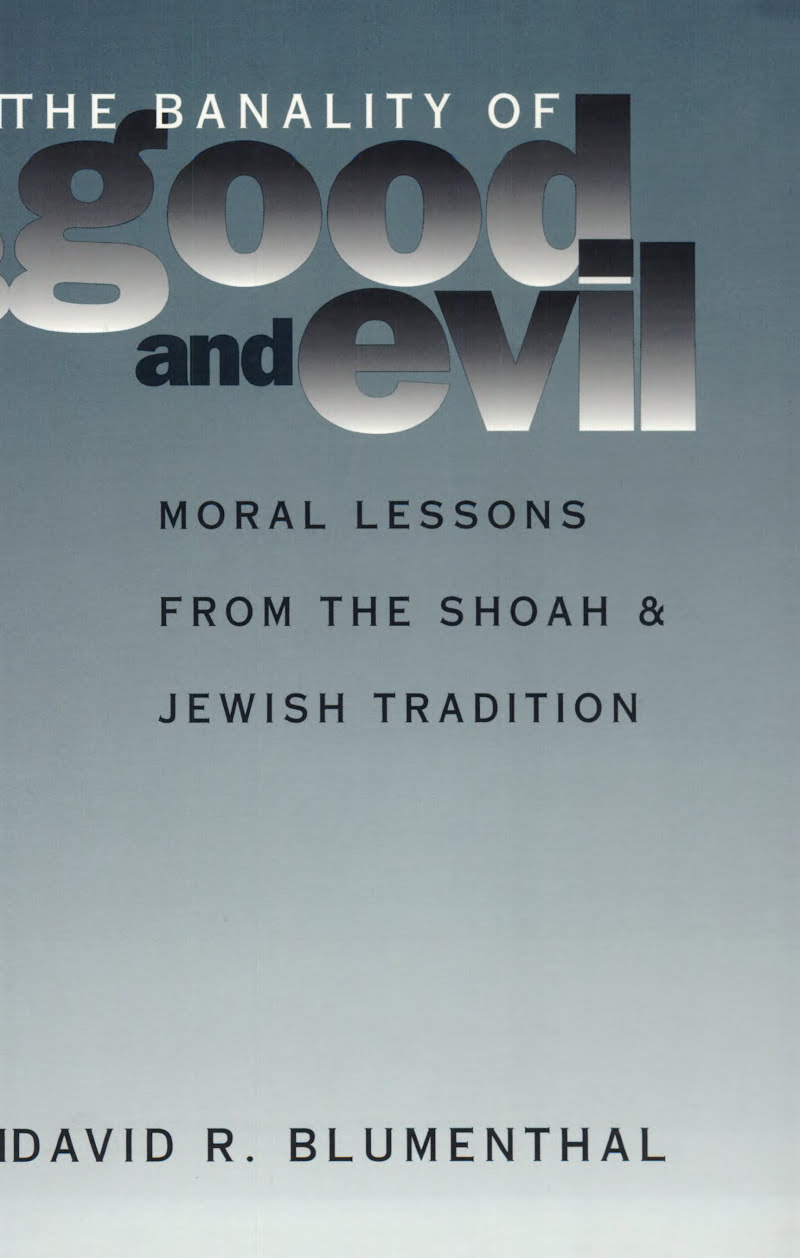
The Banality of Good and Evil

The Banality of Good and Evil

Moral Lessons from the Shoah and Jewish Tradition

by David R. Blumenthal

336 pages· 1999· ISBN 9781589014251

Browse books you can read free on Readfeed

No club is reading this yet — be the first to start one

Start a club free
About
People who helped exterminate Jews during the shoah (Hebrew for "holocaust") often claimed that they only did what was expected of them. Intrigued by hearing the same response from individuals who rescued Jews, David R. Blumenthal proposes that the notion of ordinariness used to characterize nazi evil is equally applicable to goodness. In this provocative book, Blumenthal develops a new theory of human behavior that identifies the social and psychological factors that foster both good and evil behavior. Drawing on lessons primarily from the shoah but also from well-known obedience and altruism experiments, My Lai, and the civil rights movement, Blumenthal deftly interweaves insights from psychology, history, and social theory to create a new way of looking at human behavior. Blumenthal identifies the factors -- social hierarchy, education, and childhood discipline--that shape both good and evil attitudes and actions. Considering how our religious and educational institutions might do a better job of encouraging goodness and discouraging evil, he then makes specific recommendations for cultivating goodness in people, stressing the importance of the social context of education. He reinforces his ideas through stories, teachings, and case histories from the Jewish tradition that convey important lessons in resistance and goodness. Appendices include the ethical code of the Israel Defense Forces, material on non-violence from the Martin Luther King, Jr., Center, a suggested syllabus for a Jewish elementary school, and a list of prosocial sources on the Web, as well as a complete bibliography. If people can commit acts of evil without thinking, why can't even more commit acts of kindness? Writing with power and insight, Blumenthal shows readers of all faiths how we might replace patterns of evil with empathy, justice, and caring, and through a renewed attention to moral education, perhaps prevent future shoahs.

Discuss The Banality of Good and Evil with other readers

Join or start a book club for The Banality of Good and Evil on Readfeed. Live chat, shared reading progress, and AI discussion questions — free to get started.

Frequently asked questions

How do I join a book club for The Banality of Good and Evil?

Sign up free on Readfeed, then browse public clubs or start your own club with The Banality of Good and Evil as the current read. Invite friends with a share link and discuss together with live chat and AI discussion questions.

Can I discuss The Banality of Good and Evil with other readers online?

Yes. Readfeed book clubs let you chat live, share progress, and join discussions about The Banality of Good and Evil with readers worldwide — whether your club is virtual, in-person, or hybrid.

Is Readfeed free?

Yes. Creating an account and joining book clubs is free. Sign up to find readers who love the same books and start discussing today.