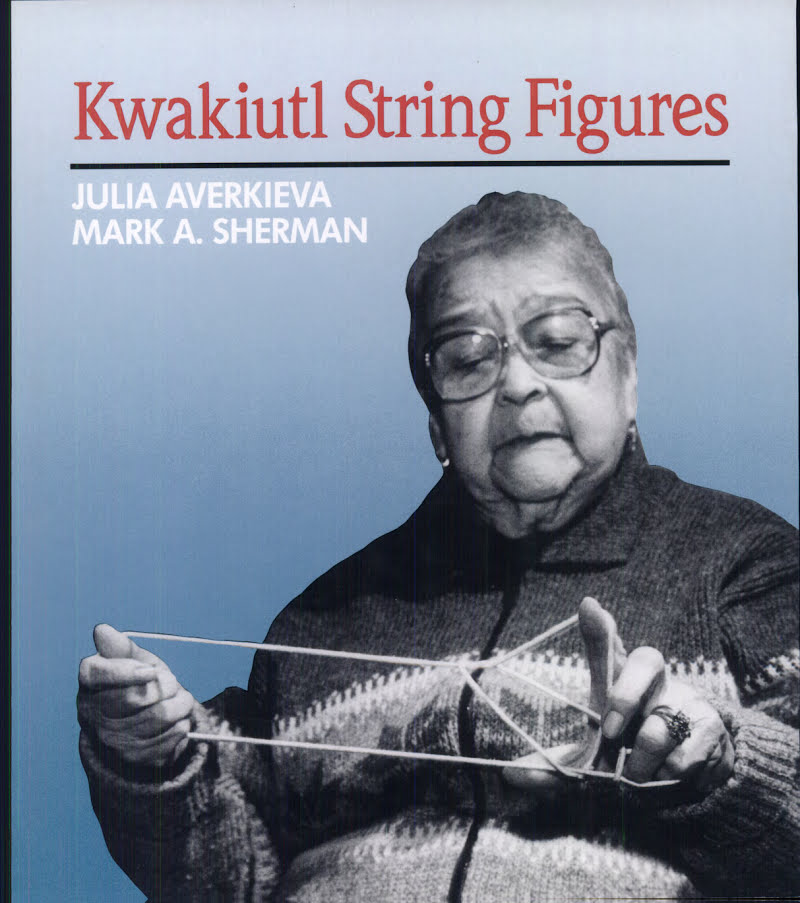
Kwakiutl String Figures

Kwakiutl String Figures

by Julia P. Averkieva

232 pages· 1992· ISBN 9780774804325

Browse books you can read free on Readfeed

No club is reading this yet — be the first to start one

Start a club free
About
Of the games people play, string figures afford nearly universal amusement, appearing in more cultures than any other. But although over 2,000 individual patterns have been recorded world-wide since 1888, when anthropologist Franz Boas first described a pair of Eskimo "cat's cradles," very few studies have explored North American Indian string figures. This intriguing volume publishes for the first time 102 string figures and 10 string tricks collected among the Kwakiutl Indians by Julia Averkieva, a young visiting Soviet scholar who accompanied Boas on his 1930 expedition to Vancouver Island. When she returned to Leningrad, Averkieva left her unpublished monograph with Boas, whose heirs eventually sent it to the American Museum of Natural History in New York. Averkieva's study represents the most comprehensive Native American string collection ever assembled from a single tribe. In addition to characterizing the social conditions that prompted string figure making among the Kwakiutl during the time of her field study, Averkieva noted step-by-step instructions for each figure and transcribed traditional accompanying chants. In editing and expanding Averkieva's manuscript, Mark Sherman addresses string figure enthusiasts as well as cultural anthropologists. Sherman includes in his introduction a complete description of basic openings and string figure moves. For each Kwakiutl figure he has prepared clear illustrations based on Averkieva's original photographs and pencil sketches. In addition he has tested each figure for workability, clarifying instructions where necessary and recasting them in Rivers and Haddon's standard terminology. Sherman's analysis of figure titles suggests that many aspects of Kwakiutl material culture and belief are preserved in string. In examining the ethnological value of the collection, he discusses the implications of observed similarities between Eskimo and Kwakiutl string figures. He also updates Averkieva's preliminary distribution data, interspersing the figure descriptions with references to related and identical figures from other cultures. Each analysis is keyed to an illustrated cross index. Kwakiutl String Figures will interest students of comparative cultures and will delight all who have time (and string) on their hands.

Discuss Kwakiutl String Figures with other readers

Join or start a book club for Kwakiutl String Figures on Readfeed. Live chat, shared reading progress, and AI discussion questions — free to get started.

Frequently asked questions

How do I join a book club for Kwakiutl String Figures?

Sign up free on Readfeed, then browse public clubs or start your own club with Kwakiutl String Figures as the current read. Invite friends with a share link and discuss together with live chat and AI discussion questions.

Can I discuss Kwakiutl String Figures with other readers online?

Yes. Readfeed book clubs let you chat live, share progress, and join discussions about Kwakiutl String Figures with readers worldwide — whether your club is virtual, in-person, or hybrid.

Is Readfeed free?

Yes. Creating an account and joining book clubs is free. Sign up to find readers who love the same books and start discussing today.