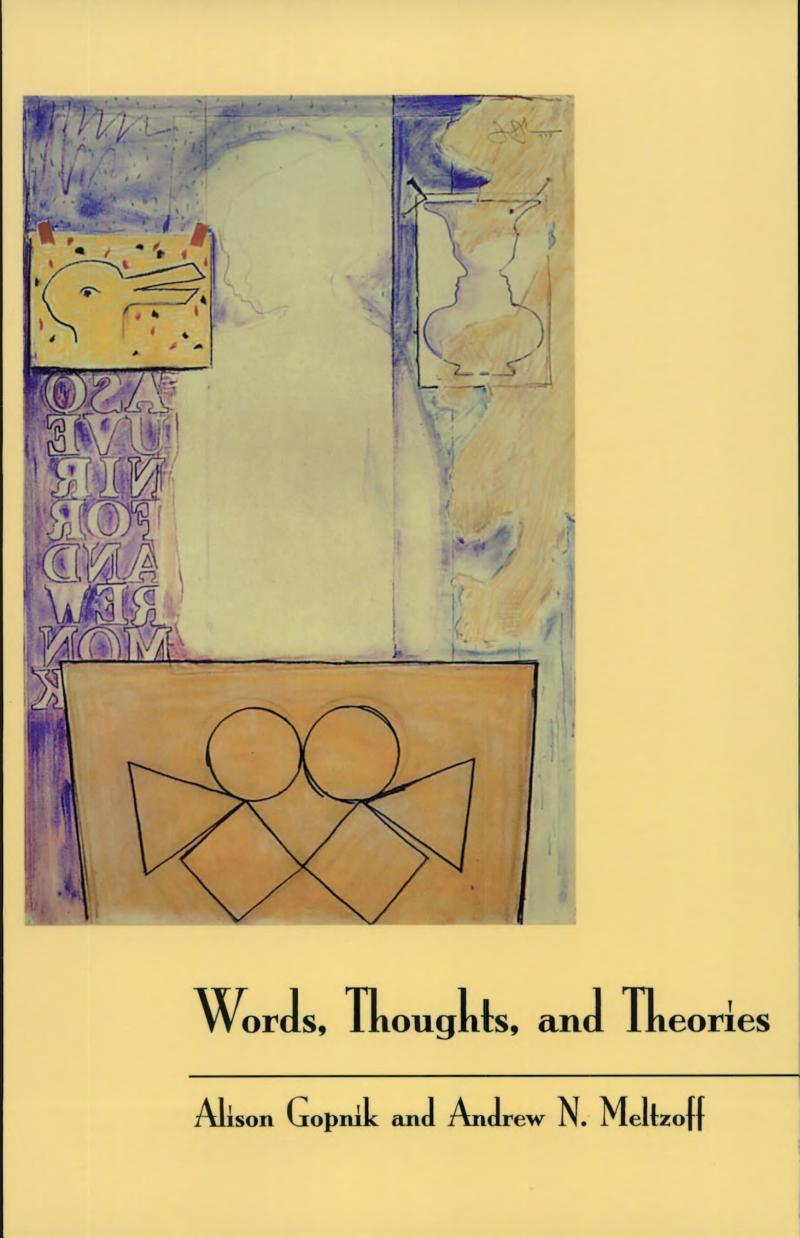
Words, Thoughts, and Theories

Words, Thoughts, and Theories

by Alison Gopnik, Andrew N. Meltzoff

268 pages· 1997· ISBN 9780262071758

Browse books you can read free on Readfeed

No club is reading this yet — be the first to start one

Start a club free
About
"The book is astonishing in its scope and clarity. It successfully integrates philosophy, cognitive development, and cognitive science in a way that has rarely if ever been done. The idea that children develop theories which evolve and reorganize into newer and more powerful theories, like mini-scientists, is of course not new; but in Gopnik and Meltzoff's hands it received a thorough treatment, across such a wide range of domains." -- Simon Baron-Cohen, Lecturer in Psychopathology, Departments of Experimental Psychology and Psychiatry, University of Cambridge "Words, Thoughts, and Theories" articulates and defends the "theory theory" of cognitive and semantic development, the idea that infants and young children, like scientists, learn about the world by forming and revising theories, a view of the origins of knowledge and meaning that has broad implications for cognitive science. Gopnik and Meltzoff interweave philosophical arguments and empirical data from their own and other's research. Both the philosophy and the psychology, the arguments and the data, address the same fundamental epistemological question: How do we come to understand the world around us? Recently, the theory theory has led to much interesting research. However, this is the first book to look at the theory in extensive detail and to systematically contrast it with other theories. It is also the first to apply the theory to infancy and early childhood, to use the theory to provide a framework for understanding semantic development, and to demonstrate that language acquisition influences theory change in children. The authors show that children just beginning to talkare engaged in profound restructurings of several domains of knowledge. These restructurings are similar to theory changes in science, and they influence children's early semantic development, since children's cognitive concerns shape and motivate their use of very early words. But, in addition, children pay attention to the language they hear around them and this too reshapes their cognition, and causes them to reorganize their theories.

Discuss Words, Thoughts, and Theories with other readers

Join or start a book club for Words, Thoughts, and Theories on Readfeed. Live chat, shared reading progress, and AI discussion questions — free to get started.

Frequently asked questions

How do I join a book club for Words, Thoughts, and Theories?

Sign up free on Readfeed, then browse public clubs or start your own club with Words, Thoughts, and Theories as the current read. Invite friends with a share link and discuss together with live chat and AI discussion questions.

Can I discuss Words, Thoughts, and Theories with other readers online?

Yes. Readfeed book clubs let you chat live, share progress, and join discussions about Words, Thoughts, and Theories with readers worldwide — whether your club is virtual, in-person, or hybrid.

Is Readfeed free?

Yes. Creating an account and joining book clubs is free. Sign up to find readers who love the same books and start discussing today.