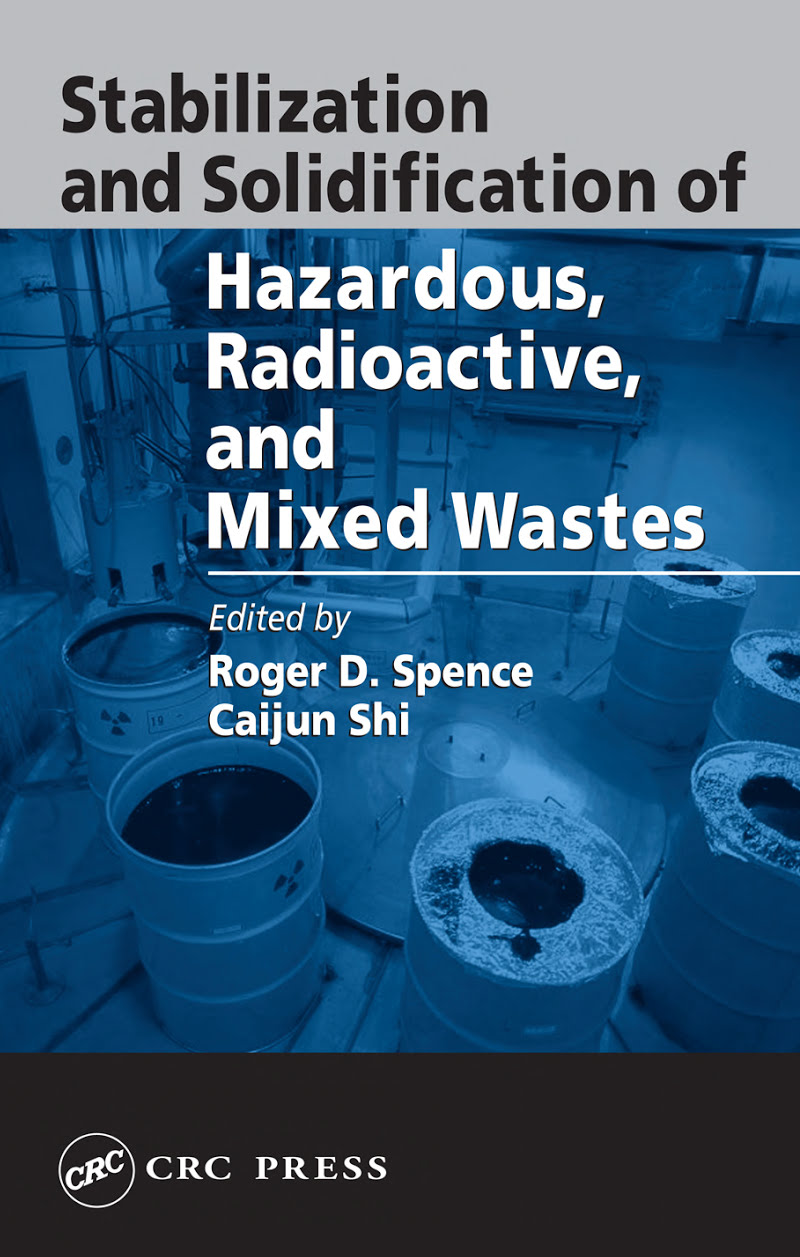
Stabilization and Solidification of Hazardous, Radioactive, and Mixed Wastes

Stabilization and Solidification of Hazardous, Radioactive, and Mixed Wastes

by Roger D. Spence, Caijun Shi

392 pages· 2004· ISBN 9781420032789

Browse books you can read free on Readfeed

No club is reading this yet — be the first to start one

Start a club free
About
The development of stabilization and solidification techniques in the field of waste treatment reflects the efforts to better protect human health and the environment with modern advances in materials and technology. Stabilization and Solidification of Hazardous, Radioactive, and Mixed Wastes provides comprehensive information including case studies, selection criteria, and regulatory considerations on waste characterization, contaminant transport and leachability, testing methods for stabilized waste forms, and the interactions between contaminants and stabilizing components. The book describes various systems based on cement technology that are used for stabilization and solidification of wastes. It demonstrates how to design a stabilized waste form, including the use of statistical techniques for generating response surface models for large, complicated applications. It provides guidelines for the selection of bonding materials, such as hydraulic cements, polymers, and hydroceramics, and discusses several additives and sorbents used to enhance immobilization, binder properties, and contaminant stabilization. The book portrays the transport mechanisms of contaminants in treated wastes and how to predict the transport of contaminants with various mathematical models. Following a discussion of waste types, principles, and properties of cemented waste forms, such as microstructure and durability, it outlines the test methods used to evaluate them. Fusing research, technology, and general practice principles taken from the firsthand experience of scientists, engineers, regulators, and teachers, Stabilization and Solidification of Hazardous, Radioactive, and Mixed Wastes can be used in advanced environmental engineering courses and as a reference for stabilization and solidification engineers, technology vendors and buyers, laboratory technicians, scientists, environmentalists, policymakers, and managers in treatment storage and disposal facilities.

Discuss Stabilization and Solidification of Hazardous, Radioactive, and Mixed Wastes with other readers

Join or start a book club for Stabilization and Solidification of Hazardous, Radioactive, and Mixed Wastes on Readfeed. Live chat, shared reading progress, and AI discussion questions — free to get started.

Frequently asked questions

How do I join a book club for Stabilization and Solidification of Hazardous, Radioactive, and Mixed Wastes?

Sign up free on Readfeed, then browse public clubs or start your own club with Stabilization and Solidification of Hazardous, Radioactive, and Mixed Wastes as the current read. Invite friends with a share link and discuss together with live chat and AI discussion questions.

Can I discuss Stabilization and Solidification of Hazardous, Radioactive, and Mixed Wastes with other readers online?

Yes. Readfeed book clubs let you chat live, share progress, and join discussions about Stabilization and Solidification of Hazardous, Radioactive, and Mixed Wastes with readers worldwide — whether your club is virtual, in-person, or hybrid.

Is Readfeed free?

Yes. Creating an account and joining book clubs is free. Sign up to find readers who love the same books and start discussing today.