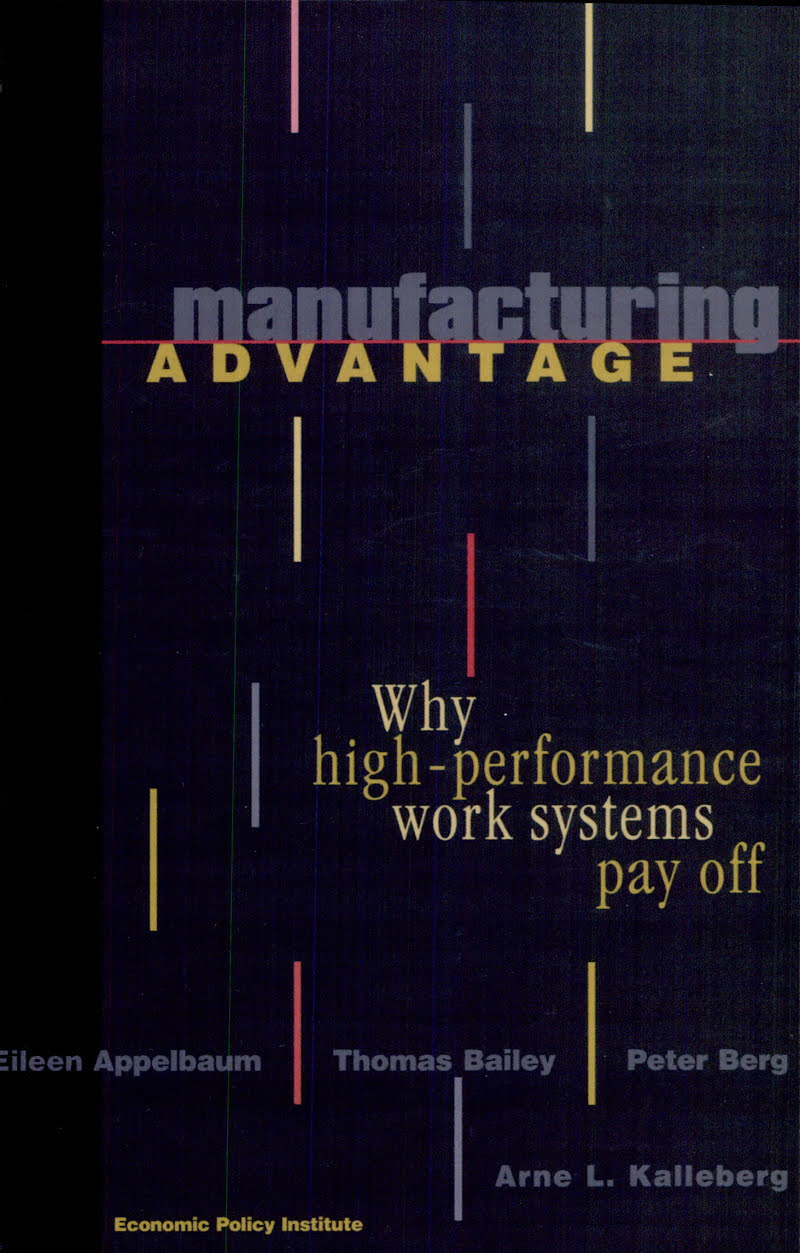
Manufacturing Advantage

Manufacturing Advantage

Why High-performance Work Systems Pay Off

by Eileen Appelbaum

259 pages· 2000· ISBN 9780801486555

Browse books you can read free on Readfeed

No club is reading this yet — be the first to start one

Start a club free
About
Much of the hoopla surrounding quality circles, teams, and high-performance work systems has been based on anecdotes and very thin evidence. It has not been established that those employee involvement strategies amount to anything more than another series of management fads or ruses designed to get more out of workers without giving them anything in return. This revelatory book, written by some of the skeptics, lays some of the suspicion to rest.Based on their visits to 44 plants and surveys of more than 4,000 employees, Eileen Appelbaum, Thomas Bailey, Peter Berg, and Arne L. Kalleberg concluded that companies are indeed more successful when managers share knowledge and power with workers and when workers assume increased responsibility and discretion.The study of steel, apparel, and medical electronics and imaging plants revealed much. In self-directed teams, workers were able to eliminate bottlenecks and coordinate the work process. In task forces created to improve quality, they communicated with individuals outside their own work groups and were able to solve problems. Expensive equipment in steel mills operated with fewer interruptions, turnaround and labor costs were cut in apparel factories, and costly inventories of components and medical equipment were reduced.And what did the employees think? The worker survey showed that jobs in participatory work systems often provide more challenging tasks and more opportunities for creativity. Employees in apparel had higher hourly earnings; those in steel had both higher hourly earnings and higher job satisfaction. Workers in more participatory settings were no more likely than others to report heavy workloads or excessive demands on their time. They were, however, less likely to report involuntary overtime or conflict with co-workers, and were more likely to be satisfied with their surroundings. Manufacturing Advantage provides the best assessment available of the effectiveness of high-performance work systems. Freestanding chapters near the end of the book provide full documentation of research data without interrupting the narrative flow.

Discuss Manufacturing Advantage with other readers

Join or start a book club for Manufacturing Advantage on Readfeed. Live chat, shared reading progress, and AI discussion questions — free to get started.

Frequently asked questions

How do I join a book club for Manufacturing Advantage?

Sign up free on Readfeed, then browse public clubs or start your own club with Manufacturing Advantage as the current read. Invite friends with a share link and discuss together with live chat and AI discussion questions.

Can I discuss Manufacturing Advantage with other readers online?

Yes. Readfeed book clubs let you chat live, share progress, and join discussions about Manufacturing Advantage with readers worldwide — whether your club is virtual, in-person, or hybrid.

Is Readfeed free?

Yes. Creating an account and joining book clubs is free. Sign up to find readers who love the same books and start discussing today.