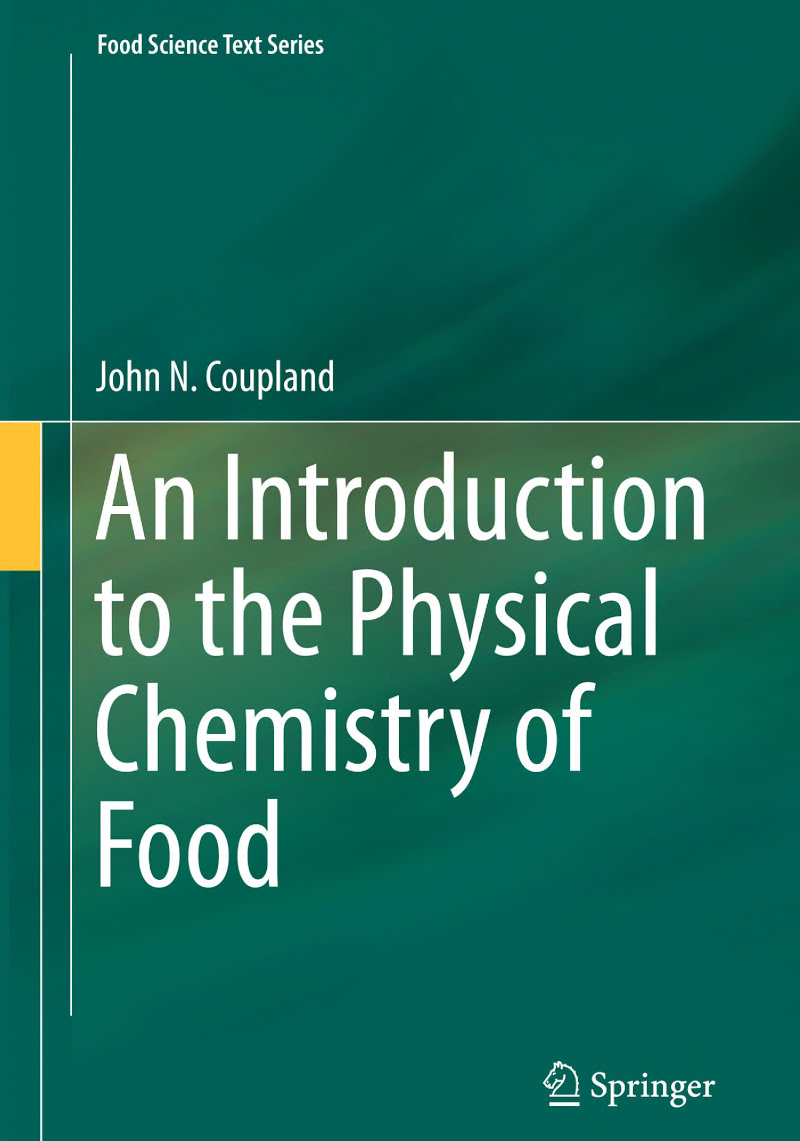
An Introduction to the Physical Chemistry of Food

An Introduction to the Physical Chemistry of Food

by John Coupland

182 pages· 2014· ISBN 9781493907618

Browse books you can read free on Readfeed

No club is reading this yet — be the first to start one

Start a club free
About
Familiar combinations of ingredients and processing make the structures that give food its properties. For example in ice cream, the emulsifiers and proteins stabilize partly crystalline milk fat as an emulsion, freezing (crystallization) of some of the water gives the product its hardness and polysaccharide stabilizers keep it smooth. Why different recipes work as they do is largely governed by the rules of physical chemistry. This textbook introduces the physical chemistry essential to understanding the behavior of foods. Starting with the simplest model of molecules attracting and repelling one another while being moved by the randomizing effect of heat, the laws of thermodynamics are used to derive important properties of foods such as flavor binding and water activity. Most foods contain multiple phases and the same molecular model is used to understand phase diagrams, phase separation and the properties of surfaces. The remaining chapters focus on the formation and properties of specific structures in foods – crystals, polymers, dispersions and gels. Only a basic understanding of food science is needed, and no mathematics or chemistry beyond the introductory college courses is required. At all stages, examples from the primary literature are used to illustrate the text and to highlight the practical applications of physical chemistry in food science.

Discuss An Introduction to the Physical Chemistry of Food with other readers

Join or start a book club for An Introduction to the Physical Chemistry of Food on Readfeed. Live chat, shared reading progress, and AI discussion questions — free to get started.

Frequently asked questions

How do I join a book club for An Introduction to the Physical Chemistry of Food?

Sign up free on Readfeed, then browse public clubs or start your own club with An Introduction to the Physical Chemistry of Food as the current read. Invite friends with a share link and discuss together with live chat and AI discussion questions.

Can I discuss An Introduction to the Physical Chemistry of Food with other readers online?

Yes. Readfeed book clubs let you chat live, share progress, and join discussions about An Introduction to the Physical Chemistry of Food with readers worldwide — whether your club is virtual, in-person, or hybrid.

Is Readfeed free?

Yes. Creating an account and joining book clubs is free. Sign up to find readers who love the same books and start discussing today.