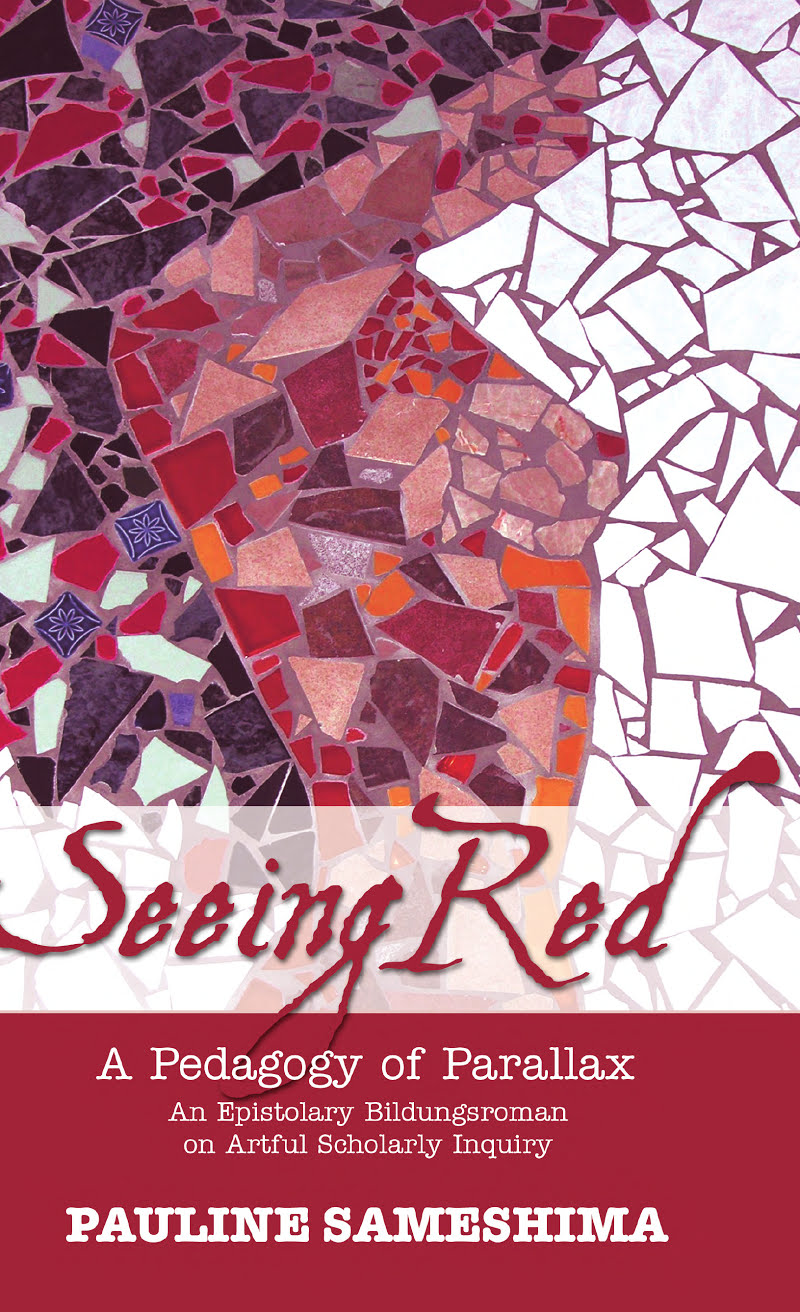
Seeing Red

Seeing Red

A Pedagogy of Parallax : an Epistolary Bildungsroman on Artful Scholarly Inquiry

by Pauline Sameshima

355 pages· 2007· ISBN 9781934043523

Browse books you can read free on Readfeed

No club is reading this yet — be the first to start one

Start a club free
About
A brilliant and daring piece of scholarship, this book will raise eyebrows and spark much debate. It does not simply break new ground, it breaks all the rules ultimately compelling us to examine and embrace scholarship in fresh, innovative ways. Seeing Red is based on Pauline Sameshima's doctoral dissertation, Winner of the 2007 Arts Based Educational Research (ABER) Outstanding Dissertation Award by the American Educational Research Association (AERA). This award is for the best dissertation that explores, is an exemplar of, and pushes the boundaries of arts based educational research. The book showcases a PhD dissertation written in the form of an epistolary bildungsroman a didactic novel of personal developmental journeying. The work is a fiction (letters from a graduate student to the professor she is in love with) embedded in developmental understanding of living the life of a teacher researcher. The work shares the possibilities of how artful research informs processes of scholarly inquiry and honours the reader's multi-perspective as integral to the research project's transformative potential. Parallax is the apparent change of location of an object against a background due to a change in observer position or perspective shift. The concept of parallax encourages researchers and teachers to acknowledge and value the power of their own and their readers and students' shifting subjectivities and situatedness which directly influence the constructs of perception, interpretation, and learning. The novel format ties themes and characters together just as storytelling can bind theory and practice. Norman Denzin (2005) supports the pedagogical and libratory nature of the critical democratic storytelling imagination. He hails this book as ..". bold, innovative, a wild, transformative text, ... almost unruly, a new vision for critical, reflexive inquiry." The love story and issues of teacher/learner role boundaries are controversial and largely unspoken of in educational settings and the letter format is voyeuristic. In this sense, the audience is being given a peek, a look at the unrevealed. One of the advantages of the epistolary novel is its semblance of reality and the difficulty for readers to distinguish the text from genuine correspondence (Wurzbach, 1969). The genre allows the reader access to the writing character's intimate thoughts without perceived interference from the author's manipulation and conveys events with dramatic and sensational immediacy (Carafi, 1997)."

Discuss Seeing Red with other readers

Join or start a book club for Seeing Red on Readfeed. Live chat, shared reading progress, and AI discussion questions — free to get started.

Frequently asked questions

How do I join a book club for Seeing Red?

Sign up free on Readfeed, then browse public clubs or start your own club with Seeing Red as the current read. Invite friends with a share link and discuss together with live chat and AI discussion questions.

Can I discuss Seeing Red with other readers online?

Yes. Readfeed book clubs let you chat live, share progress, and join discussions about Seeing Red with readers worldwide — whether your club is virtual, in-person, or hybrid.

Is Readfeed free?

Yes. Creating an account and joining book clubs is free. Sign up to find readers who love the same books and start discussing today.