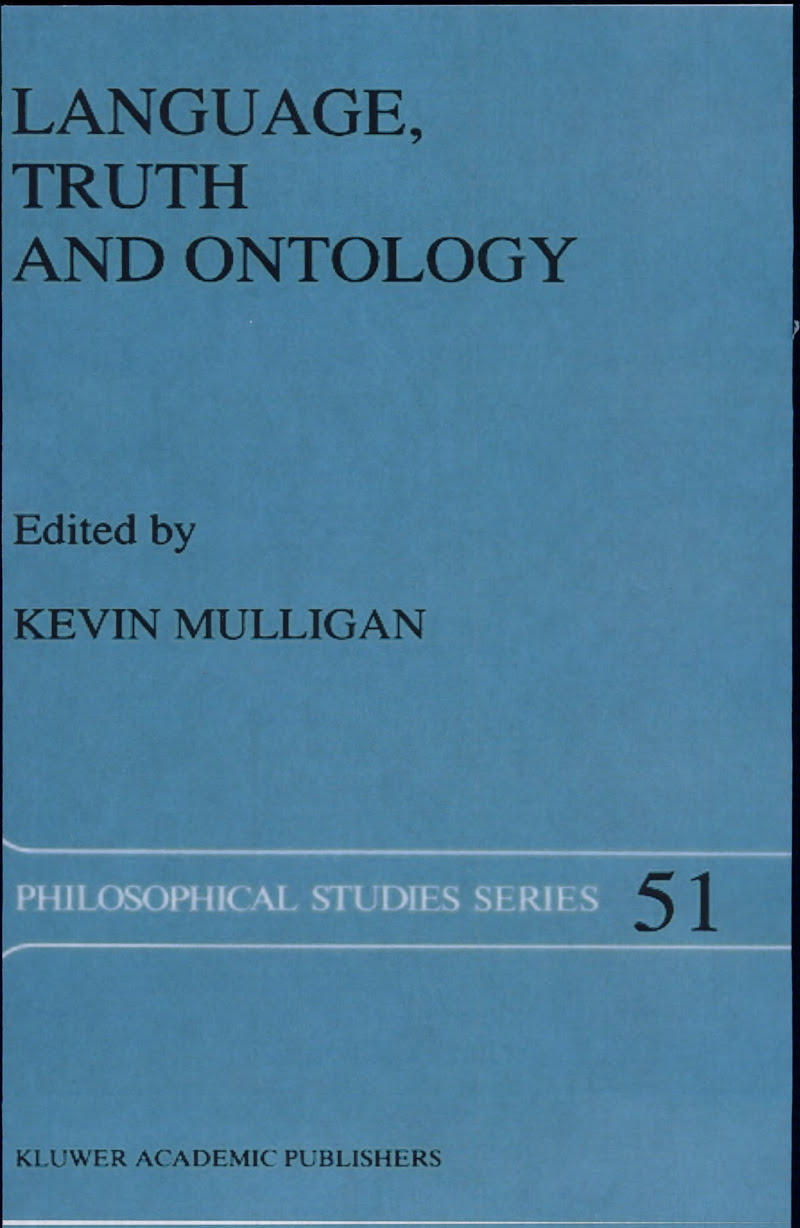
Language, Truth and Ontology
by K. Mulligan
214 pages· 1991· ISBN 9780792315094
Rate this book:
About
All except three of the papers in this volume were presented at the colloquium on "L'Ontologie formelle aujourd'hui", Geneva, 3-5 June 1988. The three exceptions, the papers by David Armstrong, Uwe Meixner and Wolfgang Lenzen, were presented at the colloquium on "Properties", Zinal, June 1-3, 1990. It was, incidentally, at the second of these two colloquia that the European Society for Analytic Philosophy came into being. The fathers of analytic philosophy - Moore and Russell - were in no doubt that ontology or metaphysics as well as the topics oflanguage, truth and logic constituted the core subject-matter of their "analytic realism", 1 for the task of metaphysics as they conceived things was the description of 2 the world. And logic and ontology are indissolubly linked in the system of the grandfather of analytic philosophy, Frege. After the Golden Age of analytic philosophy - in Cambridge and Austria - opposition to realism as well as the "linguistic turn" contributed for a long time to the eclipse of ontology. 3 Thanks in large measure to the work of some of the senior contributors to the present volume - Roderick Chisholm, Herbert Hochberg, David Armstrong and Karel Lambert - ontology and metaphysics now enjoy once again the central position they occupied some eighty years ago in the heyday of analytic philosophy.
Discuss Language, Truth and Ontology with other readers
Join or start a book club for Language, Truth and Ontology on Readfeed. Live chat, shared reading progress, and AI discussion questions — free to get started.
Frequently asked questions
How do I join a book club for Language, Truth and Ontology?
Sign up free on Readfeed, then browse public clubs or start your own club with Language, Truth and Ontology as the current read. Invite friends with a share link and discuss together with live chat and AI discussion questions.
Can I discuss Language, Truth and Ontology with other readers online?
Yes. Readfeed book clubs let you chat live, share progress, and join discussions about Language, Truth and Ontology with readers worldwide — whether your club is virtual, in-person, or hybrid.
Is Readfeed free?
Yes. Creating an account and joining book clubs is free. Sign up to find readers who love the same books and start discussing today.