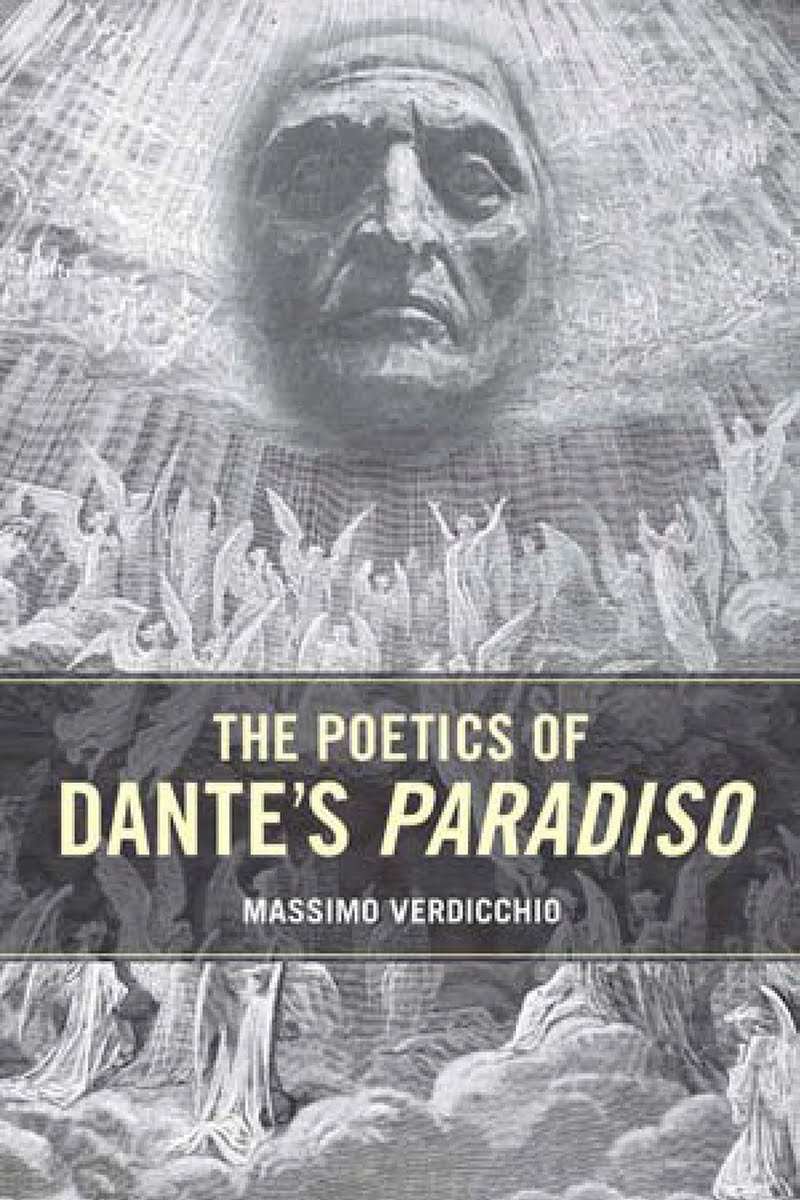
`In the world of Dante scholarship, there is a real need for studies such as The Poetics of Dante's Paradiso, which challenge our notions of the principal souls of the Paradiso. Rooted in a close analysis of the poem, Massimo Verdicchio's intelligent interpretation is supported by relevant textual evidence and provides an important counterpoint to the canonical readings of the cantica. Traditional readings of Dante's Paradiso have largely considered this third cantica of the Commedia as a poem apart. It deals with those blessed souls in Paradise who are free of sin and beyond punishment, in contrast to the sinners in the previous two cantica, and is thus no longer based on the principle of contrapasso. At the literal level this is true in that all the characters one encounters are either those who have been saved, religious leaders, or saints. However, at the allegorical level, as Massimo Verdicchio argues in The Poetics of Dante's Paradiso, the blessed souls still have something to hide, something shameful in their past earthly life, which is revealed nonetheless. In this book, Verdicchio provides a canto-by-canto analysis of Paradiso. He maintains that the cantica can allegorically be seen as a commentary on the political and religious establishment, framed as the punitive action of the DXV announced at the end of Purgatorio, denouncing the illicit and destructive alliance between the House of Anjou and the Church. Verdicchio focuses on the relationship that Dante establishes among the ten heavens, into which the poet divides the cantica and their equivalent in the Arts and Sciences of the Trivium and Quadrivium, as outlined in the Convivio. This approach provides the key to interpreting the cantos and the discourse of the inhabitants of Paradise who appear, on the surface, blameless. However, it is the earthly and human side of the blessed souls that captures Dante's attention, and this dichotomy is revealed in his characterization of the heavens. Poetic allegory and irony are the two principal modes of this cantica, and the source of much of its comedic complexity. As one of the characters puts it, in Heaven `we do not repent but we smile.' A highly original and comprehensive reading, The Poetics of Dante's Paradiso demonstrates that the intricacies of Dante's text reveal subversive undercurrents and a subtle irony, employed to deliver a critique of the Church and Empire of his own time.