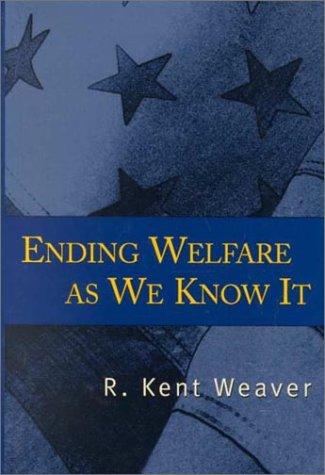
Ending welfare as we know it

Ending welfare as we know it

by R. Kent Weaver

Browse books you can read free on Readfeed

No club is reading this yet — be the first to start one

Start a club free
About
"Bill Clinton's first presidential term was a period of extraordinary change in policy toward low-income families. In 1993 Congress enacted a major expansion of the Earned Income Tax Credit for low-income working families. In 1996 Congress passed and the president signed the Personal Responsibility and Work Opportunity Reconciliation Act. This legislation abolished the sixty-year-old Aid to Families with Dependent Children (AFDC) program and replaced it with a block grant program, Temporary Assistance for Needy Families. It contained stiff new work requirements and limits on the length of time people could receive welfare benefits." "Dramatic change in AFDC was also occurring piecemeal in the states during these years. States used waivers granted by the federal Department of Health and Human Services to experiment with a variety of welfare strategies, including denial of additional benefits for children born or conceived while a mother received AFDC, work requirements, and time limits on receipt of cash benefits. The pace of change at the state level accelerated after the 1996 federal welfare reform legislation gave states increased leeway to design their programs." "Ending Welfare as We Know It analyzes how these changes in the AFDC program came about. In fourteen chapters, R. Kent Weaver addresses three sets of questions about the politics of welfare reform: the dismal history of comprehensive AFDC reform initiatives; the dramatic changes in the welfare reform agenda over the past thirty years; and the reasons why comprehensive welfare reform at the national level succeeded in 1996 after failing in 1995, in 1993-94, and on many previous occasions." "Welfare reform raises issues of race, class, and sex that are as difficult and divisive as any in American politics. While broad social and political trends helped to create a historic opening for welfare reform in the late 1990s, dramatic legislation was not inevitable. The interaction of contextual factors with short-term political and policy calculations by President Clinton and congressional Republicans - along with the cascade of repositioning by other policymakers - turned "ending welfare as we know it" from political possibility into policy reality."--BOOK JACKET.

Discuss Ending welfare as we know it with other readers

Join or start a book club for Ending welfare as we know it on Readfeed. Live chat, shared reading progress, and AI discussion questions — free to get started.

Frequently asked questions

How do I join a book club for Ending welfare as we know it?

Sign up free on Readfeed, then browse public clubs or start your own club with Ending welfare as we know it as the current read. Invite friends with a share link and discuss together with live chat and AI discussion questions.

Can I discuss Ending welfare as we know it with other readers online?

Yes. Readfeed book clubs let you chat live, share progress, and join discussions about Ending welfare as we know it with readers worldwide — whether your club is virtual, in-person, or hybrid.

Is Readfeed free?

Yes. Creating an account and joining book clubs is free. Sign up to find readers who love the same books and start discussing today.