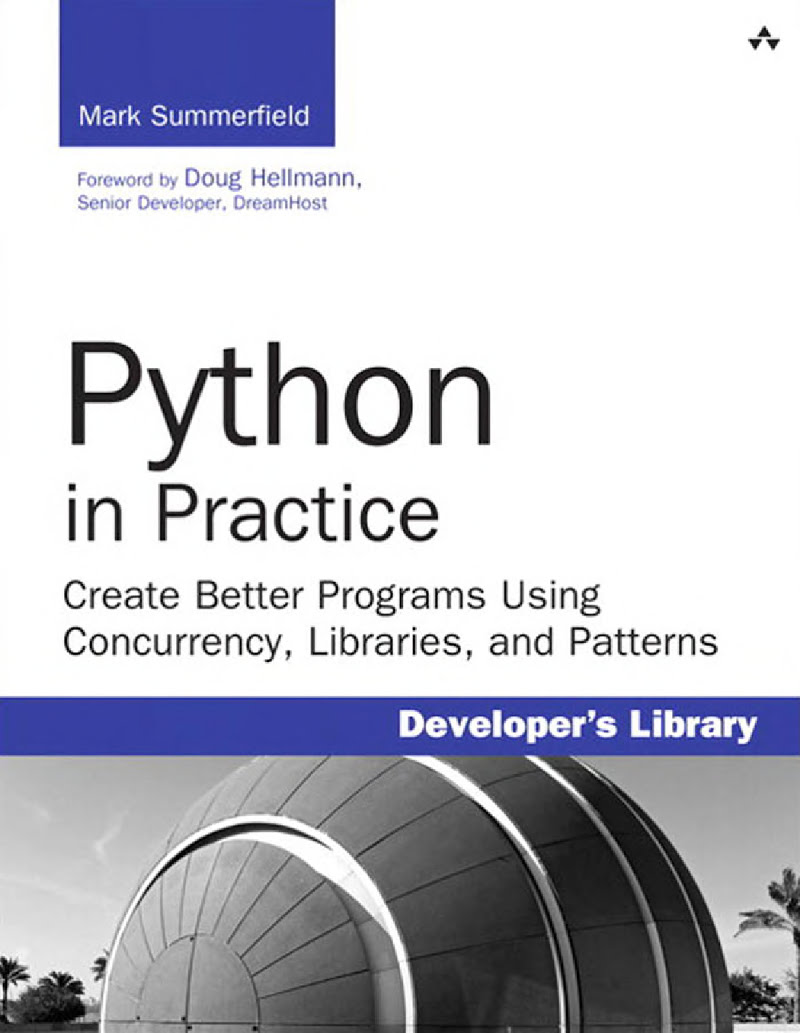
Python in Practice

Python in Practice

Create Better Programs Using Concurrency, Libraries, and Patterns

by Mark Summerfield

306 pages· 2013· ISBN 9780321905635

Browse books you can read free on Readfeed

No club is reading this yet — be the first to start one

Start a club free
About
Winner of the 2014 Jolt Award for "Best Book" "Whether you are an experienced programmer or are starting your career, Python in Practice is full of valuable advice and example to help you improve your craft by thinking about problems from different perspectives, introducing tools, and detailing techniques to create more effective solutions." --Doug Hellmann, Senior Developer, DreamHost If you're an experienced Python programmer, Python in Practice will help you improve the quality, reliability, speed, maintainability, and usability of all your Python programs. Mark Summerfield focuses on four key themes: design patterns for coding elegance, faster processing through concurrency and compiled Python (Cython), high-level networking, and graphics. He identifies well-proven design patterns that are useful in Python, illuminates them with expert-quality code, and explains why some object-oriented design patterns are irrelevant to Python. He also explodes several counterproductive myths about Python programming--showing, for example, how Python can take full advantage of multicore hardware. All examples, including three complete case studies, have been tested with Python 3.3 (and, where possible, Python 3.2 and 3.1) and crafted to maintain compatibility with future Python 3.x versions. All code has been tested on Linux, and most code has also been tested on OS X and Windows. All code may be downloaded at www.qtrac.eu/pipbook.html. Coverage includes Leveraging Python's most effective creational, structural, and behavioral design patterns Supporting concurrency with Python's multiprocessing, threading, and concurrent.futures modules Avoiding concurrency problems using thread-safe queues and futures rather than fragile locks Simplifying networking with high-level modules, including xmlrpclib and RPyC Accelerating Python code with Cython, C-based Python modules, profiling, and other techniques Creating modern-looking GUI applications with Tkinter Leveraging today's powerful graphics hardware via the OpenGL API using pyglet and PyOpenGL

Discuss Python in Practice with other readers

Join or start a book club for Python in Practice on Readfeed. Live chat, shared reading progress, and AI discussion questions — free to get started.

Frequently asked questions

How do I join a book club for Python in Practice?

Sign up free on Readfeed, then browse public clubs or start your own club with Python in Practice as the current read. Invite friends with a share link and discuss together with live chat and AI discussion questions.

Can I discuss Python in Practice with other readers online?

Yes. Readfeed book clubs let you chat live, share progress, and join discussions about Python in Practice with readers worldwide — whether your club is virtual, in-person, or hybrid.

Is Readfeed free?

Yes. Creating an account and joining book clubs is free. Sign up to find readers who love the same books and start discussing today.