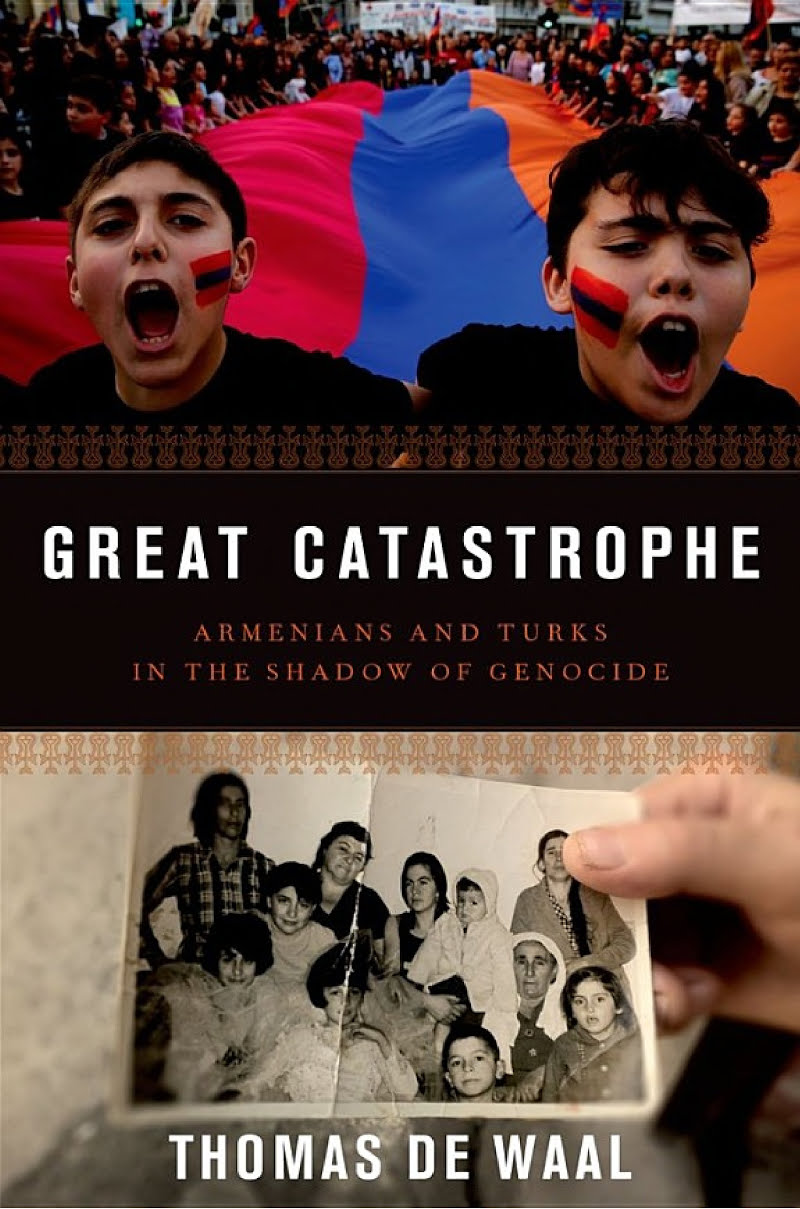
Great Catastrophe

Great Catastrophe

Armenians and Turks in the Shadow of Genocide

by Thomas De Waal

288 pages· 2015· ISBN 9780199350711

Browse books you can read free on Readfeed

No club is reading this yet — be the first to start one

Start a club free
About
The destruction of the Armenians of the Ottoman Empire in 1915-16 was the greatest atrocity of World War I. Around one million Armenians were killed, and the survivors were scattered across the world. Although it is now a century old, the issue of what most of the world calls the Armenian Genocide of 1915 is still a live and divisive issue that mobilizes Armenians across the world, shapes the identity and politics of modern Turkey, and has consumed the attention of U.S. politicians for years. In Great Catastrophe, the eminent scholar and reporter Thomas de Waal looks at the aftermath and politics of the Armenian Genocide and tells the story of recent efforts by courageous Armenians, Kurds, and Turks to come to terms with the disaster as Turkey enters a new post-Kemalist era. The story of what happened to the Armenians in 1915-16 is well-known. Here we are told the "history of the history" and the lesser-known story of what happened to Armenians, Kurds, and Turks in the century that followed. De Waal relates how different generations tackled the issue of the "Great Catastrophe" from the 1920s until the failure of the Protocols signed by independent Armenia and Turkey in 2010. Quarrels between diaspora Armenians supporting and opposing the Soviet Union broke into violence and culminated with the murder of an archbishop in 1933. The devising of the word "genocide," the growth of modern identity politics, and the 50th anniversary of the massacres re-energized a new generation of Armenians. In Turkey the issue was initially forgotten, only to return to the political agenda in the context of the Cold War and an outbreak of Armenian terrorism. More recently, Turkey has started to confront its taboos. In an astonishing revival of oral history, the descendants of tens of thousands of "Islamized Armenians," who have been in the shadows since 1915, have begun to reemerge and reclaim their identities. Drawing on archival sources, reportage and moving personal stories, de Waal tells the full story of Armenian-Turkish relations since the Genocide in all its extraordinary twists and turns. He looks behind the propaganda to examine the realities of a terrible historical crime and the divisive "politics of genocide" it produced. The book throws light not only on our understanding of Armenian-Turkish relations but also of how mass atrocities and historical tragedies shape contemporary politics.

Discuss Great Catastrophe with other readers

Join or start a book club for Great Catastrophe on Readfeed. Live chat, shared reading progress, and AI discussion questions — free to get started.

Frequently asked questions

How do I join a book club for Great Catastrophe?

Sign up free on Readfeed, then browse public clubs or start your own club with Great Catastrophe as the current read. Invite friends with a share link and discuss together with live chat and AI discussion questions.

Can I discuss Great Catastrophe with other readers online?

Yes. Readfeed book clubs let you chat live, share progress, and join discussions about Great Catastrophe with readers worldwide — whether your club is virtual, in-person, or hybrid.

Is Readfeed free?

Yes. Creating an account and joining book clubs is free. Sign up to find readers who love the same books and start discussing today.