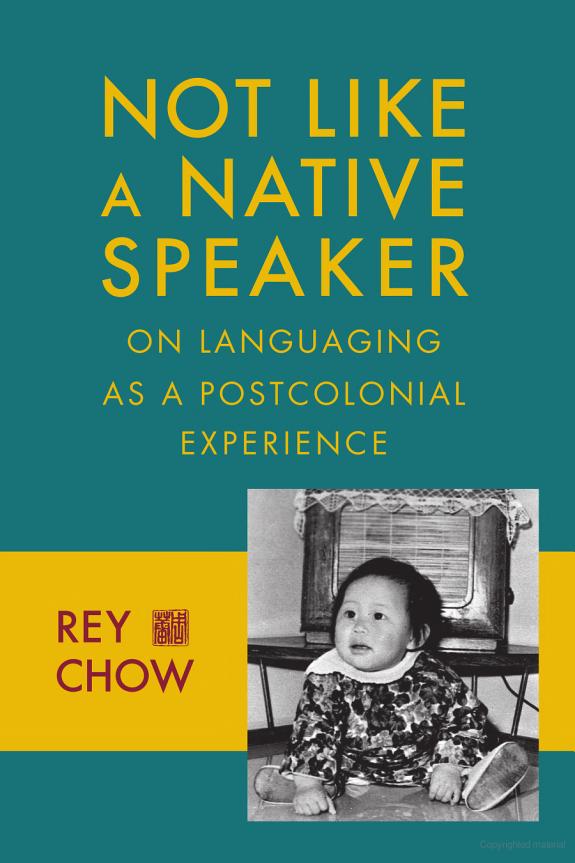
Not Like a Native Speaker

Not Like a Native Speaker

On Languaging as a Postcolonial Experience

by Rey Chow

192 pages· 2014· ISBN 9780231522717
About
Although the era of European colonialism has long passed, misgivings about the inequality of the encounters between European and non-European languages persist in many parts of the postcolonial world. This unfinished state of affairs, this lingering historical experience of being caught among unequal languages, is the subject of Rey Chow's book. A diverse group of personae, never before assembled in a similar manner, make their appearances in the various chapters: the young mulatto happening upon a photograph about skin color in a popular magazine; the man from Martinique hearing himself named "Negro" in public in France; call center agents in India trained to Americanize their accents while speaking with customers; the Algerian Jewish philosopher reflecting on his relation to the French language; African intellectuals debating the pros and cons of using English for purposes of creative writing; the translator acting by turns as a traitor and as a mourner in the course of cross-cultural exchange; Cantonese-speaking writers of Chinese contemplating the politics of food consumption; radio drama workers straddling the forms of traditional storytelling and mediatized sound broadcast. In these riveting scenes of speaking and writing imbricated with race, pigmentation, and class demarcations, Chow suggests, postcolonial languaging becomes, de facto, an order of biopolitics. The native speaker, the fulcrum figure often accorded a transcendent status, is realigned here as the repository of illusory linguistic origins and unities. By inserting British and post-British Hong Kong (the city where she grew up) into the languaging controversies that tend to be pursued in Francophone (and occasionally Anglophone) deliberations, and by sketching the fraught situations faced by those coping with the specifics of using Chinese while negotiating with English, Chow not only redefines the geopolitical boundaries of postcolonial inquiry but also demonstrates how such inquiry must articulate historical experience to the habits, practices, affects, and imaginaries based in sounds and scripts.

Discuss Not Like a Native Speaker with other readers

Join or start a book club for Not Like a Native Speaker on Readfeed. Live chat, shared reading progress, and AI discussion questions — free to get started.

Frequently asked questions

How do I join a book club for Not Like a Native Speaker?

Sign up free on Readfeed, then browse public clubs or start your own club with Not Like a Native Speaker as the current read. Invite friends with a share link and discuss together with live chat and AI discussion questions.

Can I discuss Not Like a Native Speaker with other readers online?

Yes. Readfeed book clubs let you chat live, share progress, and join discussions about Not Like a Native Speaker with readers worldwide — whether your club is virtual, in-person, or hybrid.

Is Readfeed free?

Yes. Creating an account and joining book clubs is free. Sign up to find readers who love the same books and start discussing today.