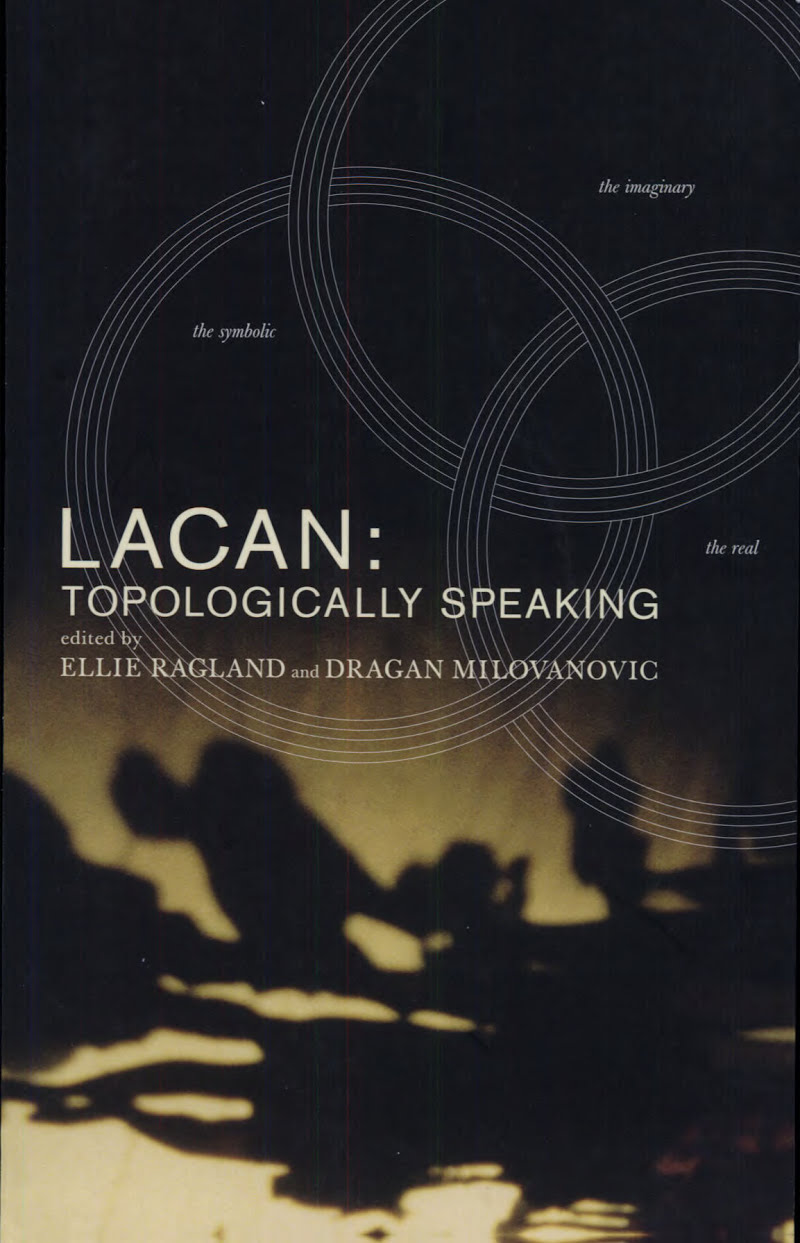
Lacan

Lacan

Topologically Speaking

by Ellie Ragland-Sullivan, Dragan Milovanovic

397 pages· 2004· ISBN 9781892746764

Browse books you can read free on Readfeed

No club is reading this yet — be the first to start one

Start a club free
About
The study of topology examines the way something can change shape while still retaining the same properties. Jacques Lacan devoted the last part of his teaching to the topology of the subject. During the 50s, he gauged the topology of surfaces (torus, Moebius strips, Klein bottles, crosscaps) and from 1972 on, he studied the topology of knots (Borromean, the sinthome). Showing that bodily and mental life function topologically, he did what no one had done before: he added to the logic of how representations function, the logic of jouissance or libidinal meaning that "materializes" language by making desire, fantasy, and the partial drives ascertainable functions of it. For Lacan, topology is neither myth nor metaphor. It is the precise way we may understand the construction and appearance of the subject. Space is multidimensional in terms of both meaning and logic. Lacanian topology answers questions of post-structuralism while revealing the flaws in its theories. It also advances a 21st-century teaching that obviates symbolic logic and its positivistic assumptions. Applications are made to the clinic, to literature, and to the social sciences. The authors collected here include world renowned Lacanian topologists such as Jacques-Alain Miller, Jeanne Lafont, Jean-Paul Gilson, Pierre Skriabine, Juan-David Nasio, Jean-Michel Vappereau, and several new theorists from the United States and Europe.

Discuss Lacan with other readers

Join or start a book club for Lacan on Readfeed. Live chat, shared reading progress, and AI discussion questions — free to get started.

Frequently asked questions

How do I join a book club for Lacan?

Sign up free on Readfeed, then browse public clubs or start your own club with Lacan as the current read. Invite friends with a share link and discuss together with live chat and AI discussion questions.

Can I discuss Lacan with other readers online?

Yes. Readfeed book clubs let you chat live, share progress, and join discussions about Lacan with readers worldwide — whether your club is virtual, in-person, or hybrid.

Is Readfeed free?

Yes. Creating an account and joining book clubs is free. Sign up to find readers who love the same books and start discussing today.