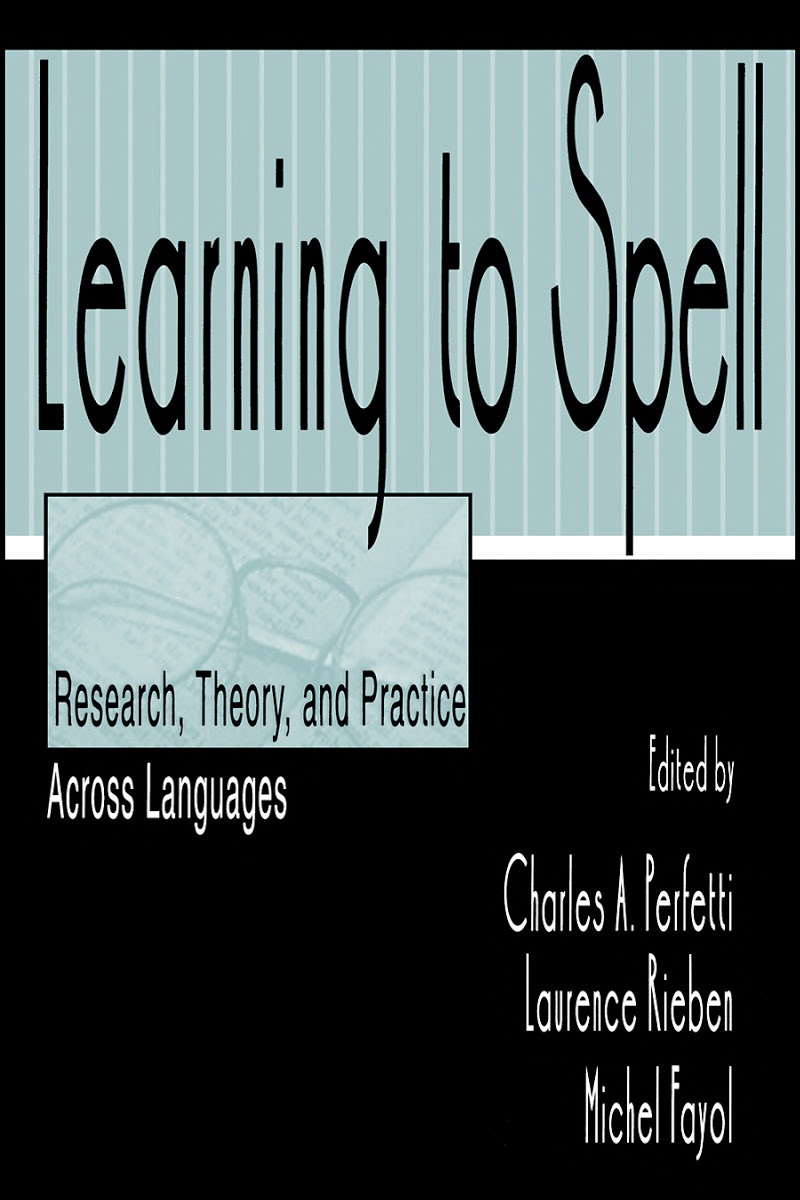
Learning to Spell

Learning to Spell

Research, Theory, and Practice Across Languages

by Charles A. Perfetti, Laurence Rieben, Michel Fayol

392 pages· 1997· ISBN 9781135691349

Browse books you can read free on Readfeed

No club is reading this yet — be the first to start one

Start a club free
About
This distinctive cross-linguistic examination of spelling examines the cognitive processes that underlie spelling and the process of learning how to spell. The chapters report and summarize recent research in English, German, Hebrew, and French. Framing the specific research on spelling are chapters that place spelling in braod theoretical perspectives provided by cognitive neuroscience, psycholinguistic, and writing system-linguistic frameworks. Of special interest is the focus on two major interrelated issues: how spelling is acquired and the relationship between reading and spelling. An important dimension of the book is the interweaving of these basic questions about the nature of spelling with practical questions about how children learn to spell in classrooms. A motivating factor in this work was to demonstrate that spelling research has become a central challenging topic in the study of cognitive processes, rather than an isolated skill learned in school. It thus brings together schooling and learning issues with modern cognitive research in a unique way. testing, children writing strings of letters as a teacher pronounces words ever so clearly. In parts of the United States it can also bring an image of specialized wizardry and school room competition, the "spelling bee." And for countless adults who confess with self-deprecation to being "terrible spellers," it is a reminder of a mysterious but minor affliction that the fates have visited on them. Beneath these popular images, spelling is a human literacy ability that reflects language and nonlanguage cognitive processes. This collection of papers presents a sample of contemporary research across different languages that addresses this ability. To understand spelling as an interesting scientific problem, there are several important perspectives. First, spelling is the use of conventionalized writing systems that encode languages. A second asks how children learn to spell. Finally, from a literacy point of view, another asks the extent to which spelling and reading are related. In collecting some of the interesting research on spelling, the editors have adopted each of these perspectives. Many of the papers themselves reflect more than one perspective, and the reader will find important observations about orthographies, the relationship between spelling and reading, and issues of learning and teaching throughout the collection.

Discuss Learning to Spell with other readers

Join or start a book club for Learning to Spell on Readfeed. Live chat, shared reading progress, and AI discussion questions — free to get started.

Frequently asked questions

How do I join a book club for Learning to Spell?

Sign up free on Readfeed, then browse public clubs or start your own club with Learning to Spell as the current read. Invite friends with a share link and discuss together with live chat and AI discussion questions.

Can I discuss Learning to Spell with other readers online?

Yes. Readfeed book clubs let you chat live, share progress, and join discussions about Learning to Spell with readers worldwide — whether your club is virtual, in-person, or hybrid.

Is Readfeed free?

Yes. Creating an account and joining book clubs is free. Sign up to find readers who love the same books and start discussing today.