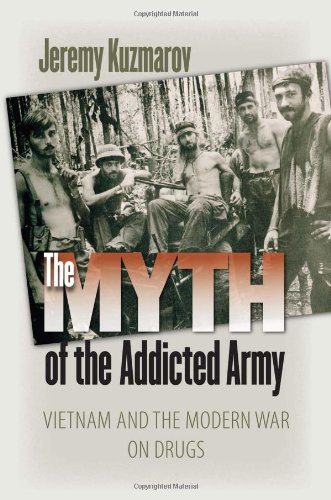
The Myth of the Addicted Army: Vietnam and the Modern War on Drugs (Culture, Politics, and the Cold War)
Vietnam and the Modern War on Drugs
by Jeremy Kuzmarov
Yet as Jeremy Kuzmarov documents in this deeply researched book, popular assumptions about drug use in Vietnam are based more on myth than fact. Not only was alcohol the intoxicant of choice for most GIs, but the prevalence of other drugs varied enormously. Although marijuana use among troops increased over the course of the war, for the most part it remained confined to rear areas, and the use of highly addictive drugs like heroin was never as widespread as many imagined.
Like other cultural myths that emerged from the war, the concept of an addicted army was first advanced by war hawks seeking a scapegoat for the failure of U.S. policies in Vietnam, in this case one that could be linked to "permissive" liberal social policies and the excesses of the counterculture. But conservatives were not alone. Ironically, Kuzmarov shows, elements of the antiwar movement also promoted the myth, largely because of a presumed alliance between Asian drug traffickers and the Central Intelligence Agency. While this claim was not without foundation, as new archival evidence confirms, the left exaggerated the scope of addiction for its own political purposes.
Exploiting bipartisan concern over the perceived "drug crisis," the Nixon administration in the early 1970s launched a bold new program of federal antidrug measures, especially in the international realm. Initially, the "War on Drugs" helped divert attention away from the failed quest for "peace with honor" in Southeast Asia. But once institutionalized, it continued to influence political discourse as well as U.S. drug policy in the decades that followed.
Discuss The Myth of the Addicted Army: Vietnam and the Modern War on Drugs (Culture, Politics, and the Cold War) with other readers
Join or start a book club for The Myth of the Addicted Army: Vietnam and the Modern War on Drugs (Culture, Politics, and the Cold War) on Readfeed. Live chat, shared reading progress, and AI discussion questions — free to get started.
Frequently asked questions
How do I join a book club for The Myth of the Addicted Army: Vietnam and the Modern War on Drugs (Culture, Politics, and the Cold War)?
Sign up free on Readfeed, then browse public clubs or start your own club with The Myth of the Addicted Army: Vietnam and the Modern War on Drugs (Culture, Politics, and the Cold War) as the current read. Invite friends with a share link and discuss together with live chat and AI discussion questions.
Can I discuss The Myth of the Addicted Army: Vietnam and the Modern War on Drugs (Culture, Politics, and the Cold War) with other readers online?
Yes. Readfeed book clubs let you chat live, share progress, and join discussions about The Myth of the Addicted Army: Vietnam and the Modern War on Drugs (Culture, Politics, and the Cold War) with readers worldwide — whether your club is virtual, in-person, or hybrid.
Is Readfeed free?
Yes. Creating an account and joining book clubs is free. Sign up to find readers who love the same books and start discussing today.