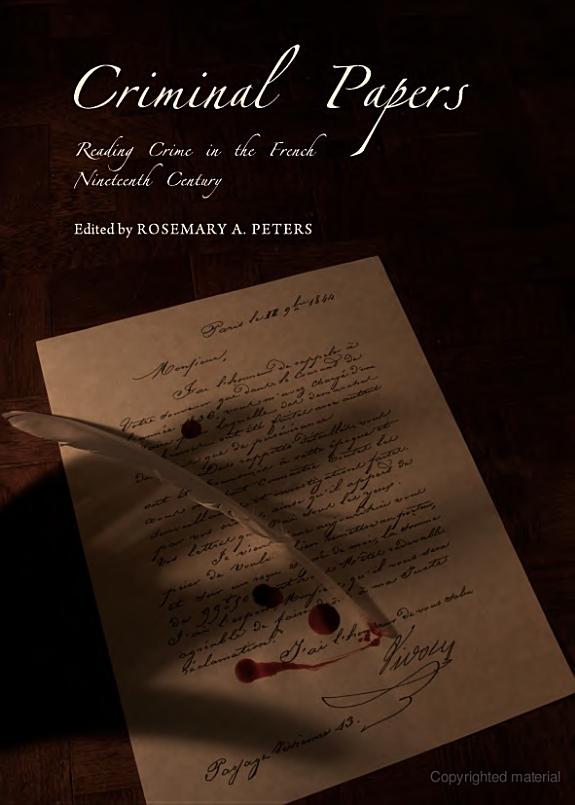
Criminal Papers

Criminal Papers

Reading Crime in the French Nineteenth Century

by Rosemary A. Peters

260 pages· 2012· ISBN 9781443838481

Browse books you can read free on Readfeed

No club is reading this yet — be the first to start one

Start a club free
About
Throughout the nineteenth century, shady characters appear in French writings from one end of the literary spectrum to another. While Paris gleams through the night, the City of Lights has a darker underside with its own infrastructure, its own rules and traditions – and its own literature. In the shadows of the capital, thieves, murderers, addicts, shoplifters, seducers, and smugglers carry out their nefarious acts, pursued by detectives (both police and private) who seek to apprehend and analyze them. These novels pave the way for a new genre, the detective novel or roman polar, which gains ever-increasing popularity as the nineteenth century moves toward its close and the twentieth dawns with developments in literature and other genres. These stories are experimental by nature, and lend themselves to further innovations, both apertures (to borrow Barthes’s term) and departures. In addition, the detective stories of the nineteenth century contribute to the creation of a new art in the twentieth century: they are part and parcel of the work of film, especially film noir. This volume considers literature of the criminal underworld and its encounters with society, in the city and the popular imagination. The twelve essays compiled here examine the intersections between law and literature in the nineteenth century, from the newly adjusted property laws after the Revolution of 1789 through the scientific discourse around kleptomania in the fin-de-siècle. The authors question how texts, both canonical and “paraliterary,” are inscribed into the social, political, economic and artistic dialogues of the period. Other questions come up in these textual examinations: how are real-life criminals and the spaces they inhabit translated into literary ones? How do crimes in novels reflect or produce social tensions and preoccupations around issues of gender, education, class, and ideology? And, perhaps most importantly, what does it mean to be the “author of a crime”?

Discuss Criminal Papers with other readers

Join or start a book club for Criminal Papers on Readfeed. Live chat, shared reading progress, and AI discussion questions — free to get started.

Frequently asked questions

How do I join a book club for Criminal Papers?

Sign up free on Readfeed, then browse public clubs or start your own club with Criminal Papers as the current read. Invite friends with a share link and discuss together with live chat and AI discussion questions.

Can I discuss Criminal Papers with other readers online?

Yes. Readfeed book clubs let you chat live, share progress, and join discussions about Criminal Papers with readers worldwide — whether your club is virtual, in-person, or hybrid.

Is Readfeed free?

Yes. Creating an account and joining book clubs is free. Sign up to find readers who love the same books and start discussing today.