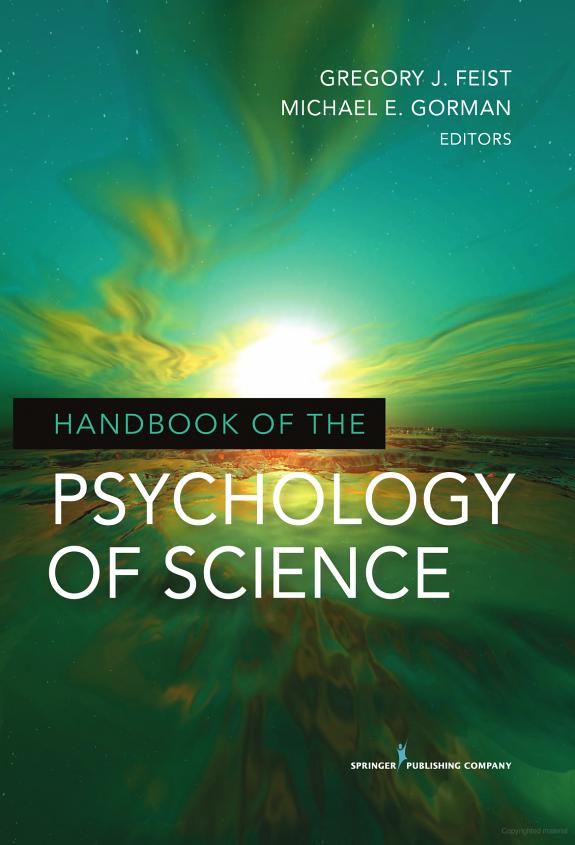
Handbook of the Psychology of Science

Handbook of the Psychology of Science

by Gregory J. Feist, Michael E. Gorman

544 pages· 2012· ISBN 9780826106247

Browse books you can read free on Readfeed

No club is reading this yet — be the first to start one

Start a club free
About
"Highly recommended."--Choice: Current Reviews for Academic Libraries This handbook is the definitive resource for scholars and students interested in how research and theory within each of the major domains of psychologyódevelopmental, cognitive, personality, and socialóhave been applied to understand the nature of scientific thought and behavior. Edited by two esteemed pioneers in the emerging discipline of the psychology of science, it is the first empirically based compendium of its time. The handbook provides a comprehensive examination of how scientific thinking is learned and evolves from infancy to adolescence and adulthood, and combines developmental and cognitive approaches to show the categorical similarities and differences in thinking between children, adolescents, adults, and scientists. Chapters highlight the breadth and depth of psychological perspectives in the studies of science, from creativity and genius, gender, and conflict and cooperation, to postmodernism and psychobiography. A section on applications offers findings and ideas that can be put to use by educators, policymakers, and science administrators. Contributors examine the importance of mental models in solving difficult technical problems, and the significance of leadership and organizational structure in successful innovation. The final section of the book is devoted to the future of this new field, focusing on how to continue to develop a healthy psychology of science. Key Features: Presents the only empirically based compendium of current knowledge about the psychology of scientific thought and behavior Edited by two pioneers in the discipline of psychology of science Describes how scientific thinking is learned and changes throughout the life span Addresses creativity and genius, gender, conflict and cooperation, postmodernism, and psychobiography Covers applications of the psychology of science that can be used by educators, policymakers, and science administrators

Discuss Handbook of the Psychology of Science with other readers

Join or start a book club for Handbook of the Psychology of Science on Readfeed. Live chat, shared reading progress, and AI discussion questions — free to get started.

Frequently asked questions

How do I join a book club for Handbook of the Psychology of Science?

Sign up free on Readfeed, then browse public clubs or start your own club with Handbook of the Psychology of Science as the current read. Invite friends with a share link and discuss together with live chat and AI discussion questions.

Can I discuss Handbook of the Psychology of Science with other readers online?

Yes. Readfeed book clubs let you chat live, share progress, and join discussions about Handbook of the Psychology of Science with readers worldwide — whether your club is virtual, in-person, or hybrid.

Is Readfeed free?

Yes. Creating an account and joining book clubs is free. Sign up to find readers who love the same books and start discussing today.