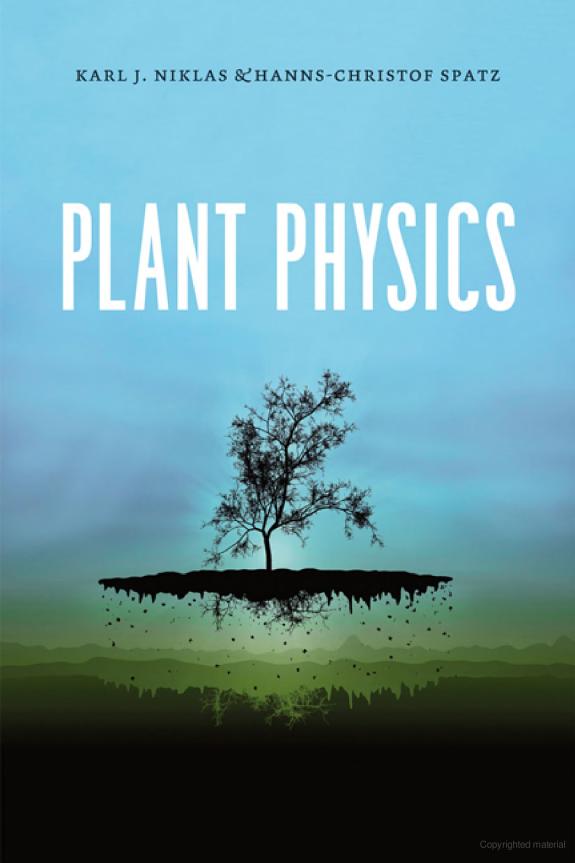
Plant Physics
by Karl J. Niklas, Hanns-Christof Spatz
448 pages· 2012· ISBN 9780226586342
About
From Galileo, who used the hollow stalks of grass to demonstrate the idea that peripherally located construction materials provide most of the resistance to bending forces, to Leonardo da Vinci, whose illustrations of the parachute are alleged to be based on his study of the dandelion’s pappus and the maple tree’s samara, many of our greatest physicists, mathematicians, and engineers have learned much from studying plants. A symbiotic relationship between botany and the fields of physics, mathematics, engineering, and chemistry continues today, as is revealed in Plant Physics. The result of a long-term collaboration between plant evolutionary biologist Karl J. Niklas and physicist Hanns-Christof Spatz, Plant Physics presents a detailed account of the principles of classical physics, evolutionary theory, and plant biology in order to explain the complex interrelationships among plant form, function, environment, and evolutionary history. Covering a wide range of topics—from the development and evolution of the basic plant body and the ecology of aquatic unicellular plants to mathematical treatments of light attenuation through tree canopies and the movement of water through plants’ roots, stems, and leaves—Plant Physics is destined to inspire students and professionals alike to traverse disciplinary membranes.
Discuss Plant Physics with other readers
Join or start a book club for Plant Physics on Readfeed. Live chat, shared reading progress, and AI discussion questions — free to get started.
Frequently asked questions
How do I join a book club for Plant Physics?
Sign up free on Readfeed, then browse public clubs or start your own club with Plant Physics as the current read. Invite friends with a share link and discuss together with live chat and AI discussion questions.
Can I discuss Plant Physics with other readers online?
Yes. Readfeed book clubs let you chat live, share progress, and join discussions about Plant Physics with readers worldwide — whether your club is virtual, in-person, or hybrid.
Is Readfeed free?
Yes. Creating an account and joining book clubs is free. Sign up to find readers who love the same books and start discussing today.