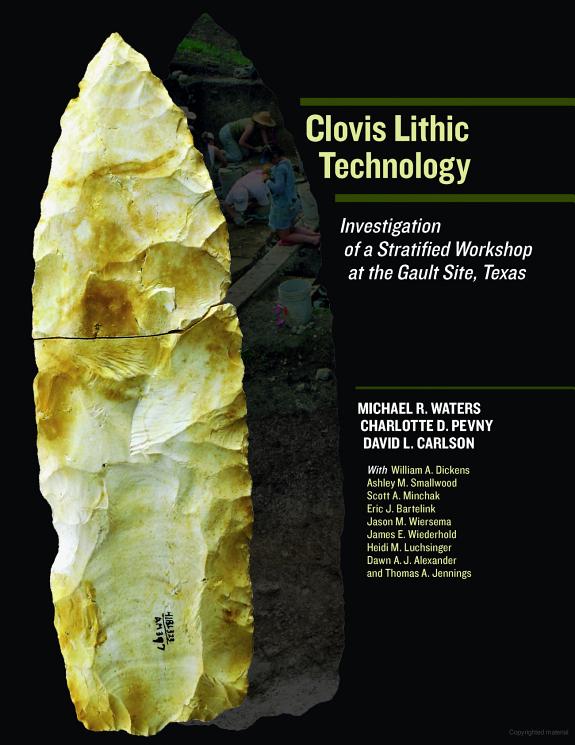
Clovis Lithic Technology

Clovis Lithic Technology

Investigation of a Stratified Workshop at the Gault Site, Texas

by Michael R. Waters, David L. Carlson, Charlotte D. Pevny, Thomas A. Jennings

224 pages· 2011· ISBN 9781603444675
About
Some 13,000 years ago, humans were drawn repeatedly to a small valley in what is now Central Texas, near the banks of Buttermilk Creek. These early hunter-gatherers camped, collected stone, and shaped it into a variety of tools they needed to hunt game, process food, and subsist in the Texas wilderness. Their toolkit included bifaces, blades, and deadly spear points. Where they worked, they left thousands of pieces of debris, which have allowed archaeologists to reconstruct their methods of tool production. Along with the faunal material that was also discarded in their prehistoric campsite, these stone, or lithic, artifacts afford a glimpse of human life at the end of the last ice age during an era referred to as Clovis. The area where these people roamed and camped, called the Gault site, is one of the most important Clovis sites in North America. A decade ago a team from Texas A&M University excavated a single area of the site—formally named Excavation Area 8, but informally dubbed the Lindsey Pit—which features the densest concentration of Clovis artifacts and the clearest stratigraphy at the Gault site. Some 67,000 lithic artifacts were recovered during fieldwork, along with 5,700 pieces of faunal material. In a thorough synthesis of the evidence from this prehistoric “workshop,” Michael R. Waters and his coauthors provide the technical data needed to interpret and compare this site with other sites from the same period, illuminating the story of Clovis people in the Buttermilk Creek Valley.

Discuss Clovis Lithic Technology with other readers

Join or start a book club for Clovis Lithic Technology on Readfeed. Live chat, shared reading progress, and AI discussion questions — free to get started.

Frequently asked questions

How do I join a book club for Clovis Lithic Technology?

Sign up free on Readfeed, then browse public clubs or start your own club with Clovis Lithic Technology as the current read. Invite friends with a share link and discuss together with live chat and AI discussion questions.

Can I discuss Clovis Lithic Technology with other readers online?

Yes. Readfeed book clubs let you chat live, share progress, and join discussions about Clovis Lithic Technology with readers worldwide — whether your club is virtual, in-person, or hybrid.

Is Readfeed free?

Yes. Creating an account and joining book clubs is free. Sign up to find readers who love the same books and start discussing today.