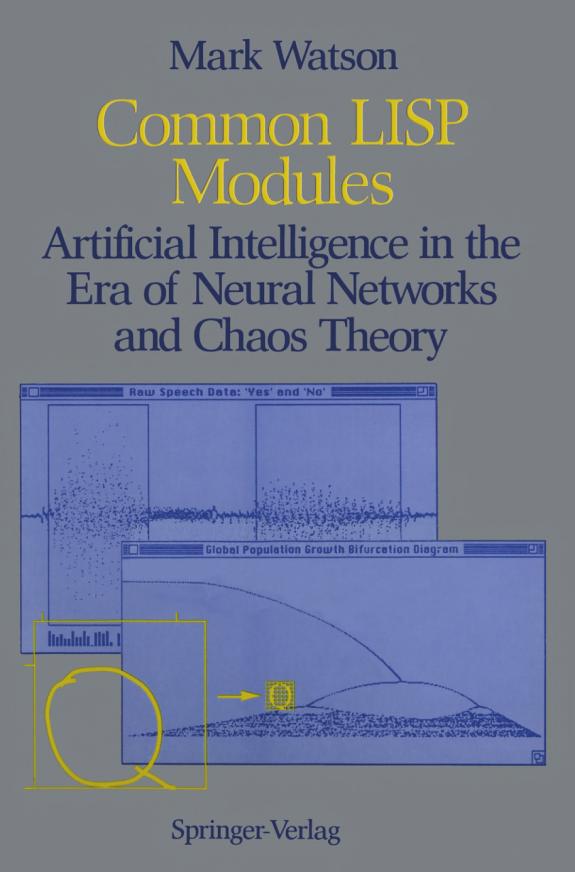
Common LISP Modules

Common LISP Modules

Artificial Intelligence in the Era of Neural Networks and Chaos Theory

by Mark Watson

207 pages· 2012· ISBN 9781461231868
About
While creativity plays an important role in the advancement of computer science, great ideas are built on a foundation of practical experience and knowledge. This book presents programming techniques which will be useful in both AI projects and more conventional software engineering endeavors. My primary goal is to enter tain, to introduce new technologies and to provide reusable software modules for the computer programmer who enjoys using programs as models for solutions to hard and interesting problems. If this book succeeds in entertaining, then it will certainly also educate. I selected the example application areas covered here for their difficulty and have provided both program examples for specific applications and (I hope) the method ology and spirit required to master problems for which there is no obvious solution. I developed the example programs on a Macintosh TM using the Macintosh Common LISP TM development system capturing screen images while the example programs were executing. To ensure portability to all Common LISP environments, I have provided a portable graphics library in Chapter 2. All programs in this book are copyrighted by Mark Watson. They can be freely used in any free or commercial software systems if the following notice appears in the fine print of the program's documentation: "This program contains software written by Mark Watson." No royalties are required. The program miniatures contained in this book may not be distributed by posting in source code form on public information networks, or in printed form without my written permission.

Discuss Common LISP Modules with other readers

Join or start a book club for Common LISP Modules on Readfeed. Live chat, shared reading progress, and AI discussion questions — free to get started.

Frequently asked questions

How do I join a book club for Common LISP Modules?

Sign up free on Readfeed, then browse public clubs or start your own club with Common LISP Modules as the current read. Invite friends with a share link and discuss together with live chat and AI discussion questions.

Can I discuss Common LISP Modules with other readers online?

Yes. Readfeed book clubs let you chat live, share progress, and join discussions about Common LISP Modules with readers worldwide — whether your club is virtual, in-person, or hybrid.

Is Readfeed free?

Yes. Creating an account and joining book clubs is free. Sign up to find readers who love the same books and start discussing today.