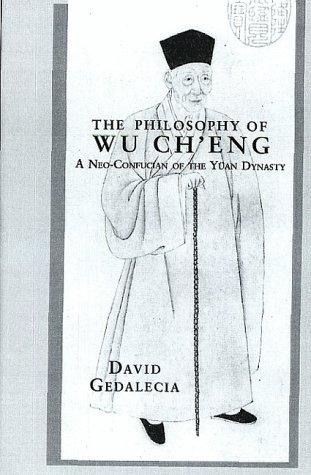
The philosophy of Wu Chʻeng

The philosophy of Wu Chʻeng

by David Gedalecia

Part of Indiana University oriental series ;

Browse books you can read free on Readfeed

No club is reading this yet — be the first to start one

Start a club free
About
This first full-length study of the thought of Wu Ch’eng (1249-1333), who was the foremost classical scholar and philosopher during the century of Mongol rule in China, incorporates translations of his seminal essays on metaphysics, ethics, and the mind. Trained in the teachings of the Sung thinker Chu Hsi, who emphasized broad learning to understand moral principles, Wu's reflections on the Confucian tradition and his experiences in official position and as a private teacher led him toward moral introspection and the intuitionism of Chu's contemporary Lu Hsiang-shan. Wu believed that metaphysical discourse was limited by language, that only through experience could one assimilate moral truth to illuminate the mind. In synthesizing Sung Confucian ideas, Wu foreshadowed trends in Ming and Ch’ing thought. Ming thinkers who developed the philosophy of mind, such as Wang Yang-ming, endorsed Wu’s path to moral enlightenment, and Wu’s synthesis of scholarship and introspection, as well as his creative approach to learning and intellectual freedom, had an impact on thinkers well into the Ch'ing era.

Discuss The philosophy of Wu Chʻeng with other readers

Join or start a book club for The philosophy of Wu Chʻeng on Readfeed. Live chat, shared reading progress, and AI discussion questions — free to get started.

Frequently asked questions

How do I join a book club for The philosophy of Wu Chʻeng?

Sign up free on Readfeed, then browse public clubs or start your own club with The philosophy of Wu Chʻeng as the current read. Invite friends with a share link and discuss together with live chat and AI discussion questions.

Can I discuss The philosophy of Wu Chʻeng with other readers online?

Yes. Readfeed book clubs let you chat live, share progress, and join discussions about The philosophy of Wu Chʻeng with readers worldwide — whether your club is virtual, in-person, or hybrid.

Is Readfeed free?

Yes. Creating an account and joining book clubs is free. Sign up to find readers who love the same books and start discussing today.