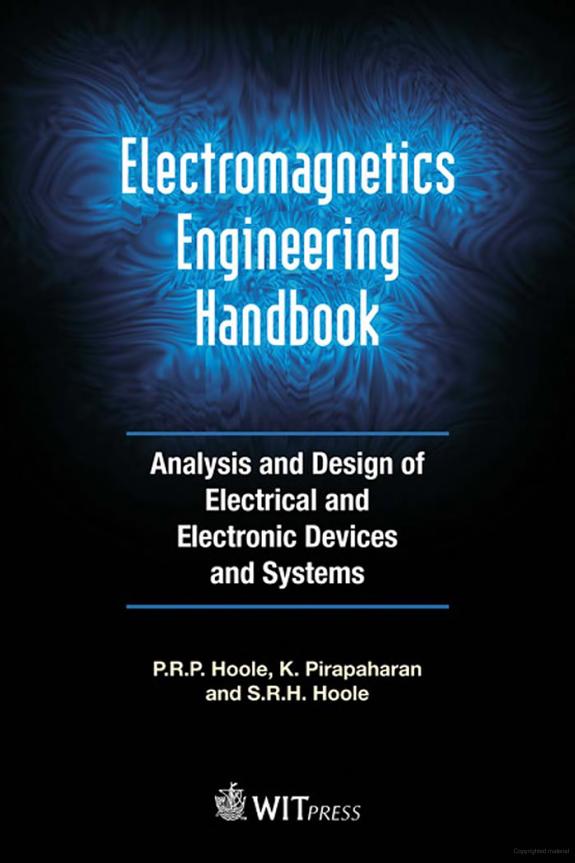
Electromagnetics Engineering Handbook

Electromagnetics Engineering Handbook

Analysis and Design of Electrical and Electronic Devices and Systems

by Paul R. P. Hoole, Paul Ratnamahilan P. Hoole, K. Pirapaharan, S. R. H. Hoole

414 pages· 2013· ISBN 9781845647988

Browse books you can read free on Readfeed

No club is reading this yet — be the first to start one

Start a club free
About
Electromagnetic fields, both static and dynamic, form the foundational basis of all electrical and electronic engineering devices and systems. Aimed at undergraduate students, university teachers, design and consultant engineers and researchers this book presents an in-depth, simple and comprehensive reference source on electromagnetics engineering.In much of electrical and electronics engineering (including: analogue and digital telecommunications engineering; biomedical monitoring and diagnostic equipment; power systems engineering and sensor technology) getting back to the fundamental principles that govern the technologies, namely electromagnetic fields and waves, has become crucial for future customer friendly technology and systems. Electromagnetics Engineering Handbook has been written to enable undergraduate students studying electromagnetics engineering for the first time to gain an understanding of the essentials of the largely invisible, but powerful, electromagnetic fields governed by the four elegant Maxwell's equations. Moreover, the book helps to apply that knowledge through analytical and computational solutions of these frequency and material dependent electric and magnetic fields. As electrical and electronic engineering grows and subdivides into many specialities this book aims to inform the reader of the basic principles that govern all of these specialised systems and on how to apply that knowledge to understand and design devices and systems that may operate at vastly different frequencies and in various media (e.g. semiconductor materials, magnetic materials, biological tissues, outer space and sea water). It also deals with a range of different functions dependant on the area of application. For example at very low power frequencies electromagnetic fields perform vastly different functions from device to device, such as in power transformers; current transformers; infrared sensors; synchronous generators; superconducting devices; electric motors and electric powered transport systems. This handbook will be of great help to students, engineers, innovators and researchers working in a wide variety of disciplines

Discuss Electromagnetics Engineering Handbook with other readers

Join or start a book club for Electromagnetics Engineering Handbook on Readfeed. Live chat, shared reading progress, and AI discussion questions — free to get started.

Frequently asked questions

How do I join a book club for Electromagnetics Engineering Handbook?

Sign up free on Readfeed, then browse public clubs or start your own club with Electromagnetics Engineering Handbook as the current read. Invite friends with a share link and discuss together with live chat and AI discussion questions.

Can I discuss Electromagnetics Engineering Handbook with other readers online?

Yes. Readfeed book clubs let you chat live, share progress, and join discussions about Electromagnetics Engineering Handbook with readers worldwide — whether your club is virtual, in-person, or hybrid.

Is Readfeed free?

Yes. Creating an account and joining book clubs is free. Sign up to find readers who love the same books and start discussing today.