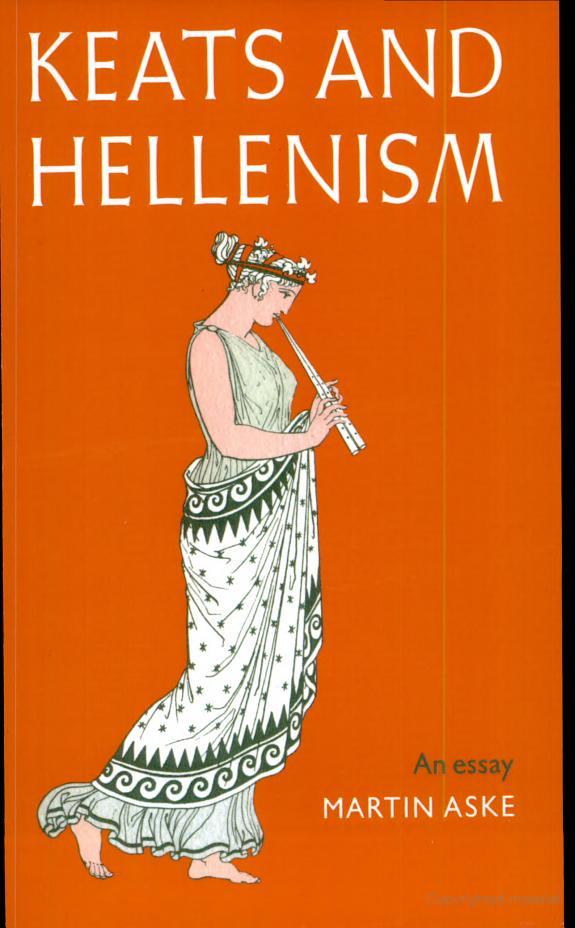
Keats and Hellenism
An Essay
by Martin Aske
208 pages· 2005· ISBN 9780521604192
About
This book proposes a fresh and original interpretation of Keats' use of classical mythology in his verse. Dr Aske argues that classical antiquity appears to Keats as a supreme fiction, authoritative yet disconcerting, and his poems represent hard endeavours to come to terms with the influence of that fiction. The major poems (most notably Endymion, Hyperion, the Ode on a Grecian Urn and Lamia) form a stage, as it were, upon which is played out a psychic drama between the modern poet and his classical muse. The study is especially bold in its assimilation of historical scholarship and literary theory to a close reading of the texts. Individual poems are discussed in the context of late Enlightenment and Romantic attitudes towards antiquity and in the light of recent critical theory, in particular the theory of literary history and influence formulated by Harold Bloom and Geoffrey Hartman. Keats emerges as a significant example of the way in which a poet tries to establish a distinct identity under the burden of history and of literary tradition.
Discuss Keats and Hellenism with other readers
Join or start a book club for Keats and Hellenism on Readfeed. Live chat, shared reading progress, and AI discussion questions — free to get started.
Frequently asked questions
How do I join a book club for Keats and Hellenism?
Sign up free on Readfeed, then browse public clubs or start your own club with Keats and Hellenism as the current read. Invite friends with a share link and discuss together with live chat and AI discussion questions.
Can I discuss Keats and Hellenism with other readers online?
Yes. Readfeed book clubs let you chat live, share progress, and join discussions about Keats and Hellenism with readers worldwide — whether your club is virtual, in-person, or hybrid.
Is Readfeed free?
Yes. Creating an account and joining book clubs is free. Sign up to find readers who love the same books and start discussing today.