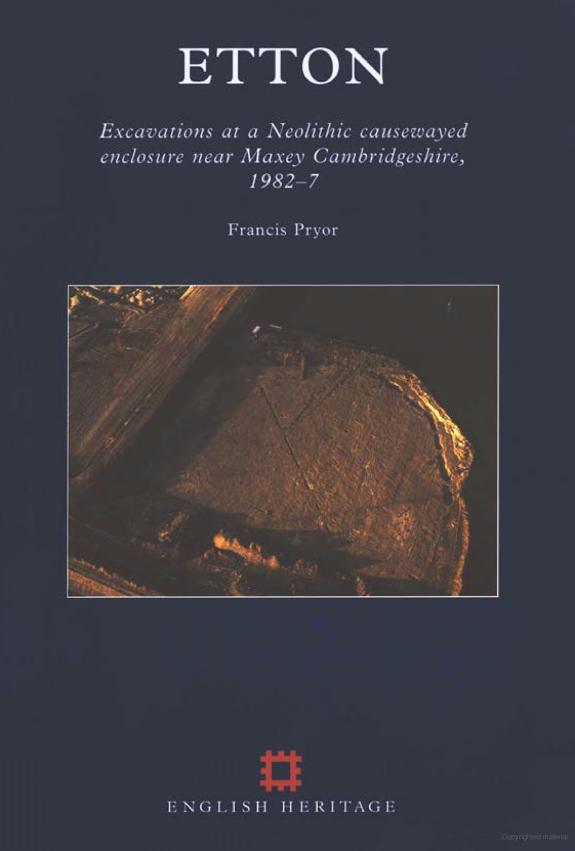
The Neolithic causewayed enclosure at Etton, cut into a Pleistocene gravel river terrace, occupied a floodplain 'island' within a relict stream meander in the Welland Valley, Maxey, Cambridgeshire. Regular flooding laid down layers of clay alluvium, mainly in Iron Age and later times, preserving a palaesol and protecting the site from modern plough damage. The causewayed enclosure, small by British standards, comprised a single, 'squashed oval' shaped ditch. Excavations revealed c 80% of the interior and most date the construction and use to the fourth millennium cal BC, that is, early in the tradition of British causewayed enclosures. Most of the excavated features are Early Neolithic; Late Neolithic and earlier Bronze Age features were associated with the ditch of a cursus, which traversed the enclosure diagonally. Causeways entered the enclosure on the north, which featured a substantial timber gateway, east, west, and possibly the south (which could not be examined). Through the life of the site additional features were built and aligned with care: a north-south dividing fence, aligned with the north gateway, in Phase 1 and numerous ritual pits, back-filled with pottery (often deliberately smashed), flint, and animal bones. These pits may have represented individual people and the cntents allude to the person's skills, achievements, or social position. The nearest ditch segment probably represented an individual's family or kin-group. The inhabitants were careful not to damage earlier deposits when digging new pits, and it was thus possible to define an evolving tradition of carefully structured ritual deposits. Objects such as complete pots or skulls were also placed close to causeways, within the buttends of individual ditch segments. In Phase 2 (Late Neolithic) such deposits were more sporadic, but ritual continued to dominate. Most of the pottery from the pits is a regional variant of the Hurst Fen tradition. Fengate-style wares also feature prominently, and flintwork, 'imported' polished stone axes, and other stone objects were also deposited. The western arc of the enclosure ditch produced some 5000 pieces of worked wood, most of which derived from coppice.