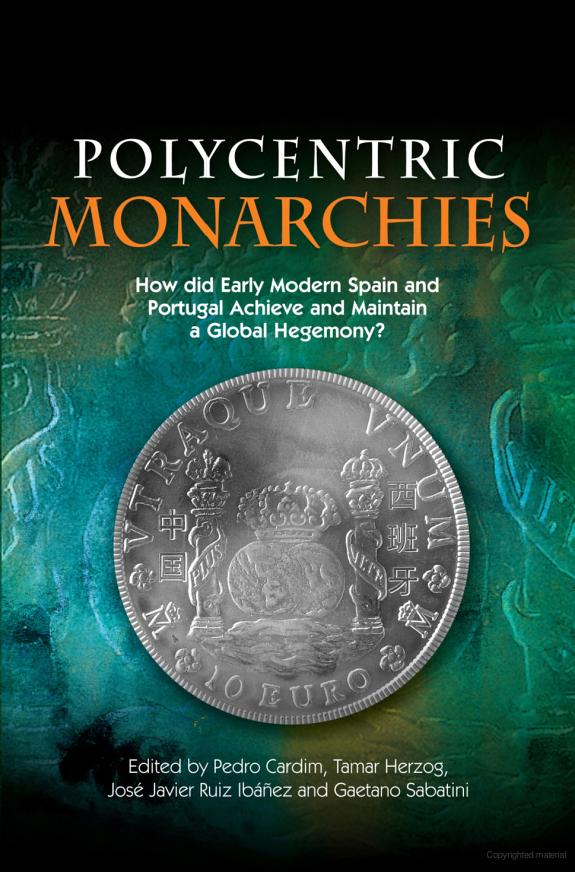
Polycentric Monarchies

Polycentric Monarchies

How Did Early Modern Spain and Portugal Achieve and Maintain a Global Hegemony?

by Pedro Cardim, Tamar Herzog, José Javier Ruiz Ibáñez, Gaetano Sabatini

320 pages· 2013· ISBN 9781782840916
About
Having succeeded in establishing themselves in Europe, Asia, Africa and the Americas, in the early 16th century Spain and Portugal became the first imperial powers on a worldwide scale. Between 1580 and 1640, when these two entities were united, they achieved an almost global hegemony, constituting the largest political force in Europe and abroad. Although they lost their political primacy in the seventeenth century, both monarchies survived and were able to enjoy a relative success until the early 19th century. The aim of this collection is to answer the question how and why their cultural and political legacies persist to date. ... Part I focuses on the construction of the monarchy, examining the ways different territories integrated in the imperial network mainly by inquiring to what extent local political elites maintained their autonomy, and to what a degree they shared power with the royal administration. Part II deals primarily with the circulation of ideas, models and people, observing them as they move in space but also as they coincide in the court, which was a veritable melting pot in which the various administrations that served the Kings and the various territories belonging to the monarchy developed their own identities, fought for recognition, and for what they considered their proper place in the global hierarchy. Part III explains the forms of dependence and symbiosis established with other European powers, such as Genoa and the United Provinces. Attempting to reorient the politics of these states, political and financial co-dependence often led to bad economic choices. ... The Editors and Contributors discard the portrayal of the Iberian monarchies as the accumulation of many bilateral relations arranged in a radial pattern, arguing that these political entities were polycentric, that is to say, they allowed for the existence of many different centers which interacted and thus participated in the making of empire. The resulting political structure was complex and unstable, albeit with a general adhesion to a discourse of loyalty to King and religion.

Discuss Polycentric Monarchies with other readers

Join or start a book club for Polycentric Monarchies on Readfeed. Live chat, shared reading progress, and AI discussion questions — free to get started.

Frequently asked questions

How do I join a book club for Polycentric Monarchies?

Sign up free on Readfeed, then browse public clubs or start your own club with Polycentric Monarchies as the current read. Invite friends with a share link and discuss together with live chat and AI discussion questions.

Can I discuss Polycentric Monarchies with other readers online?

Yes. Readfeed book clubs let you chat live, share progress, and join discussions about Polycentric Monarchies with readers worldwide — whether your club is virtual, in-person, or hybrid.

Is Readfeed free?

Yes. Creating an account and joining book clubs is free. Sign up to find readers who love the same books and start discussing today.