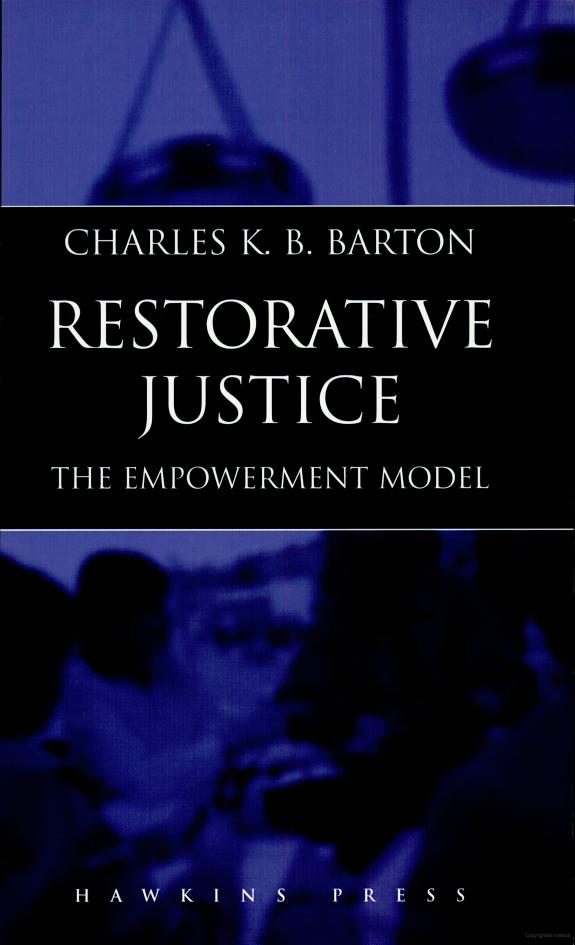
Restorative Justice
The Empowerment Model
by Charles K. B. Barton
194 pages· 2003· ISBN 9781876067168
About
The primary aim of this book is to equip the reader with a thorough understanding of restorative justice philosophy, theory and good practice. In doing so it presents a powerful challenge to many current accounts of the criminal justice system. Charles Barton gives a clear and insightful analysis of current restorative justice philosophy and theory. He uses a unifying and overarching principle of empowerment to provide a distinct conceptual framework for restorative justice theory and practice. He puts forward a step-by-step implementation process which includes restorative meeting facilitation, complete with seating plans and scripted prompts for mediators, keepers, and facilitators. Barton emphasises the importance of each participant in a restorative justice meeting --the victims, offenders and their supporters as well as professionals such as police, social workers and legal advocates. Successful programs must consistently and reliably achieve maximally restorative outcomes for all of them.
Discuss Restorative Justice with other readers
Join or start a book club for Restorative Justice on Readfeed. Live chat, shared reading progress, and AI discussion questions — free to get started.
Frequently asked questions
How do I join a book club for Restorative Justice?
Sign up free on Readfeed, then browse public clubs or start your own club with Restorative Justice as the current read. Invite friends with a share link and discuss together with live chat and AI discussion questions.
Can I discuss Restorative Justice with other readers online?
Yes. Readfeed book clubs let you chat live, share progress, and join discussions about Restorative Justice with readers worldwide — whether your club is virtual, in-person, or hybrid.
Is Readfeed free?
Yes. Creating an account and joining book clubs is free. Sign up to find readers who love the same books and start discussing today.