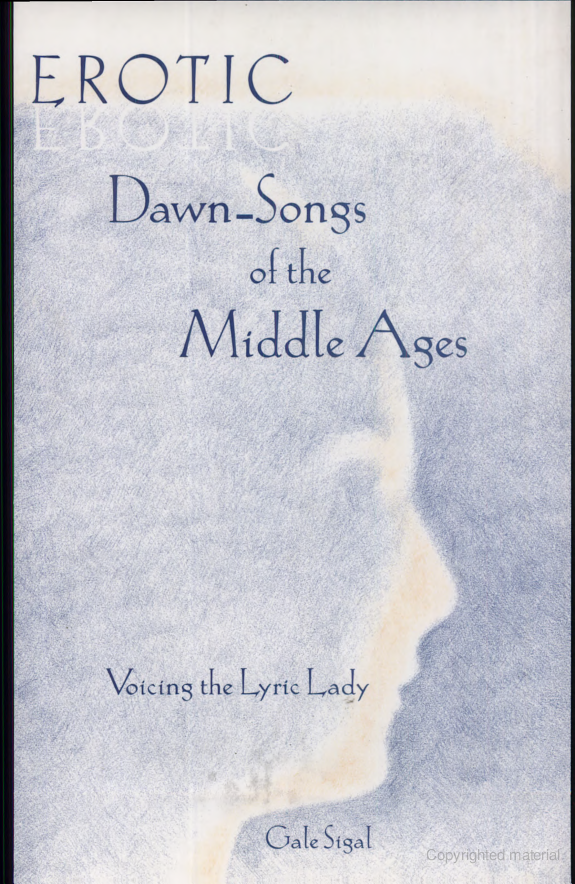
Erotic Dawn-songs of the Middle Ages

Erotic Dawn-songs of the Middle Ages

Voicing the Lyric Lady

by Gale Sigal

241 pages· 1996· ISBN 9780813013817

Browse books you can read free on Readfeed

About
"Should appeal to the many feminist critics who have summarily dismissed courtly literature or studied it only in terms of idealization. . . . Sigal's truly comparative methodology will garner the attention of critics outside the narrow domain of Occitan/Provençal studies. . . . Long overdue."--William E. Burgwinkle, University of Hawaii The alba, or dawn-song, takes its name from the hour at which it is sung. Appearing in southern France around the middle of the 12th century, the genre presents the parting plaints of adulterous lovers. Such erotically charged songs blend the lyricism, dramatic power, and poignancy implicit in the lovers' plight. The alba is the only genre in an emerging vernacular lyric corpus whose focus is reciprocal romantic love. Like dawn itself, the alba has two faces. As the sunrise brings an end to the secret lovers' night of passion, one face joyfully looks back to stolen hours of forbidden love, while the other mourns love's bittersweet passing. Gale Sigal reexamines the role of the female voice as it is commonly viewed in the history of Western lyric. Among lyric ladies, the alba lady plays a vital role: she dramatizes the female love experience in her own voice. The traditional image of the silenced and repressed lady of the canso (the "canonical lyric genre") is overturned by the alba lady's forceful presence and eloquent voice. That voice cries out for a hearing, while the canso lady's is still. The alba is one poetic form in which the ambivalence toward, and mistreatment of, women that appears so blatant in other medieval literary genres vanishes. This perspective helps us to reassess the significance not merely of the alba but of the lady's place in the entire lyric enterprise. Erotic Dawn-Songs redirects our attention to this lyric lady, who for the first time assumes her rightful place at the critical center of a lyric continuum in which an array of women are presented from varying points of view. In the process this book crosses a number of disciplinary borders including comparative literature, social and literary history, women's studies, and medieval studies. Gale Sigal is associate professor of English at Wake Forest University. She is the coeditor of Voices in Translation: The Authority of 'Olde Bookes' in Medieval Literature, Essays in Honor of Helaine Newstead and the author of articles in The Romanic Review, Medieval Perspectives, Tenso, and other journals.

Discuss Erotic Dawn-songs of the Middle Ages with other readers

Join or start a book club for Erotic Dawn-songs of the Middle Ages on Readfeed. Live chat, shared reading progress, and AI discussion questions — free to get started.

Frequently asked questions

How do I join a book club for Erotic Dawn-songs of the Middle Ages?

Sign up free on Readfeed, then browse public clubs or start your own club with Erotic Dawn-songs of the Middle Ages as the current read. Invite friends with a share link and discuss together with live chat and AI discussion questions.

Can I discuss Erotic Dawn-songs of the Middle Ages with other readers online?

Yes. Readfeed book clubs let you chat live, share progress, and join discussions about Erotic Dawn-songs of the Middle Ages with readers worldwide — whether your club is virtual, in-person, or hybrid.

Is Readfeed free?

Yes. Creating an account and joining book clubs is free. Sign up to find readers who love the same books and start discussing today.