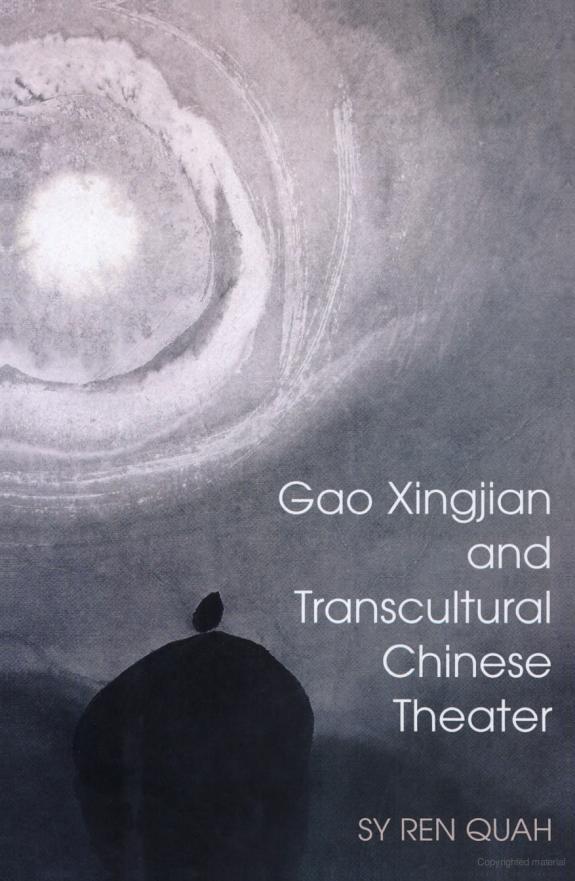
Gao Xingjian and Transcultural Chinese Theater

Gao Xingjian and Transcultural Chinese Theater

by Sy Ren Quah

225 pages· 2004· ISBN 9780824826291

Browse books you can read free on Readfeed

No club is reading this yet — be the first to start one

Start a club free
About
A reclusive painter living in exile in Paris, Gao Xingjian found himself instantly famous when he became the first Chinese-language writer to receive the Nobel Prize in Literature (2000). The author of the novel Soul Mountain, Gao is best known in his native country not as a visual artist or novelist, but as a playwright and theater director. This important yet rarely studied figure is the focus of Sy Ren Quah's rich account appraising his contributions to contemporary Chinese and world theater over the past two decades. A playwright himself, Quah provides an in-depth analysis of the literary, dramatic, intellectual, and technical aspects of Gao's plays and theatrical concepts, treating Gao's theater not only as an art form but, with Gao himself, as a significant cultural phenomenon. The Bus Stop, Wild Man, and other early works are examined in the context of 1980s China. Chinese theater arts and philosophies, Gao refused to conform to the dominant realist conventions of the time and made a conscious effort to renovate Chinese theater. The young playwright sought to create a Modern Eastern Theater that was neither a vague generalization nor a nationalistic declaration, but a challenge to orthodox ideologies. After fleeing China, Gao was free to experiment openly with theatrical forms. Quah examines his post-exile plays in a context of performance theory and philosophical concerns, such as the real versus the unreal, and the Self versus the Other. The image conveyed of Gao is not of an activist but of an intellectual committed to maintaining his artistic independence who continues to voice his opinion on political matters. the history of Chinese drama due to his disinterest in social concerns. In the West, by contrast, his willingness to explore themes considered universal has won him a place within the world literature curriculum, but not widespread recognition. Students of modern and Chinese theater and literature, as well as those with an interest in comparative literature and cultural studies, will welcome this illuminating work that probes Gao Xingjian's transcultural creativity and its complex significance.

Discuss Gao Xingjian and Transcultural Chinese Theater with other readers

Join or start a book club for Gao Xingjian and Transcultural Chinese Theater on Readfeed. Live chat, shared reading progress, and AI discussion questions — free to get started.

Frequently asked questions

How do I join a book club for Gao Xingjian and Transcultural Chinese Theater?

Sign up free on Readfeed, then browse public clubs or start your own club with Gao Xingjian and Transcultural Chinese Theater as the current read. Invite friends with a share link and discuss together with live chat and AI discussion questions.

Can I discuss Gao Xingjian and Transcultural Chinese Theater with other readers online?

Yes. Readfeed book clubs let you chat live, share progress, and join discussions about Gao Xingjian and Transcultural Chinese Theater with readers worldwide — whether your club is virtual, in-person, or hybrid.

Is Readfeed free?

Yes. Creating an account and joining book clubs is free. Sign up to find readers who love the same books and start discussing today.