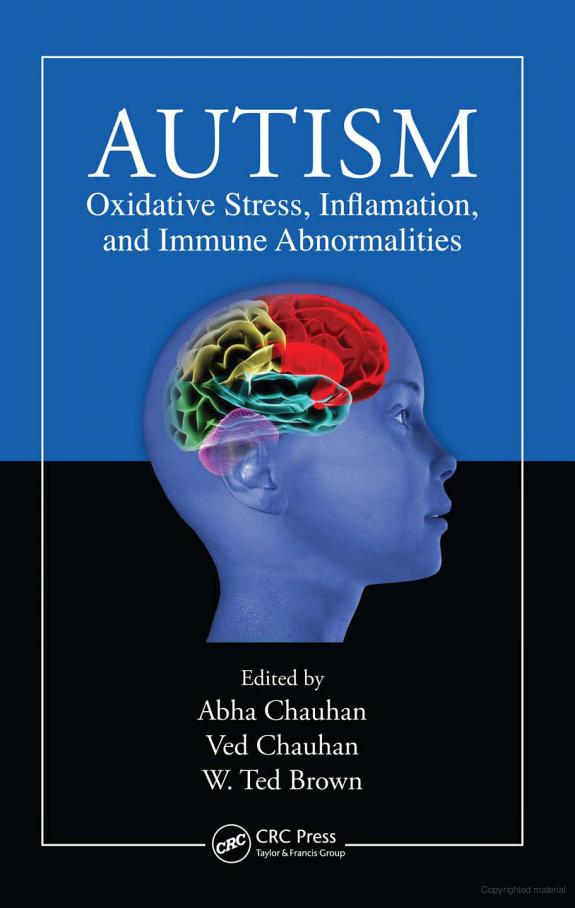
Autism

Autism

Oxidative Stress, Inflammation, and Immune Abnormalities

by Abha Chauhan, Ved Chauhan, Ted Brown

452 pages· 2009· ISBN 9781420068870

Browse books you can read free on Readfeed

No club is reading this yet — be the first to start one

Start a club free
About
In 2007, the Centers for Disease Control and Prevention issued an autism alarm, estimating that one in 150 children may be affected by autism spectrum disorder. Autism has been treated mainly with technical approaches: principally applied behavior analysis and psychopharmacology. The findings in this book implicate oxidative stress as a common feature in autism, and support the claim that oxidative stress and intracellular redox imbalance can be induced or triggered in autism by exposure to certain environmental agents. Such findings could point the way to new treatment approaches in autism. Autism: Oxidative Stress, Inflammation, and Immune Abnormalities brings together a wealth of cutting-edge evidence that is already influencing how we treat this serious condition. It looks at the role of neuropathological abnormalities, genetics, and those factors common to oxidative stress such as inflammation, immune dysfunction, aberrant cellular signaling, and gene-environment interactions. Among dozens of research topics, this volume — Looks at interactions between genetic and environmental factors such as the maternal immune environment and prenatal/postnatal environmental stressors Summarizes evidence for oxidative damage and inflammation in autism Introduces a PDD behavior inventory as a tool for assessing autism Considers autism as an aberrant adaptive response to neuroinflammation and oxidative stress Examines the role of abnormal calcium signaling and the hypothesis that it may represent a target for novel therapeutics Presents a hypothesis that autism arises from the dysregulation of a unified gut/brain system rather than originating in the brain alone Proposes the utility of using a biopsychosocial method to treat autism This book shows us that autism is not only developmental but also a chronic condition based on active pathophysiology, and that it is not only behavioral but also presents somatic and systemic features. The findings in these chapters support the theory that oxidative stress plays an important role in autism. They also point to the value of conducting in-depth mechanistic studies as a way to uncover new targets for therapeutic intervention in autism.

Discuss Autism with other readers

Join or start a book club for Autism on Readfeed. Live chat, shared reading progress, and AI discussion questions — free to get started.

Frequently asked questions

How do I join a book club for Autism?

Sign up free on Readfeed, then browse public clubs or start your own club with Autism as the current read. Invite friends with a share link and discuss together with live chat and AI discussion questions.

Can I discuss Autism with other readers online?

Yes. Readfeed book clubs let you chat live, share progress, and join discussions about Autism with readers worldwide — whether your club is virtual, in-person, or hybrid.

Is Readfeed free?

Yes. Creating an account and joining book clubs is free. Sign up to find readers who love the same books and start discussing today.