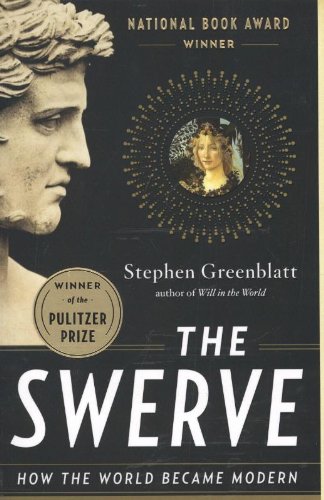
The Swerve: How the World Became Modern
by Stephen Greenblatt
Winner of the 2012 Pulitzer Prize for Non-Fiction
Winner of the 2011 National Book Award for Non-Fiction
Nearly six hundred years ago, a short, genial, cannily alert man in his late thirties took a very old manuscript off a library shelf, saw with excitement what he had discovered, and ordered that it be copied. That book was the last surviving manuscript of an ancient Roman philosophical epic, On the Nature of Things, by Lucretius―a beautiful poem of the most dangerous ideas: that the universe functioned without the aid of gods, that religious fear was damaging to human life, and that matter was made up of very small particles in eternal motion, colliding and swerving in new directions.
The copying and translation of this ancient book-the greatest discovery of the greatest book-hunter of his age-fueled the Renaissance, inspiring artists such as Botticelli and thinkers such as Giordano Bruno; shaped the thought of Galileo and Freud, Darwin and Einstein; and had a revolutionary influence on writers such as Montaigne and Shakespeare and even Thomas Jefferson. 16 pages of color illustrations
Discuss The Swerve: How the World Became Modern with other readers
Join or start a book club for The Swerve: How the World Became Modern on Readfeed. Live chat, shared reading progress, and AI discussion questions — free to get started.
Frequently asked questions
How do I join a book club for The Swerve: How the World Became Modern?
Sign up free on Readfeed, then browse public clubs or start your own club with The Swerve: How the World Became Modern as the current read. Invite friends with a share link and discuss together with live chat and AI discussion questions.
Can I discuss The Swerve: How the World Became Modern with other readers online?
Yes. Readfeed book clubs let you chat live, share progress, and join discussions about The Swerve: How the World Became Modern with readers worldwide — whether your club is virtual, in-person, or hybrid.
Is Readfeed free?
Yes. Creating an account and joining book clubs is free. Sign up to find readers who love the same books and start discussing today.