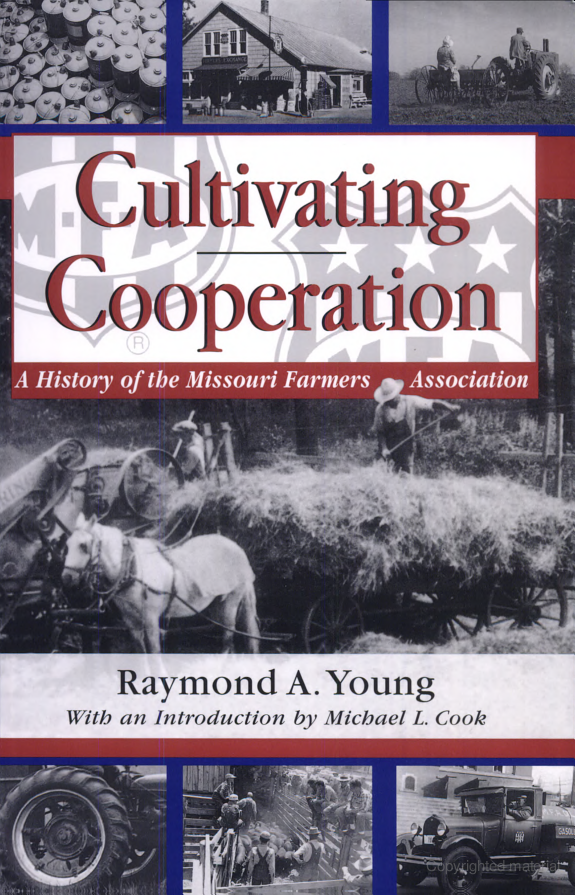
Cultivating Cooperation

Cultivating Cooperation

A History of the Missouri Farmers Association

by Raymond A. Young

246 pages· 1995· ISBN 9780826209993

Browse books you can read free on Readfeed

No club is reading this yet — be the first to start one

Start a club free
About
As one of the most successful farm organizations in the United States, the Missouri Farmers Association brought together farm clubs from all over the state to serve as the central body through which farmer-owned businesses could compete with investor-owned businesses. In Cultivating Cooperation, Raymond A. Young follows the fascinating history of MFA from its grass-roots beginning in a schoolhouse in 1914 through the upheaval that led to only the second leadership change in the organization's history in 1979. William Hirth was responsible for the early success of MFA. At the age of fifteen, Hirth became interested in farming and started lecturing on the benefits of building a cooperative of farm clubs. He continued to advocate this idea by publishing The Missouri Farmer, a magazine that informed subscribers on legislative issues and farm club news and later became MFA's house organ. Hirth believed that the farm clubs should capitalize not only on the economic advantages of joining together as a cooperative, but on the political and social advantages as well. Upon Hirth's death in 1940, Fred Heinkel took over leadership of MFA. Under his guidance, the cooperative grew at a feverish rate. Supply companies, such as oil refineries, feed mills, and seed plants, were acquired or built whenever it proved advantageous to the farmers. A sister cooperative was created to expand into neighboring states, and a national alliance was created to establish a stronger representation in Washington, D.C. MFA was also instrumental in securing a fourþyear medical school in its hometown of Columbia in order to ensure medical care for farmers and their families in rural areas. In addition, MFA has played a role in helping Third World countries develop cooperatives of their own. With intimate knowledge of the organization, Raymond Young involves the reader in the intricacies of the formation and development of the Missouri Farmers Association, enlivening his account with liberal use of anecdotes from the pages of The Missouri Farmer. An introduction by Michael L. Cook places the story of MFA within the context of the history of the cooperative movement nationwide. Students and scholars of Missouri history, as well as farmers and those interested in agriculture, will find this comprehensive examination of MFA an invaluable resource.

Discuss Cultivating Cooperation with other readers

Join or start a book club for Cultivating Cooperation on Readfeed. Live chat, shared reading progress, and AI discussion questions — free to get started.

Frequently asked questions

How do I join a book club for Cultivating Cooperation?

Sign up free on Readfeed, then browse public clubs or start your own club with Cultivating Cooperation as the current read. Invite friends with a share link and discuss together with live chat and AI discussion questions.

Can I discuss Cultivating Cooperation with other readers online?

Yes. Readfeed book clubs let you chat live, share progress, and join discussions about Cultivating Cooperation with readers worldwide — whether your club is virtual, in-person, or hybrid.

Is Readfeed free?

Yes. Creating an account and joining book clubs is free. Sign up to find readers who love the same books and start discussing today.