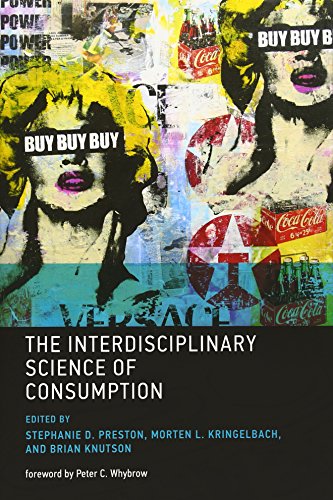
The Interdisciplinary Science of Consumption (The MIT Press)
by Peter C. Whybrow, Robert H. Frank, Terry Robinson, Morten L. Kringelbach, Gad Saad, Stephanie D. Preston, Brian Knutson, Sarah F. Brosnan, Darby Proctor, Vladas Griskevicius, Joseph P. Redden, Joshua M. Ackerman, Stephen Lea, Peter M. Todd, Sara L. Minard, David Sherry, Brian D. Vickers, Scott I. Rick, Uma Karmarkar, Michael L. Robinson, Kent Berridge, Hilke Plassmann, Tor Wager, Paul D. Webley, Chiraag Mittal, Bruce J. Ellis, Noah J. Webster, Toni C. Antonucci, Carolyn Yoon, Wayne R. McCullough, Debra Fin, Deb Hartsell
No club is reading this yet — be the first to start one
Scholars from psychology, neuroscience, economics, animal behavior, and evolution describe the latest research on the causes and consequences of overconsumption.
Our drive to consume―our desire for food, clothing, smart phones, and megahomes―evolved from our ancestors' drive to survive. But the psychological and neural processes that originally evolved to guide mammals toward resources that are necessary but scarce may mislead us in modern conditions of material abundance. Such phenomena as obesity, financial bubbles, hoarding, and shopping sprees suggest a mismatch between our instinct to consume and our current environment. This volume brings together research from psychology, neuroscience, economics, marketing, animal behavior, and evolution to explore the causes and consequences of consumption.
Contributors consider such topics as how animal food-storing informs human consumption; the downside of evolved “fast and frugal” rules for eating; how future discounting and the draw toward immediate rewards influence food consumption, addiction, and our ability to save; overconsumption as social display; and the policy implications of consumption science.
Taken together, the chapters make the case for an emerging interdisciplinary science of consumption that reflects commonalities across species, domains, and fields of inquiry. By carefully comparing mechanisms that underlie seemingly disparate outcomes, we can achieve a unified understanding of consumption that could benefit both science and society.
Discuss The Interdisciplinary Science of Consumption (The MIT Press) with other readers
Join or start a book club for The Interdisciplinary Science of Consumption (The MIT Press) on Readfeed. Live chat, shared reading progress, and AI discussion questions — free to get started.
Frequently asked questions
How do I join a book club for The Interdisciplinary Science of Consumption (The MIT Press)?
Sign up free on Readfeed, then browse public clubs or start your own club with The Interdisciplinary Science of Consumption (The MIT Press) as the current read. Invite friends with a share link and discuss together with live chat and AI discussion questions.
Can I discuss The Interdisciplinary Science of Consumption (The MIT Press) with other readers online?
Yes. Readfeed book clubs let you chat live, share progress, and join discussions about The Interdisciplinary Science of Consumption (The MIT Press) with readers worldwide — whether your club is virtual, in-person, or hybrid.
Is Readfeed free?
Yes. Creating an account and joining book clubs is free. Sign up to find readers who love the same books and start discussing today.