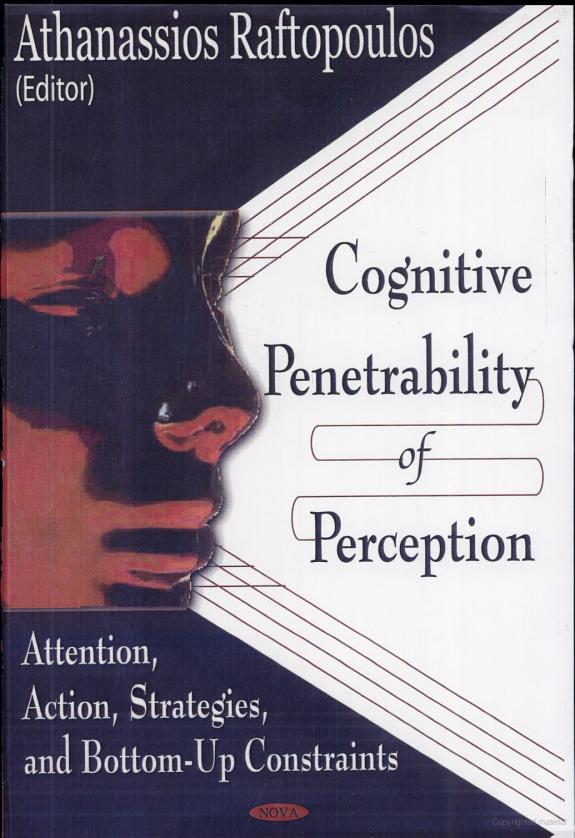
Cognitive Penetrability of Perception

Cognitive Penetrability of Perception

Attention, Action, Strategies, and Bottom-up Constraints

by Athanassios Raftopoulos

217 pages· 2005· ISBN 9781590339916

Browse books you can read free on Readfeed

No club is reading this yet — be the first to start one

Start a club free
About
The issue of the cognitive impenetrability or penetrability of perception lay dormant for a long period of time. Though philosophers reacted to the relativism implied by the work of Hanson, Kuhn, and Feyerabend, they concentrated their efforts in dealing with the danger of the incommensurability of theories. They tried to show by philosophical and detailed historical analysis that scientists within different paradigms do communicate with each other and put their respective theories to the empirical test. Curiously enough the same philosophers did not seek to examine the very foundation of the relativistic trend, namely the thesis that perception is cognitively penetrable and theory-laden. In the last decade there has been a keen interest in studying the cognition/perception boundary. However, the discussion focused mainly on the grounding of conceptual content on perception and on the embodiment of cognition. The repercussions of these issues for the problem of the cognitive effects on perception were largely ignored. The chapters in this book address directly the issue of the cognitive penetrability of perception. The volume consists of eleven chapters, each one addressing the issue from a different perspective. Eight of the chapters were written by philosophers and cognitive scientists, and three by psychologists and neuropsychologists. These differences notwithstanding, the chapters share many common themes. The role of attention in perception, the contribution of action to perception, the relation between perception and scientific data, the examination of the content of perception and its nature and the detailed examination of the ways background knowledge affects perception, are among these themes. Most chapters combine philosophical analysis with psychological and/or neuropsychological evidence, which shows that there is consensus as to the kind of approaches that are currently deemed necessary for an adequate examination of the problem.

Discuss Cognitive Penetrability of Perception with other readers

Join or start a book club for Cognitive Penetrability of Perception on Readfeed. Live chat, shared reading progress, and AI discussion questions — free to get started.

Frequently asked questions

How do I join a book club for Cognitive Penetrability of Perception?

Sign up free on Readfeed, then browse public clubs or start your own club with Cognitive Penetrability of Perception as the current read. Invite friends with a share link and discuss together with live chat and AI discussion questions.

Can I discuss Cognitive Penetrability of Perception with other readers online?

Yes. Readfeed book clubs let you chat live, share progress, and join discussions about Cognitive Penetrability of Perception with readers worldwide — whether your club is virtual, in-person, or hybrid.

Is Readfeed free?

Yes. Creating an account and joining book clubs is free. Sign up to find readers who love the same books and start discussing today.