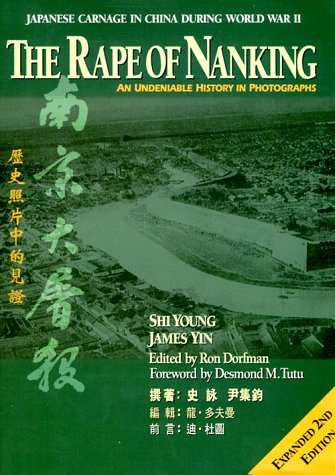
The Rape of Nanking: An Undeniable History in Photographs
by James Yin, Shi Young
No club is reading this yet — be the first to start one
The horror began on the morning of December 13, 1937, when the Japanese Imperial Army captured Nanking (Nanjing), which was then China's capital. Soldiers went through the streets indiscriminately killing Chinese men, women, and children without apparent provocation or excuse until in places the streets and alleys were littered with the bodies of their victims.
Thousands of women were raped by Japanese soldiers; death was frequently the penalty for the slightest resistance by a victim or members of her family. Even large numbers of young girls and old women were raped throughout the city, and many cases of abnormal and sadistic behavior in connection with these rapes were reported. Many women were killed after the act and their bodies mutilated.
For the next six weeks, while horrific rape continued, wholesale murder of male civilians was conducted with the apparent sanction of the Japanese high command. Hundreds of thousands of civilians and disarmed ex-soldiers were arrayed in formation, their hands bound behind their backs, and marched outside the city wall where, in groups, they were beheaded, or buried alive, or bayoneted, or raked with machine-gun fire, or doused with gasoline and burned.
This book, using more than 400 historical photographs, many of which were taken by Japanese soldiers themselves, is published to commemorate the sixtieth anniversary of the Rape of Nanking, to remind the world of the forgotten holocaust of WWII, and to honor history and answer any attempt to deny or change it.
Discussion questions for The Rape of Nanking: An Undeniable History in Photographs
Bring these to your book club — or discuss them with readers on Readfeed.
- 1
How does the use of over 400 historical photographs—many taken by the perpetrators themselves—change the impact of reading about the Nanking Massacre compared to reading a traditional text-only account?
- 2
In what ways does the book challenge or expand upon the conventional narrative of World War II history taught in the West?
- 3
The authors state their purpose is to honor history and answer attempts at denial; how does visual documentation serve as an unyielding witness against historical revisionism?
Discuss The Rape of Nanking: An Undeniable History in Photographs with other readers
Join or start a book club for The Rape of Nanking: An Undeniable History in Photographs on Readfeed. Live chat, shared reading progress, and AI discussion questions — free to get started.
Frequently asked questions
How do I join a book club for The Rape of Nanking: An Undeniable History in Photographs?
Sign up free on Readfeed, then browse public clubs or start your own club with The Rape of Nanking: An Undeniable History in Photographs as the current read. Invite friends with a share link and discuss together with live chat and AI discussion questions.
Can I discuss The Rape of Nanking: An Undeniable History in Photographs with other readers online?
Yes. Readfeed book clubs let you chat live, share progress, and join discussions about The Rape of Nanking: An Undeniable History in Photographs with readers worldwide — whether your club is virtual, in-person, or hybrid.
Is Readfeed free?
Yes. Creating an account and joining book clubs is free. Sign up to find readers who love the same books and start discussing today.